Khammouane
Laos is a country blessed with exceptional historical, cultural, social and natural heritage. It counts **numerous sites classified as UNESCO World Heritage**. Caves, temples, and other places that stand out for their beauty and history. Among the gems of the ancient land of a million elephants, Khammouane stands out.
Laos is a country blessed with exceptional historical, cultural, social and natural heritage. It counts numerous sites classified as UNESCO World Heritage. Caves, temples, and other places that stand out for their beauty and history. Among the gems of the ancient land of a million elephants, Khammouane stands out. This province captivates with the magnificence of its nature, ethnic diversity, and cultural wealth. One cannot help but marvel at the splendor of its imposing limestone karst massifs, its enigmatic caves including Kong Lor, its wild jungles, and its "world of water". In this idyllic and enchanting setting, visitors are easily seduced by its lush flora and incredibly rare fauna.
History
Chronologically, concrete data on the history of Khammouane province dates back to the 6th and 8th centuries. At that time, the region was bound to the kingdom of Sikhottabong. An affiliation that left it with numerous vestiges including Kampaeng Yak, the great stupa of Sikhottabong and the Stupa Phone.
That said, the echoes of French protectorate in Laos also reached this canton. An occupation that graced its urban landscape with colonial buildings, especially in the city of Thakhek (provincial capital). There is also an unfinished railway line, meant to connect Laos to Vietnam. Currently, what remains of this project is an old railway bridge spanning the Nam Don River.
In the 19th century, its high karst cliffs served as refuge for various ethnic communities during Haw invasions in the northern part of the country. During the Indochina War, the Mu Gia Pass served as a transit point for the Ho Chi Minh Trail.
As for the name Khammouane meaning "happy gold", it is believed to originate from gold deposits discovered in the surrounding areas about a hundred years ago.
Today
Nowadays, this locality is defined by its biodiversity and historical and cultural heritage. As far as one knows, it is home to superb natural heritage, rich and diverse culture, numerous ethnic groups, a stunning karst landscape, as well as crystal-clear rivers and lakes.
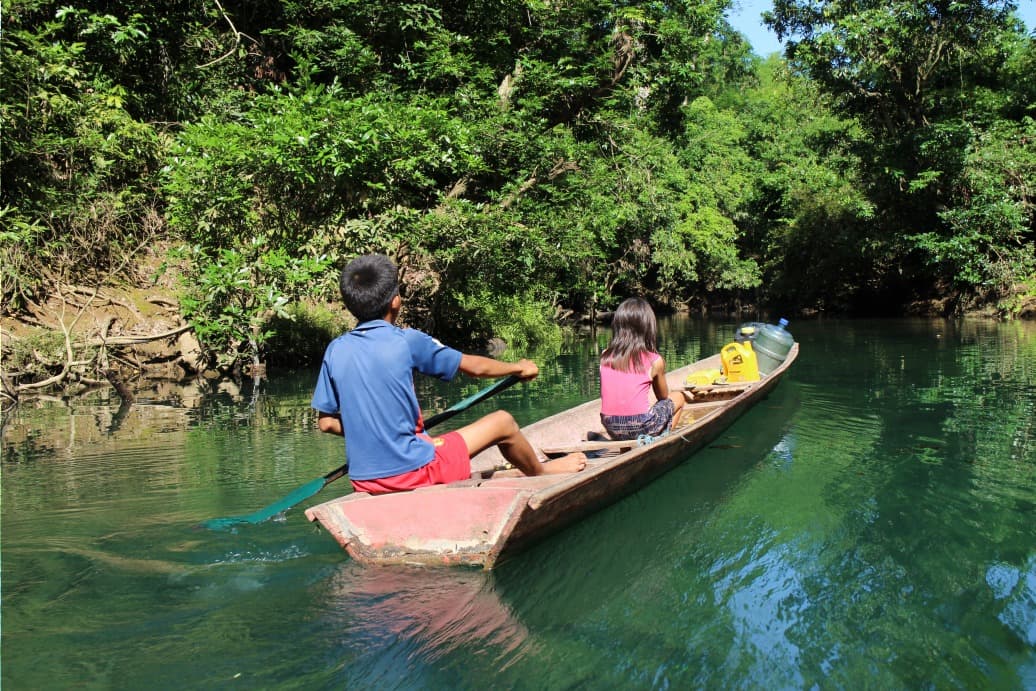
For those planning to explore it, there are numerous must-see places. A wild land, Khammouane offers a wide range of activities: hiking, cycling, boat rides, kayaking, caving adventures, trekking, and more.
Generous Nature
Khammouane is a National Biodiversity Protected Area. Planning a trip to this part of Laos means being able to observe fauna and flora found nowhere else. To see them more closely, simply combine visits and trekking in one of its five protected national zones (PNZ). The Hin Nam No PNZ attracts many travelers for curiosities like the Tham Khoun Xe cave with its fantastic underground river passages and vast caverns. There is also Phou Hin Bun. With luck, you may encounter the incredibly rare douc langur, a primate now threatened with extinction.
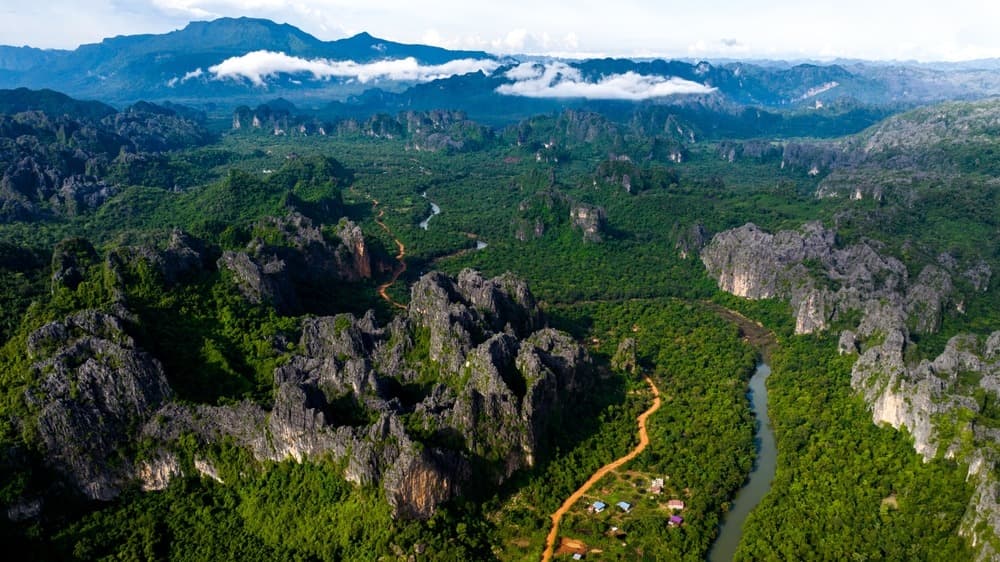
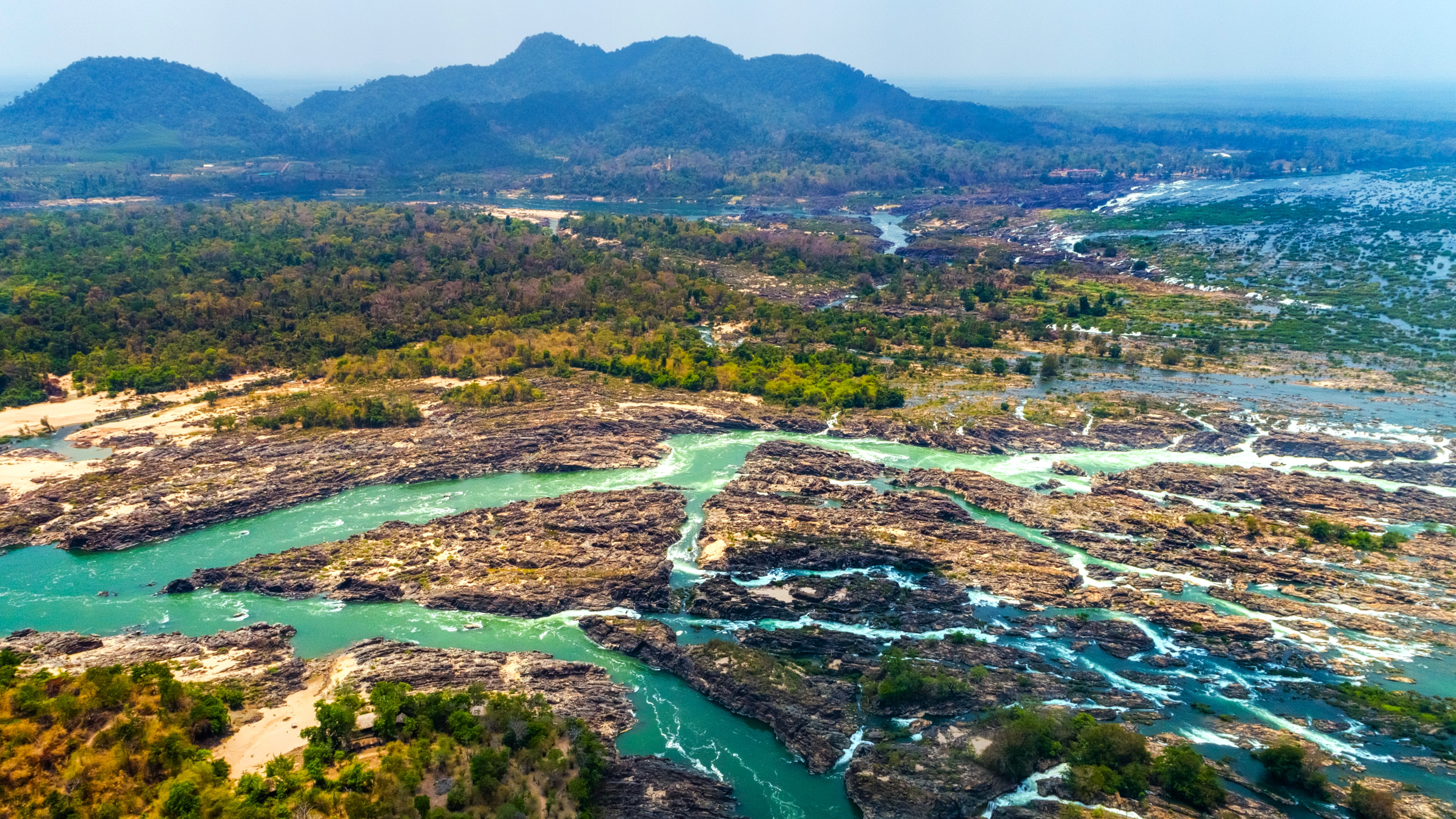
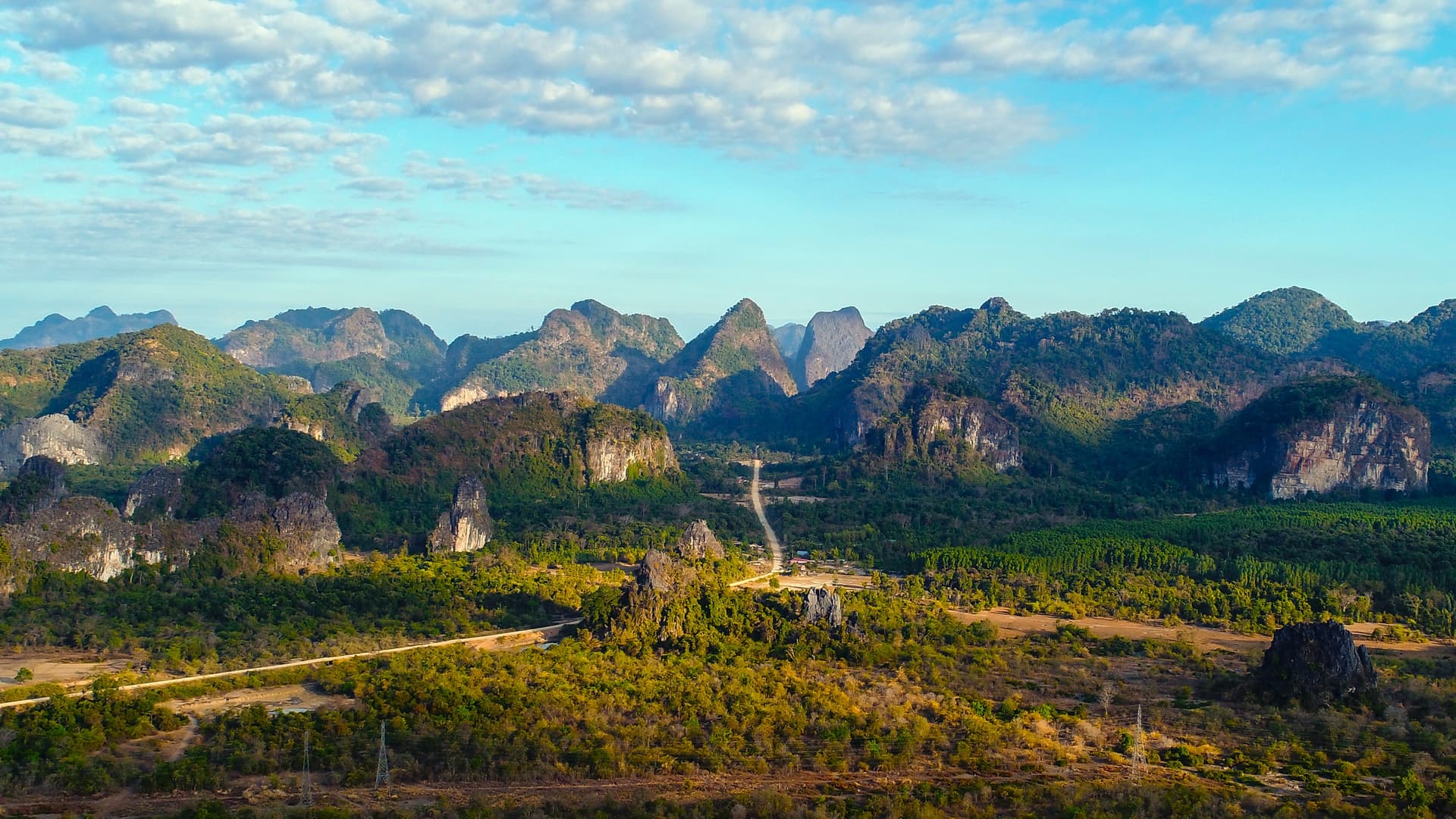
Another natural gem of these lands: its karst landscape. These high limestone cliffs are crossed by calm rivers. They impress with their high peaks, strange rock sculptures, ridges, and boulder formations.
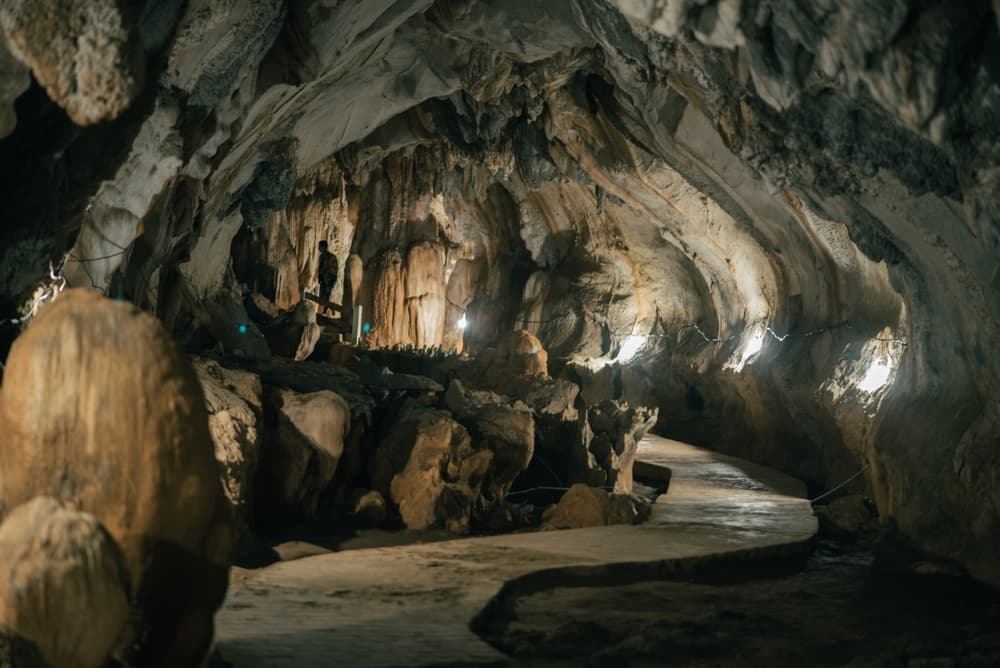
For speleology enthusiasts, they will be thoroughly satisfied exploring its vast caves. Of all sizes, most of these caverns carry a sacred dimension. To name just a few: the great Kong Lor with the blue lagoon of the Hin Bun River and its weaver village; Tham Xang (Elephant Cave) holding both mythical and historical significance; Tham Nong Pha Fa (Buddha Cave) and its 229 statuettes over 600 years old; Tham Nang Aen with its dramatic love story, interior lake and small zoo; Tham Lode with its bats and giant fish; Tham Xieng Liap and Khoun Nam Don with its turquoise lagoon.
Magnificent Bodies of Water
Swimming is one of the essential pleasures when traveling to a distant and exotic country. Within this province, you can indulge beneath its beautiful waterfalls such as Tad Nam Sanam with its twin falls, and Tad Mouang with its 18 levels. You can also refresh yourself and swim within its lakes. For example, the Evening Gong Lake or Khoun Kong Leng with its emerald waters and its full moon story. There is also the artificial Nam Theun with its dead trees and chimeric atmosphere.
Tailor-made Activities
Khammouane goes beyond a simple random visit to its natural sites. There exists an attraction that is particularly appreciated by globetrotters: the Thakhek Loop.
This famous loop amounts to a tour including: the provincial capital @Thakhek, Cave Alley, the Nakai Plateau and the limestone forest. It is possible to extend this "loop" with a foray into the Hinterlands. However, this stop is particularly intended for the most robust adventurers. Roads and terrain there are extremely steep.
This journey is usually done by motorbike or scooter. This allows quickly moving from one landscape to another. The various stages of this itinerary have their own attractions and specificities:
The city of Thakhek is the starting point. It captivates with its guesthouses featuring French colonial architecture, noodle shops, its night market, restaurants along the @Mekong River, the Sikhottabong stupa and Kampaeng Yak (the city's great wall)
The Cavern Alley or Cave Alley brings together seven caves over 17 km including Tham Xang, Tham Xieng Liab, Tham Nong Pha Fa, Tham Pha Chan (Sandalwood Buddha Cave), Khoun Nam Don, Tham Pla Xaen (Blind Fish Cave) and Tham Nang Aen. This site is located 5 km from the capital and is perfect for caving, trekking, kayaking, swimming, picnicking, fishing, boat rides and hiking enthusiasts.
Regarding the Nakai Plateau, it is pleasant to visit its town near the Nam Theun 2 dam reservoir (NT2). This small isolated city has a center displaying UXO (unexploded ordnance) and other war remnants. 20 km from this place, Tha long offers many activities such as canoeing, fishing, camping, and picnics.
The loop is then enhanced with a visit to the Phou Hin Bun PNZ and its limestone forest. Then, you can take a moment of rest at the village of Ban Na Hin. From there, it is possible to trek towards the Tad Mouaung waterfall and the deep Tham Heup cave. Otherwise, simply head to the town of Konglor to visit its famous caverns or stop at the city of Hinboun, gateway to Khoun Kong Leng Lake and the Hinboun River.
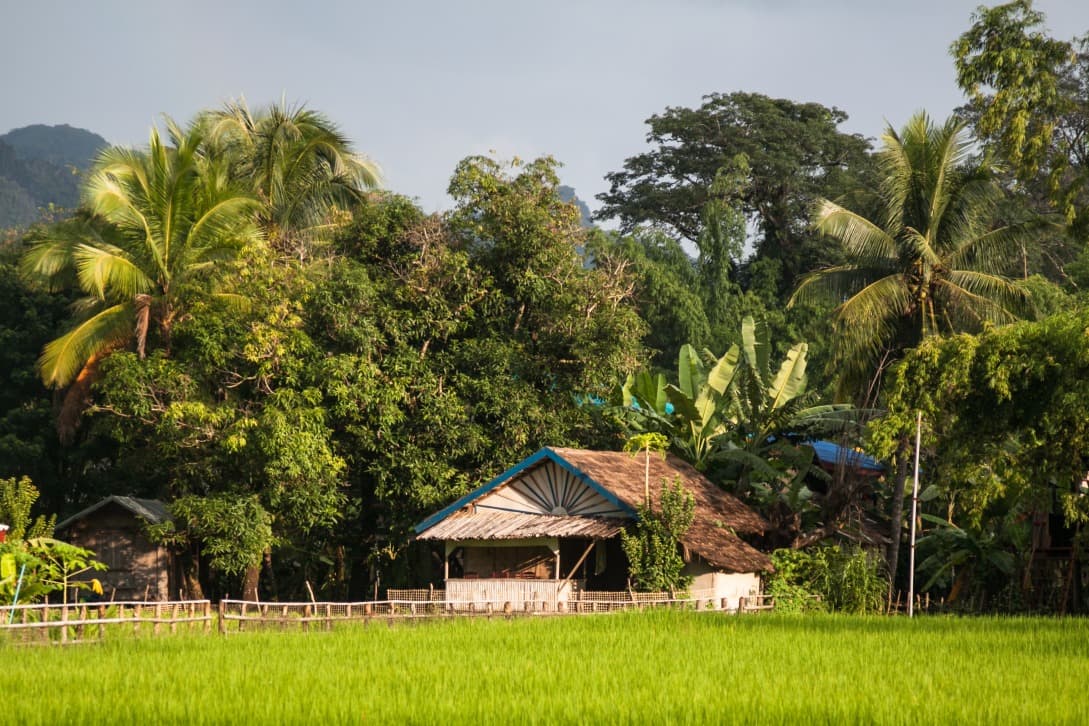
From Ban Na Hin, continue with the Hinterlands and the village of Ban Phon Ton. The countryside landscape all around is astonishing. You grow to enjoy strolling between rice fields, forests, and the mountain leading to Tham Phi Seua cave, Tham Phabang and Xebangfai.
Geography and Climate
Khammouane is a province located in central Laos and subdivided into 9 districts. It is bordered by Borikhamxay province to the north, Vietnam to the east, Savannakhet province to the south and the Mekong River to the west. Thakhek is its capital and is home to the third Lao-Thai Friendship Bridge.
Its terrain comprises mountains dotted with verdant forests. Its hydrography is essentially focused on the Xe Bangfay, Nam Theun and Nam Hinboun.
The best season to visit is between November and May. And regarding the Tham Pla Xaen cave, kayak season is between August and November.
How to Get There?
By Bus
Reaching Khammouane often means coming to Thakhek. There are numerous buses heading to this capital departing from Savannakhet, Vientiane, Pakse, Attapeu, Sekong and Salavan.
From Vientiane, you have a choice between two modes of transportation: VIP coaches (80,000 kips/person) and Express buses (70,000 kips/person).
That said, Thakhek is not the only gateway to the region. It is also possible to take the bus from Vientiane and head directly to either Konglor or Nakai.
Departing from the Thai province of Nakhon Phanom and crossing the Friendship Bridge also allows you to come to this beautiful Laotian territory. Visas are made available upon arrival.
How to Get Around?
By Tuk-tuk
This mode of transport works well for getting around the capital. And some of them are willing to provide transport to sites around Thakhek and Cave Alley. These services can be charged by the day but you need to know how to negotiate.
By Motorbike or Scooter
This is the most popular option for tourists doing the Thakhek Loop. So it is normal to see them abundant in several rental shops around the city.
By Bicycle
Trade 1 US dollar for a rental bike and you get a good vehicle to explore every corner more easily.
By Sawengthaew or Jumbos
These are small trucks with benches that shuttle back and forth between Khammouane's districts.
By Car Rental
From hotels and guesthouses, you can find various car rental options with drivers: taxis, minibuses, and boats.
Other Possibilities
The Lot-sam-lo (motorized bicycle) remains a very practical vehicle for strolling around Thakhek. And for travel outside the city, there is the alternative of local buses. These are available from district stations in the morning and early evening.