Hin Nam No Park
Hin Nam No Park
A karst park spanning 94,121 hectares in Khammouane, Hin Nam No is home to the Xe Bang Fai river cave and exceptional Annamite Mountains biodiversity.
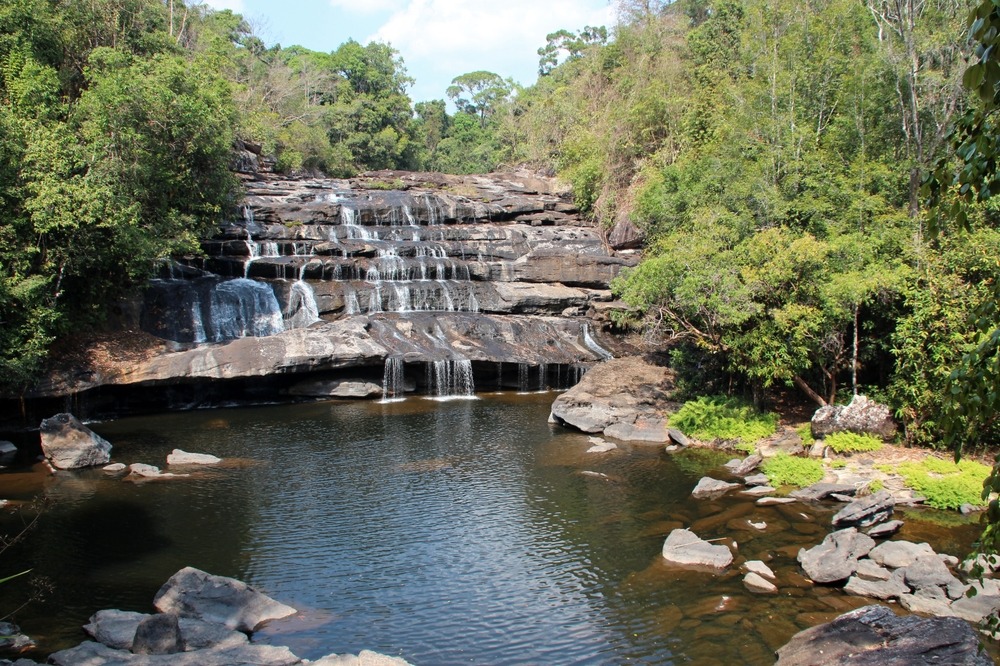
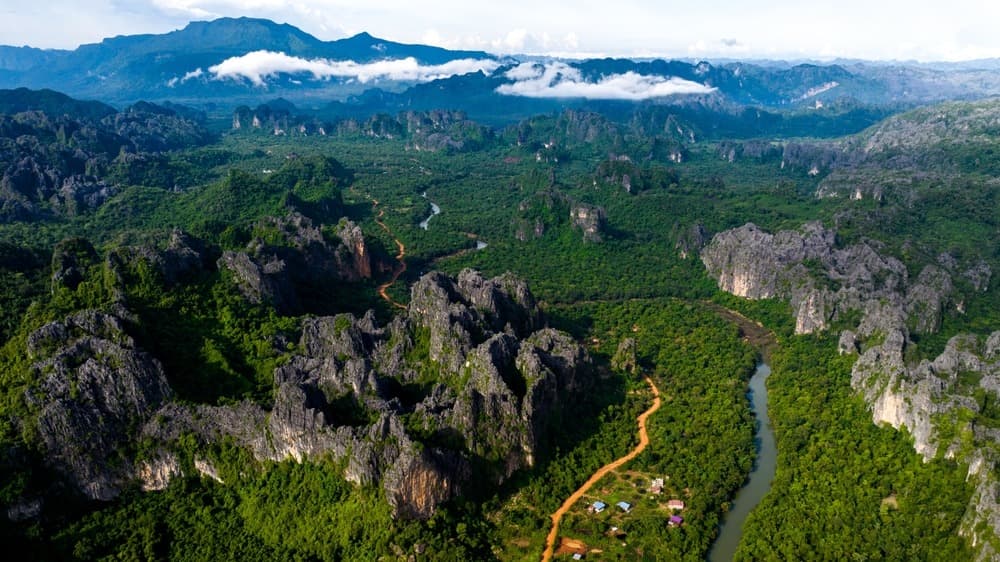
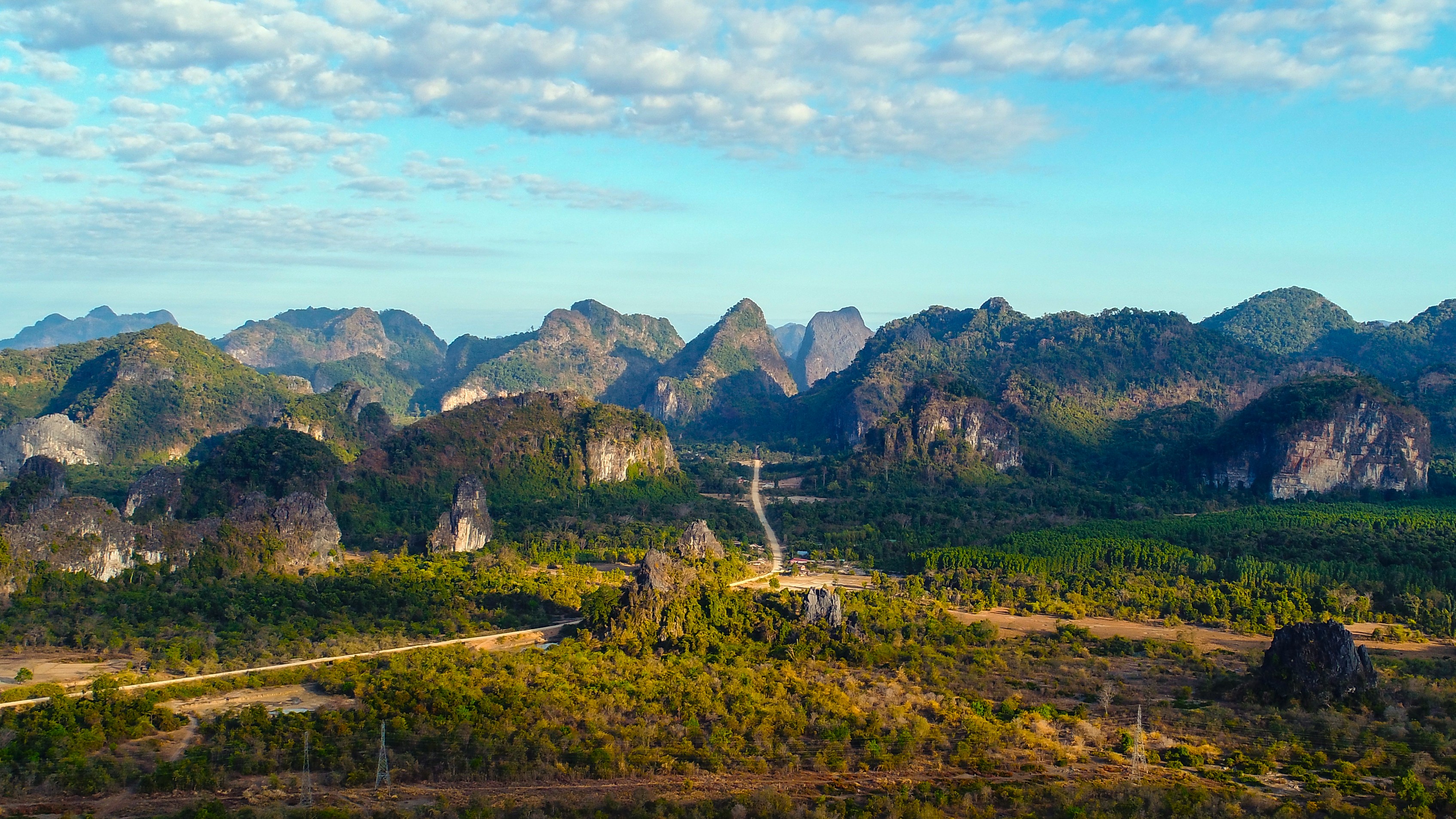
Hin Nam No stretches across 94,121 hectares in Khammouane Province, in southeastern Laos. This national park covers a portion of the Annamite Mountains, which mark the border with Vietnam. Its name means "mountain ridge resembling spiny bamboo shoots," a direct reference to the sharp limestone pinnacles that dominate the landscape. The site is home to the Xe Bang Fai river cave, one of the longest in the world, and biodiversity among the richest in the Annamite chain.
Why visit Hin Nam No
The park protects one of Southeast Asia's largest karst complexes. The eroded limestone massifs form towers, canyons, and an underground network still partially unmapped. The forest covering them has remained largely intact, making it a sanctuary for rare species, including several endangered primates.
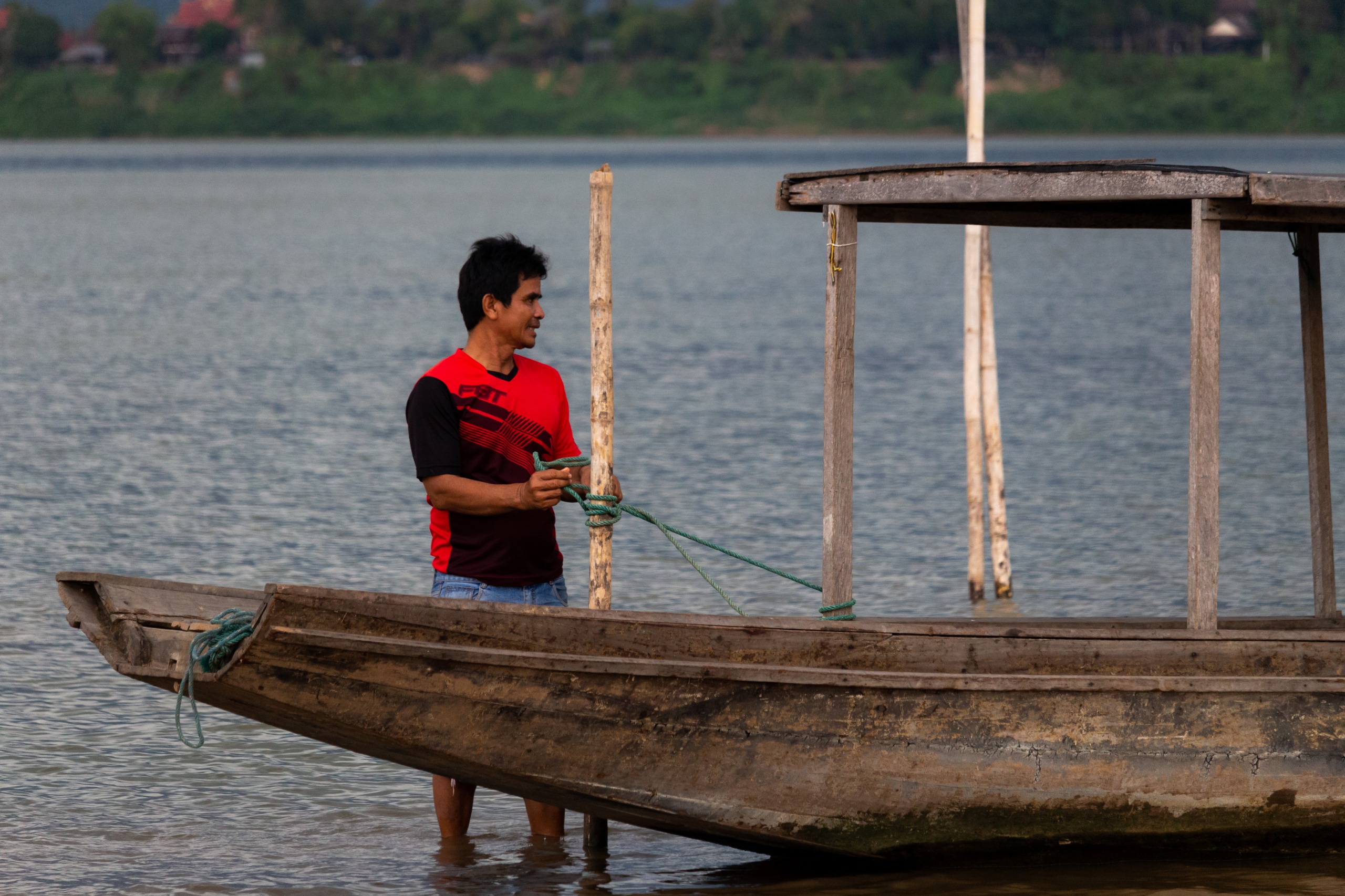
Hin Nam No operates under shared management with local communities, who provide guiding and hospitality services. On the Vietnamese side, the massif extends into Phong Nha-Ke Bang National Park, a UNESCO World Heritage site. The two areas form an exceptional transboundary karst continuum.
What to see and do in the park
Xe Bang Fai Cave
Xe Bang Fai is the jewel of the park. This active river cave stretches for 6.4 km, with an average width of 76 m and height of 53 m. In some chambers, the ceiling soars to 120 m and the gallery reaches 200 m wide—dimensions that make it one of the world's largest river cavities. The river flows through it entirely, and the exit opens into a resurgence basin 200 m in diameter, bordered by a beach.
Inside, the walls are covered in flowstone draperies and cave pearls. Gour pools, formed by calcite deposits on the floor, reach up to 61 m in length. The passage is made by kayak or boat depending on water levels, accompanied by a local guide.
Annamite Forest Fauna
The park is home to more than 800 vertebrate species: 154 mammals, 117 reptiles, 58 amphibians, 314 birds, and 170 freshwater fish. Thirty-eight species are endemic to the Annamite chain, including four primates.
- The Red-shanked Douc Langur, a primate with striking coloring, lives in the canopy of dense forests.
- The White-cheeked Gibbon is more often identified by its morning calls than by sight.
- The Bengal Slow Loris and Pygmy Slow Loris are nocturnal and elusive.
- Five macaque species cohabitate in the park: stump-tailed, long-tailed, northern pig-tailed, rhesus, and Assamese macaques.
Rich Karst Flora
More than 1,520 vascular plant species have been recorded, distributed across 175 families and 755 genera. Orchids are particularly well represented, with species restricted to limestone walls such as Chiloschista pulchella. Bamboo forests, omnipresent throughout, provide building materials, weaving fibers, and food for nearby villages. They also shelter the bamboo rat, a rodent typical of these environments. Epiphytic ferns, adapted to humidity, colonize trunks and rocky ledges.
Practical Information
- Guide required: visits to Xe Bang Fai Cave and forest treks are only conducted with an approved guide recruited from local villages.
- Equipment: powerful headlamp, waterproof closed-toe shoes, change of clothes, waterproof bag for camera and electronics.
- Fitness level: cave passage requires good physical condition; the approach hike may take several hours.
- Accommodation: homestays in villages within the buffer zone, primarily in Ban Nong Ping and Ban Tha Sang Chan.
- Recommended duration: plan for two to three days to combine cave and forest trekking.
When to visit
The dry season, from November to April, is the prime window for visiting Hin Nam No. Access trails are passable and the Xe Bang Fai river maintains navigable levels. The river cave is only accessible when water flow permits; during peak monsoon (June to September), passage is closed for safety reasons. Transition months (May, October) are uncertain and depend on rainfall.
Temperatures remain warm year-round in the lowlands, but nights in the karst forest can be cool in December and January.
How to get there
The main access point is Thakhek, the provincial capital of Khammouane. From Thakhek, it takes about half a day's drive east toward Boualapha District, then to one of the park's entry villages. Local agencies and operators based in Thakhek organize transport, village lodging, and guiding as a single package, which remains the simplest solution.
Thakhek can be reached by bus from Vientiane (approximately a day's journey) or from Savannakhet further south. The town is also connected to Nakhon Phanom in Thailand by a bridge across the Mekong River.
Combining with the region
Hin Nam No fits into a broader nature circuit in central Laos. The Thakhek Loop, a three- to four-day motorcycle circuit, traverses Khammouane's karst landscapes and passes near Kong Lor Cave, another river cave traversed by a river for 7 km. Travelers interested in Laotian national parks can extend their itinerary to Phou Khao Khouay National Park, more accessible from Vientiane.
For another river-based experience, the Nam Ou River in the north offers a different boat journey through the valleys of Phongsaly and Luang Prabang. The Hintang Archaeological Park complements this exploration of rural, pristine Laos.
Frequently Asked Questions
Frequently asked questions
Planning your trip
Hin Nam No requires some organization and represents one of the most memorable nature experiences in central Laos. To integrate this park into a complete itinerary, explore our bespoke Laos travel experiences.
Interested in this visit?
We can include it in your personalised itinerary.