Gibbon Experience
Gibbon Experience
Treetop cabins and zip lines in Nam Kan National Park: Gibbon Experience combines adventure, conservation and local employment from Houay Xay.
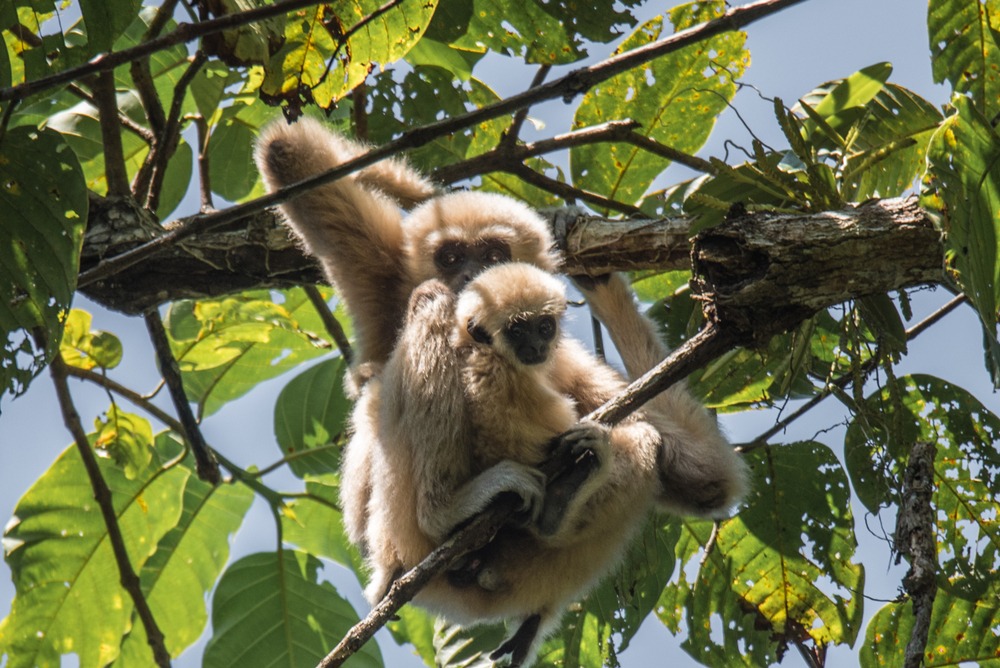
In north-western Laos, in Bokéo province, Gibbon Experience offers stays in treetop cabins and zip-line courses through the heart of the Nam Kan National Park. The project combines nature tourism, forest conservation and local employment, with the black-crested gibbon, a threatened Southeast Asian primate, as its flagship species.
Why visit Gibbon Experience
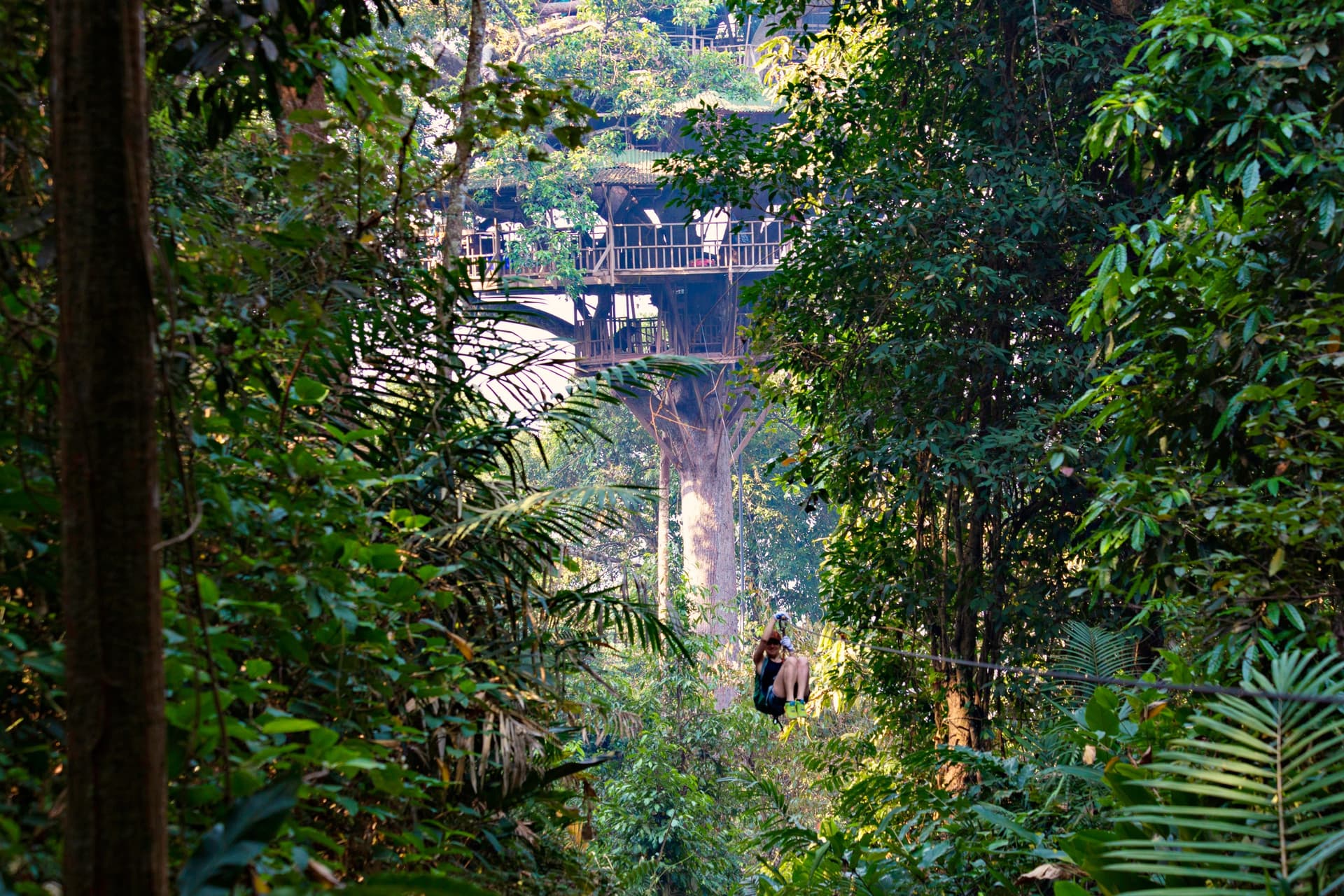
Three main reasons make the detour from Houay Xay worthwhile. First, the setup itself: a network of zip lines crossing the canopy and linking wooden cabins built between 30 and 40 metres above the ground. Second, the setting: 123,000 hectares of pristine forest, home to diverse wildlife. Finally, the conservation dimension: revenues fund salaries, infrastructure maintenance and forest patrols, with some staff recruited from former poachers now reformed.
The experience requires good physical fitness but remains accessible to regular hikers. Groups are limited to 8 people, led by local guides.
Project history
Gibbon Experience was founded by Frenchman Jean-Francois Reumaux, with the idea of reconciling forest protection, economic development and experiential tourism. Originally, the area corresponded to the Bokéo nature reserve, 123,000 hectares of old-growth forest sparsely populated but subject to illegal logging and poaching.
The project recruited inhabitants from surrounding ethnic villages, trained as guides, cooks, cabin builders and forest rangers. The company ANIMO was responsible for initial development work: 6 huts and 7 kilometres of cabling were installed in this first phase. The cabins were built by hand, using wood and palm leaves.
In 2008, Bokéo reserve was promoted to National Park status, which strengthened its protection framework and allowed Laotian government subsidies to complement tourism revenues. Today, the project involves around 120 people from neighbouring villages.
What you see and do
Zip lines and canopy
The main activity involves moving between platforms via cables stretched above the forest. Depending on the package chosen (Classic, Waterfall, Express), hiking distances and the number of zip lines vary. Harnesses and gloves are provided; guides review safety procedures before each crossing.
Fauna and flora
Nam Kan National Park is home to significant biodiversity: black-crested gibbons (critically endangered species according to the IUCN), forest birds, mammals such as sun bears, as well as a wide variety of reptiles and insects. Leopards and elephants are reported in the area, but their observation remains very rare. The park is also part of the historical range of the Indochinese tiger, whose population in Laos is now considered virtually extinct.
Hearing gibbons sing at daybreak from the cabin remains the most memorable moment for most visitors — though visual observation is not guaranteed.
The cabins
The cabins are situated between 30 and 40 metres above ground, accessible only by zip line. Accommodation remains rustic yet comfortable: mattress with mosquito net, potable running water, outdoor shower on a grating, kitchenette equipped to prepare tea and coffee, toilet facilities. Meals, based on local produce, are brought by guides.
Practical information
- Book in advance: demand is high, departures are limited.
- Office and departure point in Houay Xay, on the main street; option to leave large luggage.
- Groups of maximum 8 people, led by local guides.
- Weight limit: 110 kg for safety reasons.
- Recommended equipment: hiking shoes, rain gear, insect repellent, headlamp, water bottle, change of clothes, sheet or sleeping bag liner for cool nights.
- Travel insurance covering adventure activities advised.
- Good physical fitness required, particularly during wet season.
When to visit
The dry season, from November to February, offers the most comfortable conditions: passable trails, cool mountain temperatures, minimal rainfall. March to May is the hot season, sometimes with agricultural smoke affecting visibility. The rainy season (June to September) makes trekking more demanding and is often accompanied by leeches on the trails; some sections may be muddy, but the forest is particularly vibrant at this time.
How to reach Gibbon Experience
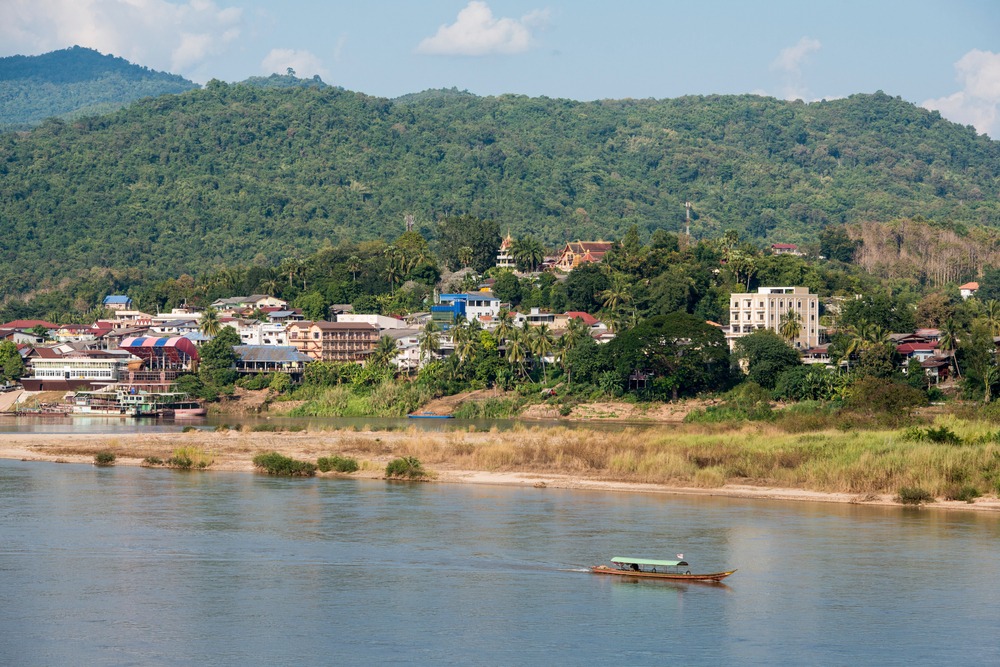
Everything starts at the Houay Xay office, a border town facing Chiang Khong (Thailand), accessible via Friendship Bridge No. 4. From Luang Namtha or Luang Prabang, daily buses connect to Houay Xay. The Thai border is the other classic entry point.
From Houay Xay, expect around three hours by road (duration varies depending on trail conditions) to the reserve village, followed by approximately one hour's hiking to the first platforms.
Nearby attractions
Before or after the trek, several northern Laos sites deserve a visit. The Nam Ou river runs through the karst landscapes of Phongsaly and Luang Prabang provinces. In Luang Prabang, the Centre for Ethnology and Traditional Arts (TAEC) documents the cultures of northern ethnic minorities, a useful complement to a Nam Kan stay. The Luang Prabang night market remains the usual stop for craft shopping.
Frequently asked questions
Frequently asked questions
Planning the rest of your journey
Gibbon Experience fits naturally into a northern Laos itinerary combining Houay Xay, Luang Namtha and Luang Prabang. To build a coherent trip around nature and ethnic minorities, explore our Laos travel ideas.
Interested in this visit?
We can include it in your personalised itinerary.