Luang Prabang Night Market
Luang Prabang Night Market
Born in 2002 under the name of the "candle market," Luang Prabang's night market brings together Hmong artisans and street food vendors every evening.
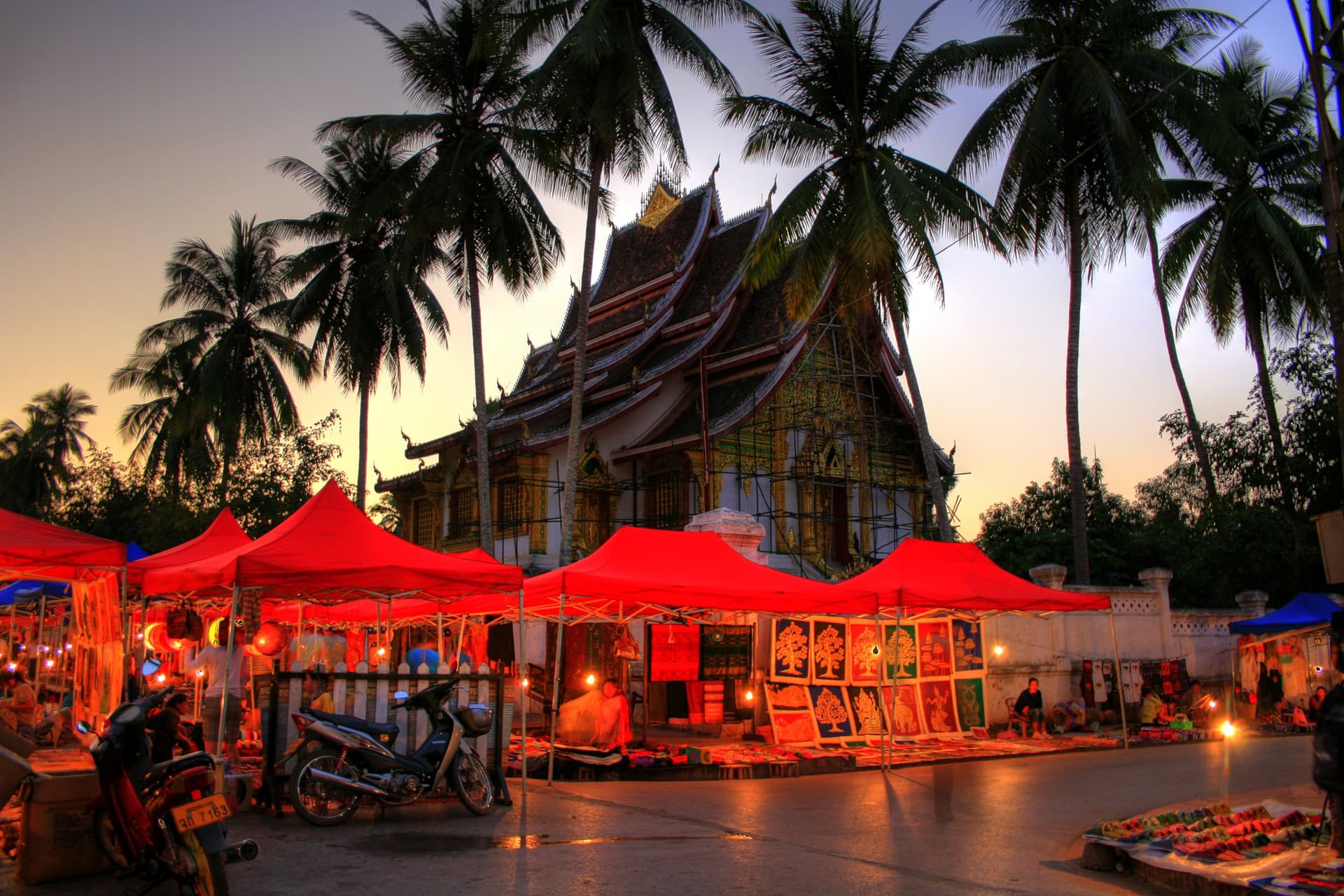
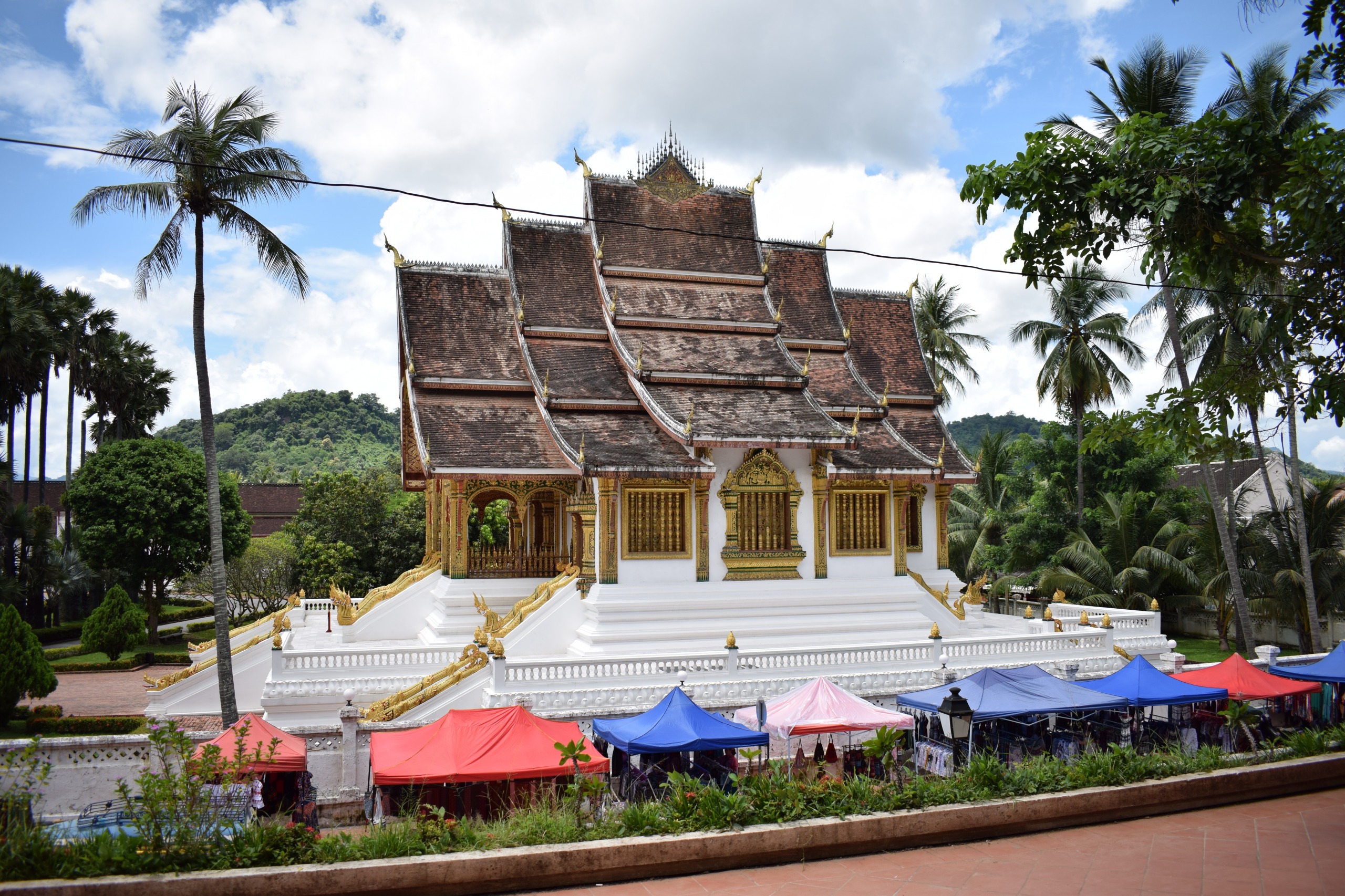
Along Sisavangvong Avenue, between the main street and the Royal Palace Museum, Luang Prabang's night market spreads out hundreds of stalls each evening. Established in December 2002, it has become one of the city's most frequented gatherings, equally prized for its textile craftsmanship and its street food alleys.
Why visit Luang Prabang's night market
The market concentrates within a few hundred meters the craftsmanship of Hmong ethnicities and minorities from the surrounding regions. It is one of the best places in northern Laos to bring home embroidered textiles, bamboo objects or ceramics without having to venture into remote villages.
Three elements make it a worthwhile stop during a stay in Luang Prabang:
- A concentration of artisans rarely found elsewhere in the city.
- A pedestrianized street in the evening, pleasant to stroll through after the day's heat.
- An adjacent street food area, convenient for dining on site.
History: from candle market to today
The night market first took place along Sisavangvong Avenue in December 2002. It had been set up as part of Western Christmas celebrations and was meant to last only a few weeks. Hmong artisans and other ethnic groups from surrounding regions came to offer their products to foreign passersby.
At the time, public lighting on the pedestrian street remained dim. Each vendor illuminated their stall by candlelight, earning the place its nickname of "candle market." The success was such that the stalls reassembled every evening, and the market has never stopped since.
Today, more than a hundred merchants sell their products there, with estimates reaching several hundred stalls during high season. Since around 2005, Chinese and Vietnamese products have begun to disrupt the market's original local and authentic vocation: one must now keep a sharp eye to distinguish handmade craftsmanship from imported series.
What to see and what to bring home
The market extends from the main Sisavangvong street to the Royal Palace Museum. In the evening, traffic is cut off in this area: stalls spread out on the asphalt itself, under red lanterns that give the alley its characteristic atmosphere.
The offerings are divided into major product families:
- Textiles: silk scarves, embroidered fabrics, bedspreads.
- Accessories: embroidered bags, wallets, pouches.
- Décor: stone chessboards, opium pipes, Buddha images, local paintings, ceramics, paper lanterns.
- Woven goods: bamboo works, baskets, woven lighting fixtures.
Prices are generally displayed and remain affordable. Haggling is accepted but stays measured: Lao vendors don't practice systematic markup, so there's no need to drop prices too low.
The street food alley
A side alley perpendicular to the main axis groups together street food stalls: grilled meats, skewers, vegetarian options, build-your-own buffets and Beerlao bottles. You dine for just a few euros, seated on shared benches. At the end of the market, the Night Food Market offers a slightly more comfortable setting to settle in.
Practical information
- Location: Sisavangvong Avenue, facing the former royal palace now the Royal Palace Museum.
- Access: on foot from the historic centre. Tuk-tuk possible from more distant accommodations.
- Hours: setup begins late afternoon (around 5pm), gradual closing in the evening. Open daily.
- Budget: affordable purchases, bring kips in small denominations. Street meals at very modest cost.
- Tips: bring a flashlight to examine fabrics, and verify the origin of objects if local authenticity matters to you.
When to visit
The market operates year-round, but the experience varies by season. The dry season, from November to March, coincides with high tourist season: the alley is very busy, the atmosphere lively, but the best pieces sell quickly. From April to June, the heat is intense and the market is best enjoyed after sunset. The rainy season, from June to September, sees fewer visitors; some stalls may be covered or reduced during downpours, but vendors remain present.
For a balance between reasonable crowds and pleasant weather, October and November are interesting months.
Around Luang Prabang to explore
The night market fits into a broader stay around Luang Prabang. A few natural stops complement your urban visit well:
- The Kuang Si butterfly park, near the waterfalls of the same name.
- Nahm Dong park, for a half-day of nature.
- Mount Pha Ngern, a viewpoint over the valley.
- The Nam Ou River, waterway leading north.
Frequently asked questions
Frequently asked questions
Vendors begin setting up late afternoon, around 5pm, and the market closes progressively in the evening. It is generally empty shortly after 10pm.
Yes, the market operates every evening of the year, including during the rainy season, with variable crowds depending on the season.
Haggling is accepted but remains moderate. Starting prices are generally reasonable and Lao vendors don't practice heavy markup.
Since the mid-2000s, Chinese and Vietnamese items coexist with ethnic craftsmanship. Hand-embroidered pieces, woven textiles and bamboo works from minorities remain most representative; vendors willingly specify the origin if you ask.
A side alley perpendicular to the main axis groups together street food stalls (grilled meats, vegetarian buffets, Beerlao). The Night Food Market, at the end of the market, offers a slightly more relaxed setting.
Planning your stay
The night market combines easily with a daytime visit to the Royal Palace and the natural sites of the surrounding area. To integrate this stop into a complete itinerary, consult our trips to Laos.
Nearby
Interested in this visit?
We can include it in your personalised itinerary.