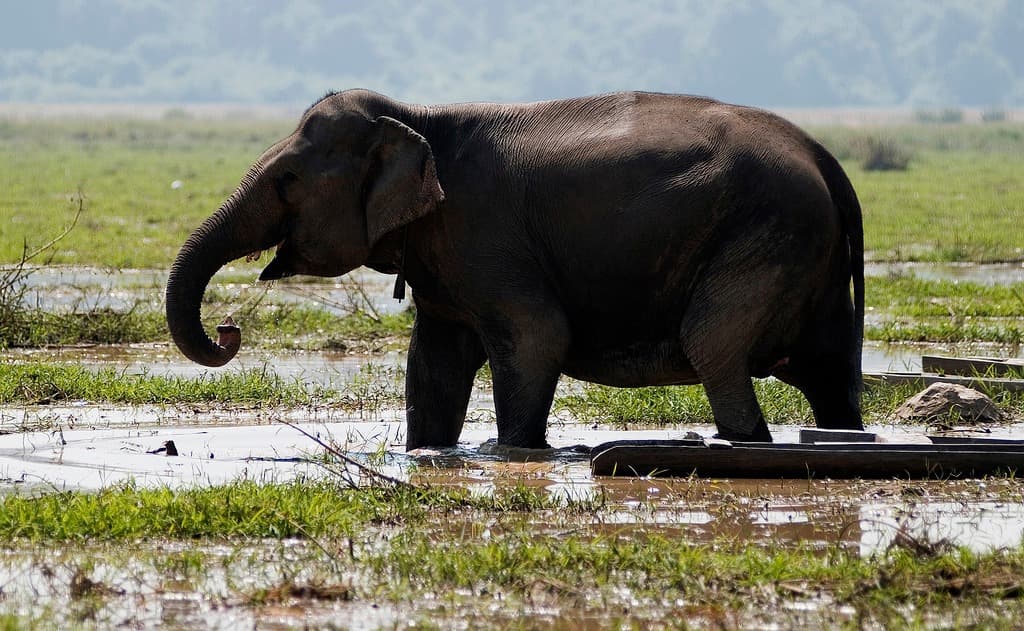
Elephant Mekong Camp
Elephant Mekong Camp
Ecotourism center dedicated to Asian elephants, located on the Mekong opposite Pakbeng. Elephant bathing, forest walks and encounters with mahouts.
Elephant Mekong Camp is an ecotourism sanctuary located on the right bank of the Mekong, opposite the village of Pakbeng, in northern Laos. The center hosts Asian elephants retired from logging operations and offers visitors a guided program of observation and structured interaction with these animals, in partnership with their mahouts.
Why visit Elephant Mekong Camp
The camp is part of a concrete conservation effort: providing a suitable living environment for elephants while guaranteeing stable income for the mahouts who accompany them. In Laos, the number of remaining elephants is estimated at approximately 300 individuals in the wild and 400 in captivity, a population weakened by deforestation, habitat loss and exploitation for timber transport.
The appeal of a visit rests on three key elements:
- An educational approach to the condition of the Asian elephant in Laos and the mahout profession.
- A logical stopping point on the river itinerary between Huay Xai and Luang Prabang, which breaks up the monotony of the cruise.
- A cultural aspect with handicraft workshops and visits to mahout villages.
History of the camp
The center has been open to the public since 2008. Originally designed as a local ecotourism pilot project, it was renamed in 2017 as part of a management restructuring, but retains the same mission: protecting Asian elephants by offering mahouts an economic alternative to forestry work.
The model rests on a simple principle: revenue generated by visitors funds the care, feeding and accommodation of the elephants, as well as the compensation of mahout families who have been responsible for them for several generations.
What to see and do on site
With the elephants
Activities are organized around the animals' daily rhythm and mahout availability. The typical program includes:
- Bathing the elephants in the Mekong or in an adjacent river.
- Forest walks alongside the animals, on marked trails.
- A mahout demonstration explaining vocal commands and the mahout's daily work.
- Free observation of elephants in their activity area.
Cultural and handicraft activities
The camp also offers:
- A traditional Lao cooking workshop.
- Weaving demonstrations (bamboo and silk) and blacksmithing.
- Visits to nearby mahout villages, where you can discover rural living and the bonds between families and elephants.
2-day trekking option
For travelers with more time, a two-day program combines extended walks with the elephants, visits to ethnic minority villages in the surrounding hills and introduction to mahout techniques. This option includes one night on site, in simple accommodation.
Practical information
- Duration of visit: allow approximately half a day for the short format, two days for the full trek.
- Rates: moderate entrance fee for adults, reduced rate for children; packages including activities with the elephants are charged separately. Prices change, so check with the camp or your agency before departure.
- Equipment: clothes that can get wet for bathing, closed hiking shoes, sun protection, insect repellent.
- Accessibility: terrain slopes in places, not well suited for people with reduced mobility.
When to go
The most comfortable period extends from November to February, during the dry season: moderate temperatures, easy river navigation on the Mekong and passable trails. From March to May, heat is intense and agricultural smoke can reduce visibility. The rainy season (June-October) makes trails slippery but offers dense vegetation; the Mekong level is then higher, which facilitates navigation between Huay Xai and Pakbeng.
How to get there
The camp is located midway between Luang Prabang and Huay Xai (northern border, Chiang Khong side in Thailand), on the Mekong bank, at the height of Pakbeng.
- From Pakbeng: boat transfers are organized from Pakbeng Lodge to the camp, on the opposite bank. The crossing takes a few minutes.
- From Luang Prabang or Huay Xai: the camp typically integrates into a two-day cruise on the Mekong, by slow boat, with one night in Pakbeng.
- By road: Pakbeng is connected to Oudomxay and Luang Prabang by winding mountain roads (allow 6 to 8 hours from Luang Prabang).
What to see nearby
- The village of Pakbeng, a mandatory stop on the Mekong cruise.
- The Nam Ou River, tributary of the Mekong, to extend your river exploration.
- In Luang Prabang, the night market and the Ethnology and Traditional Arts (TAEC) center to deepen your knowledge of the ethnic minorities encountered along the way.
Frequently asked questions
Plan your trip
Elephant Mekong Camp naturally integrates into an itinerary combining a Mekong cruise, cultural stops in Luang Prabang and exploration of the northern regions. To build a custom trip including this stop, consult our tours in Laos.
Interested in this visit?
We can include it in your personalised itinerary.
