Chao Anouvong Park
Chao Anouvong Park
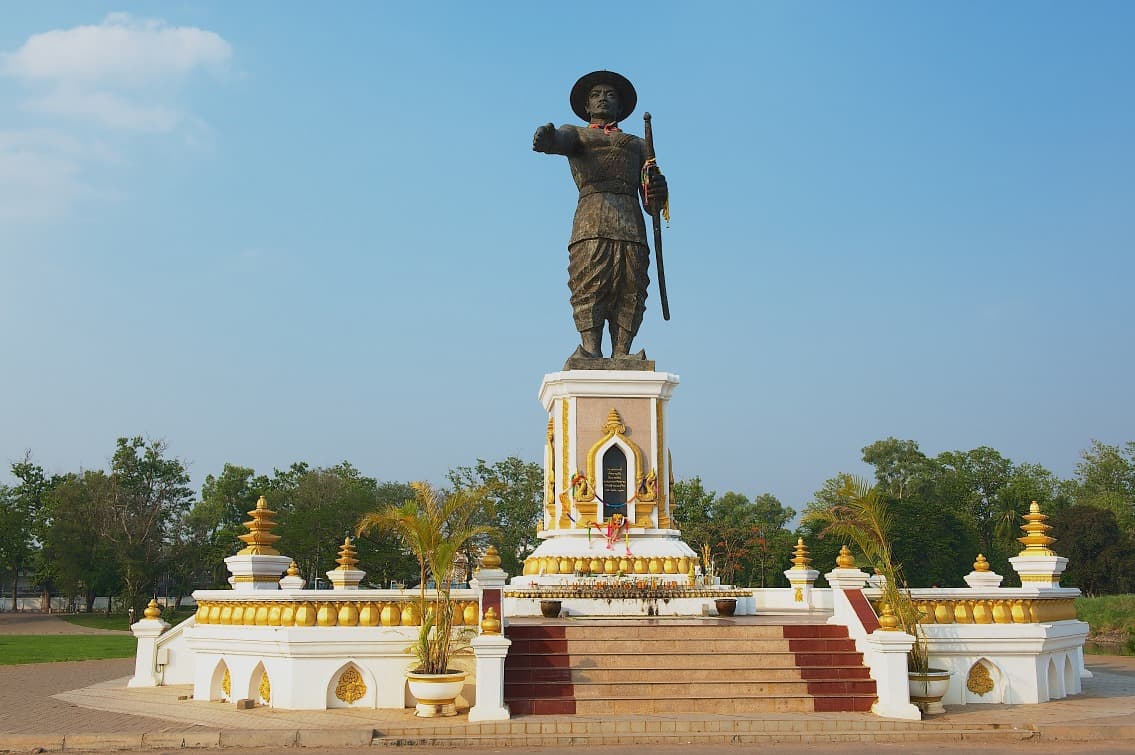
On the banks of the Mekong in Vientiane, Chao Anouvong Park pays tribute to the last king of Lan Xang through a 6-metre statue inaugurated in 2011.
At the heart of Vientiane, the Chao Anouvong Park spans 14 hectares along the banks of the Mekong. Inaugurated in 2010 to mark the 450th anniversary of the Laotian capital, it pays homage to the last king of the Lan Xang kingdom through a monumental bronze statue facing Thailand. Nestled between the presidential palace and the night market, it is one of the city's most frequented green spaces, visited by both locals and travellers alike.
Why visit Chao Anouvong Park
This urban park offers a tangible insight into 19th-century Laotian history. The statue of Chao Anouvong, erected in 2011, recalls the fall of the Lan Xang kingdom to Siam. Beyond its historical significance, the site is a logical stopping point between the banks of the Mekong, the presidential palace and the night market. Locals come here to practise Tai Chi in the morning and gather in the late afternoon, making it a wonderful place to observe daily life away from the standard tourist circuits.
Recent history for a major figure
The original project had planned a shopping centre at this central Vientiane location. It was abandoned in favour of a commemorative park, inaugurated in 2010. The statue of King Chao Anouvong, added in November 2011, occupies the tip of the park overlooking the Mekong, its gaze turned towards neighbouring Thailand.
Chao Anouvong reigned from 1805 to 1828 over the kingdom of Vientiane, one of three kingdoms that emerged from the dissolution of Lan Xang. He led a military campaign against Siam to reclaim Laotian independence. Defeated by the armies of King Rama III, his kingdom was dismantled and Vientiane was sacked. This defeat marked the political end of the historical Lan Xang. Today, the sovereign is regarded as a national figure, which explains the care lavished on the monument and its surroundings.
What to see on site
The statue of Chao Anouvong
The bronze statue stands 6 metres tall. The king is depicted in military dress, wearing the royal headdress, with a sabre at his side. His right arm is raised, his left rests on his weapon. This posture evokes both authority and resistance against Siam. At the foot of the monument, an altar receives offerings from Laotian visitors: flowers, incense sticks and fruit.
Green spaces and surroundings
The park alternates between lawns, pathways and concrete monuments. It runs along Fa Ngum Quay, offering an unobstructed view of the Mekong and the Thai bank. A few shops at the edges sell Laotian crafts and everyday goods. Nearby, the temple Wat Xieng Nyeun is worth a quick visit.
When to visit
Two moments stand out:
- In the morning: peaceful atmosphere, Tai Chi sessions, soft light on the statue and the Mekong.
- Late afternoon and early evening: more visitors, progressive opening of the nearby night market, sunset over the river.
The dry season, from November to March, remains the most pleasant time to enjoy the park outdoors. The rainy season (May to September) limits daytime visits but offers a particularly wide Mekong.
Practical information
- Access: free and open to all.
- Statue: accessible during the day and early evening; the immediate surroundings may be closed at night.
- Visit duration: allow 30 minutes to 1 hour, longer if you combine it with the night market.
- What to bring: water, hat or cap, modest clothing out of respect for the commemorative nature of the site.
How to get there
The park is located in central Vientiane, on Fa Ngum Quay, near the presidential palace and Wat Xieng Nyeun temple. From most hotels in the centre, walking is the simplest option: follow the banks of the Mekong to the night market, and the park is right next to it.
Bike rental is a comfortable alternative to explore the capital; several rental shops are located in the centre at affordable daily rates. Tuk-tuks and taxis drop you off easily at the park entrance.
Nearby attractions
- Vientiane's night market, which sets up each evening along the Mekong, a few steps from the park.
- The presidential palace, visible from the street (interior not open to the public).
- Wat Xieng Nyeun temple, right next to the park.
- For more nature experiences in Laos: Phou Khao Khouay National Park, accessible from Vientiane.
- If your itinerary takes you north: Luang Prabang's night market and Kuang Si Butterfly Park.
Frequently asked questions
Frequently asked questions
Yes, entry is free for all visitors.
Allow 30 minutes to 1 hour to tour the park and view the statue. Your visit can be extended if you combine it with the nearby night market.
Chao Anouvong was king of Vientiane from 1805 to 1828. He led a war of independence against Siam and was defeated by King Rama III, marking the end of the Lan Xang kingdom. He is regarded today as a national hero in Laos.
In the morning for a peaceful atmosphere and to see locals practising Tai Chi, or in the late afternoon for sunset over the Mekong and proximity to the night market.
Vientiane's night market, the presidential palace and Wat Xieng Nyeun temple are all within walking distance of the park.
Plan your trip
Chao Anouvong Park naturally fits into a half-day exploration of Vientiane, combining the Mekong banks, the night market and historical heritage. To go further and build a complete itinerary, explore our tailor-made journeys in Laos.
Interested in this visit?
We can include it in your personalised itinerary.