Pha That Luang
Pha That Luang
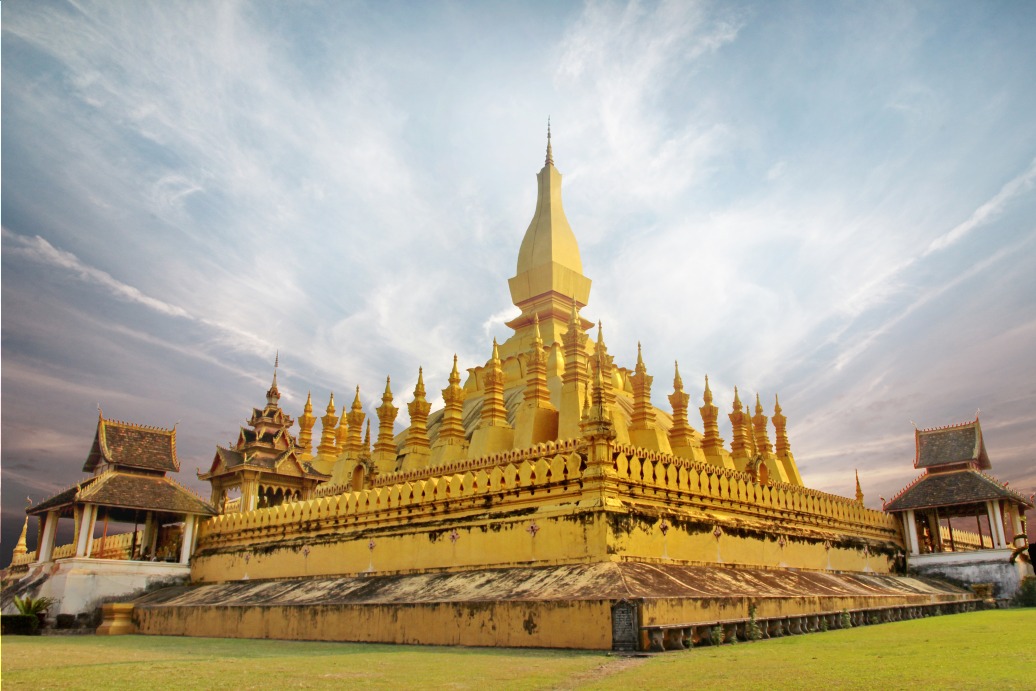
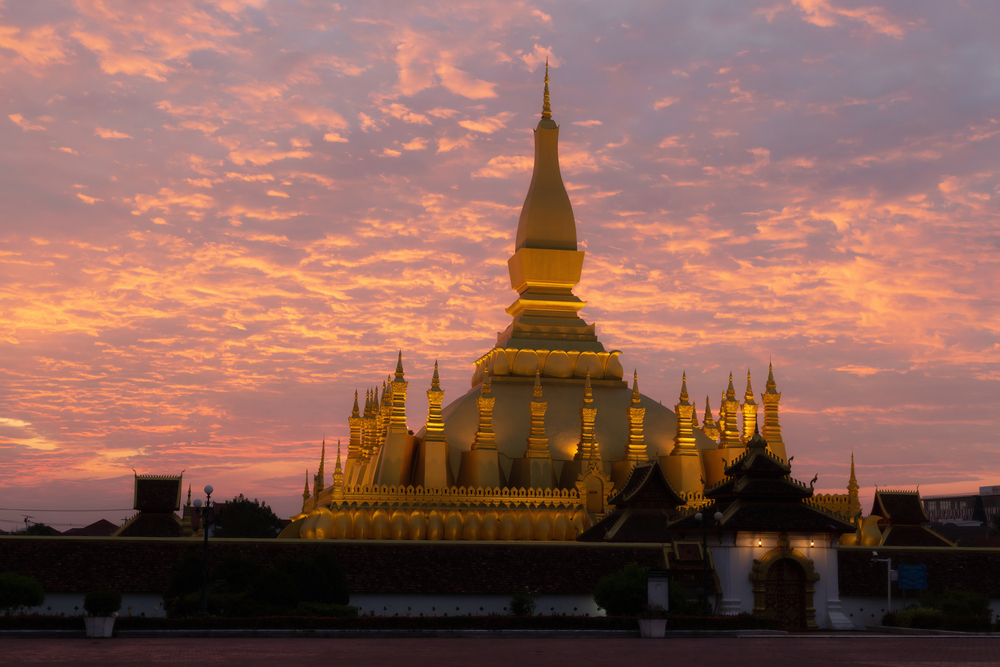
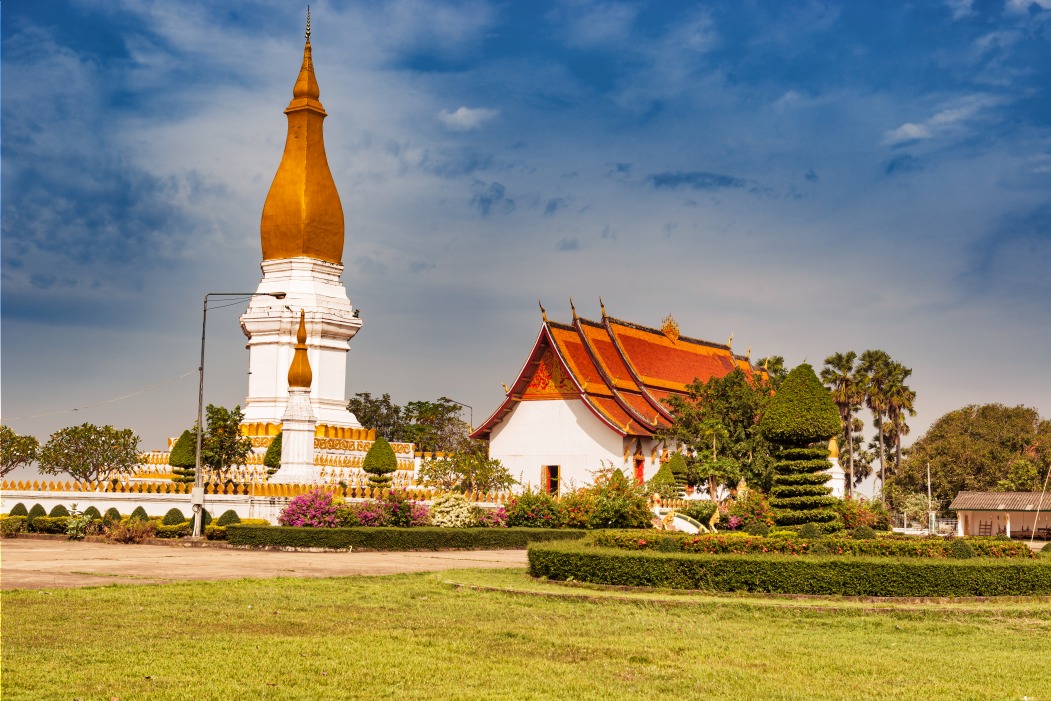
Built in 1566 under King Saysettathirath, Pha That Luang is Laos' most sacred monument. A 45-meter golden pyramid, it dominates the east of Vientiane.
Pha That Luang dominates the east of Vientiane with its pyramidal silhouette covered in gold leaf. Built in 1566 under King Saysettathirath on much older foundations, this stupa is considered Laos' most sacred monument. Its image appears on the national coat of arms and on banknotes.
Why visit Pha That Luang
The site encapsulates a large part of Laotian religious and political identity within itself. Its quadrangular three-tiered structure symbolizes the ascension from earth to heaven, a central doctrine of Theravada Buddhism practiced in the country. Covered with approximately 500 kg of gold leaf, the building stands out in the capital's urban landscape.
Beyond its architectural significance, the stupa remains a living place of worship. The faithful come to pray and leave offerings, and each year the monument serves as the backdrop for the Boun That Luang festival, one of Laos' major religious celebrations.
History of Pha That Luang
Ancient and disputed origins
The site's earliest foundations are said to date back to the Khmer civilization, when the Cham people occupied the Vientiane region. Around 218 BC, two monks and five scholars supported by Indian King Ashoka are believed to have brought Buddhist relics to Vientiane—fragments of a pelvis attributed to the Buddha—enshrined on Phou Luang hill.
In 236 BC, the lord Boulichanh, also known as Chanthaboury Phasitthisack, is said to have built a stupa above this structure named Pha Chedi Lokachulamany. Another hypothesis links the original obelisk to a Cham construction built between the 9th and 14th centuries. A statue dated between 1181 and 1219, attributed to Khmer sovereign Jayavarman VII, is preserved in the northern cloister and supports this interpretation.
The 1566 construction
Around 1560, King Saysettathirath relocated the capital of the Lan Xang kingdom to Vientiane. In 1566, he had the stupa erected as we know it today, wishing to endow the new capital with a great sanctuary and a setting worthy of an annual festival intended to strengthen the unity of the kingdom.
The sanctuary is surrounded by 30 small Palami stupas of identical size, each adorned with a gold plate engraved with the ariyasat, the four noble truths of Buddhism.
Looting and successive restorations
The monument suffered severe damage during Siamese invasions in the 18th century, then in 1827, when it was looted and burned. King Anouvong subsequently began reconstruction and had the cloister built. In 1901, the French School of the Far East conducted the first restoration, whose modifications were contested by the population. A later intervention would rely on plans drawn by Louis Delaporte in 1866 to restore the stupa to a silhouette more faithful to the original.
Damaged by a Thai air raid during the independence war, the monument was restored again in the following years. In 2010, the esplanade was enlarged from 7.67 to 12.75 hectares, which resulted in the relocation of 241 families, and the Hor Thammasapha temple was created. The most recent rehabilitation work took place between September 2016 and November 2017.
What to see on site
The main edifice presents a quadrangular three-tiered pyramidal structure, measuring respectively 69, 47 and 29 meters on each side, for a height of approximately 45 meters. The enclosure surrounding it forms a square 85 meters on each side. Access to the stupa's tiers is prohibited, but circumambulation at the foot of the monument allows you to grasp its proportions.
- The 30 secondary Palami stupas arranged around the central sanctuary
- The cloister, with its Laotian and Khmer paintings and sculptures
- The stone effigy of Jayavarman VII in the Seysettha gardens, near the main entrance
- The altars at the foot of the stupa, where the faithful leave their offerings
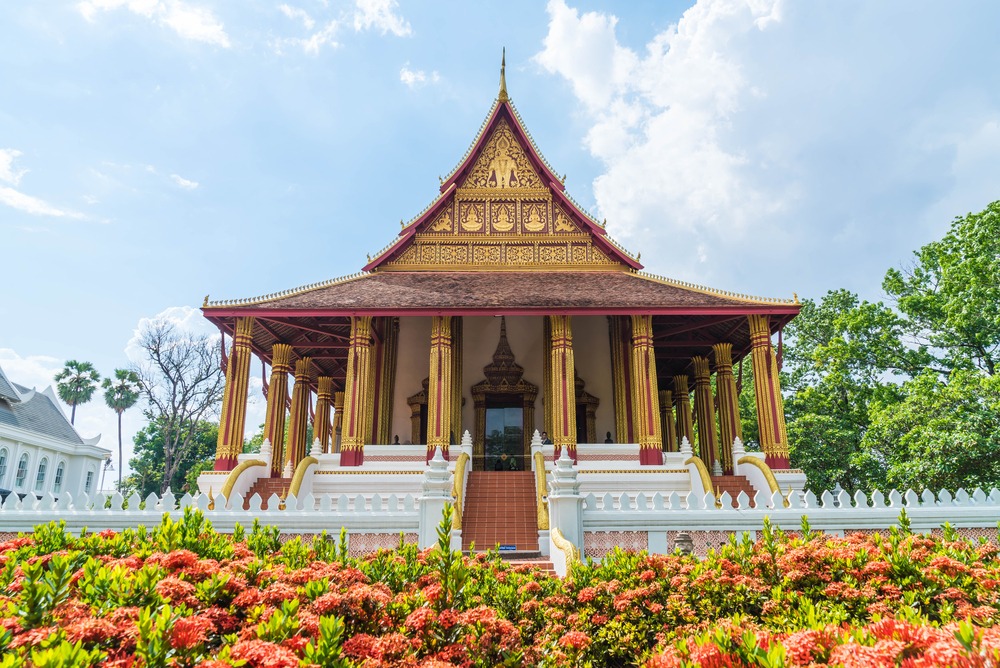
- The Hor Thammasapha temple, added during the 2010 expansion
When to visit
The site is open year-round. The dry season, from November to February, offers the most pleasant conditions, with clear skies that highlight the stupa's gilding.
The most significant period is the Boun That Luang festival, on the first full moon of the 11th lunar month (usually in November). Religious ceremonies extend over three days and three nights, within a week of festivities. Highlights include the "wax castle" parade, a tikki match (traditional Laotian hockey), alms-giving to monks, and on the final evening, a candlelit circumambulation around the stupa.
Practical information
- Opening: daily except Monday, in the morning and early afternoon (check opening hours on site)
- Entrance fee: modest, to be paid in kips upon arrival
- Dress code required: shoulders and knees covered
- Duration of visit: allow 1 to 1.5 hours to tour the site
- Photography permitted within the enclosure
How to get there
Pha That Luang is located approximately 4 km northeast of central Vientiane, in the Ban Nongbone area, and 2 km from the Patuxai. A tuk-tuk remains the most practical mode of transport from the city center. Many visitors combine a visit here with the Patuxai on the same round trip. Biking is also an option when the heat permits.
What to see nearby
The area lends itself to a half-day of exploration by combining several sites:
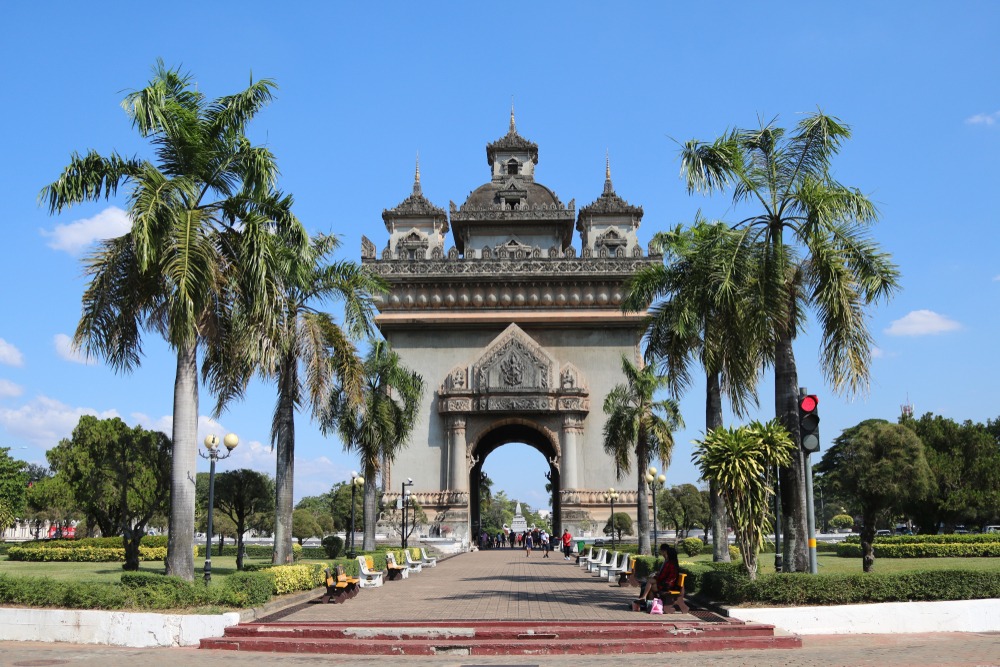
- The Patuxai, Laotian triumphal arch located on Lane Xang Avenue
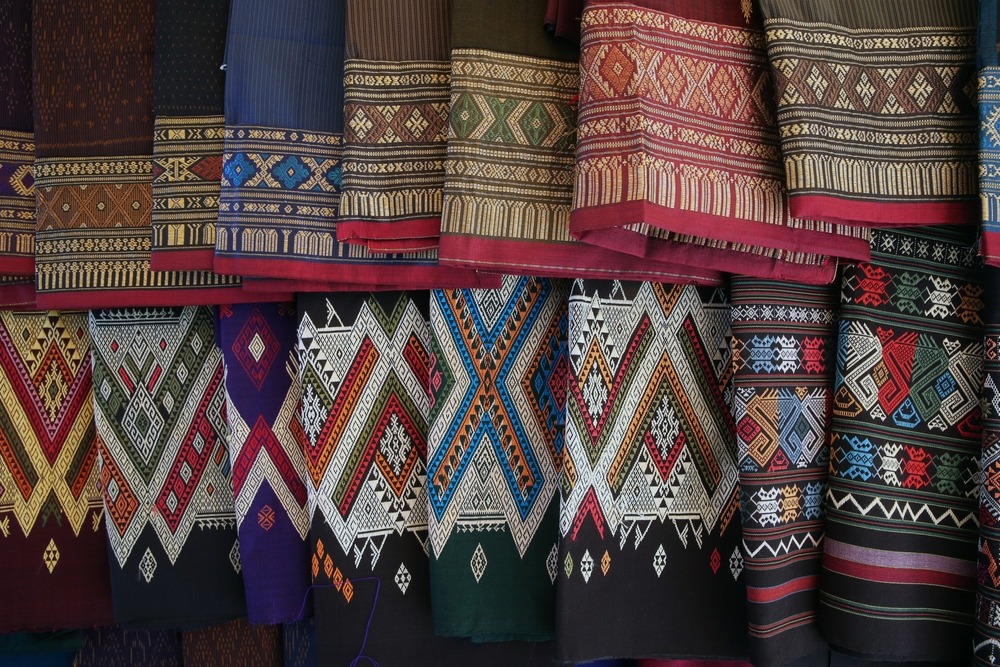
- The Mai Savanh Lao boutique-workshop, dedicated to fair-trade crafts
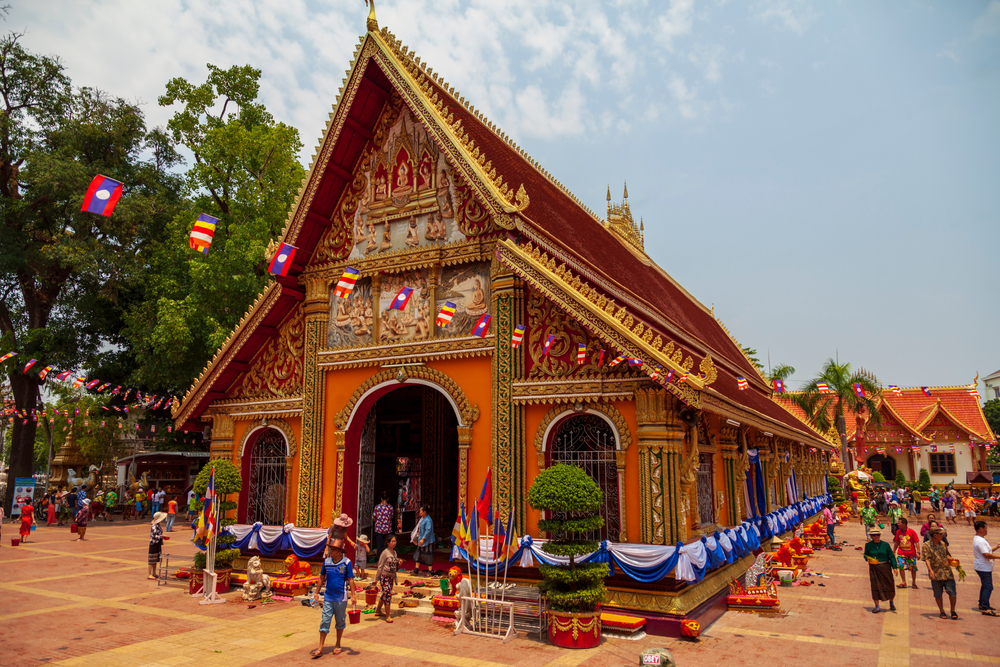
- The temples of central Vientiane
Frequently asked questions
Frequently asked questions
Yes. The structure is clad with approximately 500 kg of gold leaf, refixed and maintained during successive restoration campaigns, the most recent of which was completed in 2017.
No. The three tiers of the pyramid are not accessible to the public. The visit consists of exploring the enclosure, the cloister and gardens, and performing circumambulation at the foot of the monument.
The dry season, from November to February, is the most comfortable. To experience the site in its most intensely religious context, aim for the Boun That Luang festival on the first full moon of November.
Allow 1 to 1.5 hours on site, longer if you combine your visit with the Patuxai or if you attend a ceremony.
The site remains a place of worship. Clothing covering the shoulders and knees is expected, and it is customary to remove your shoes before entering the pavilions.
Prepare your trip
Pha That Luang naturally fits into an itinerary combining Vientiane, Luang Prabang and the Laotian countryside. To build a coherent and well-paced stay, consult our Laos travel suggestions.
Nearby
Interested in this visit?
We can include it in your personalised itinerary.