Champassak
Champassak
A former royal city at the foot of Mount Phou Kao, Champassak is home to the pre-Angkorian Wat Phou temple and serves as a gateway to the 4000 Islands and the Boloven Plateau.
Once a royal capital, Champassak today reveals itself as a peaceful town in the province of the same name. This locality in southern Laos ranks among the country's most cherished corners for its folk charm. It comes as no surprise: the town harbors numerous attractions, including the Khmer ruins of Wat Phou temple. Some of its surrounding sites also generate considerable fascination among foreign travelers: Don Daeng, the 4000 Islands, and the heights of the Boloven Plateau.
Renowned for its tranquility and unhurried pace, the town lies some 28 kilometers from Paksé, the current capital of Champassak Province. It nestles at the foot of two mountains: Phou Koa (the bun mountain) and Phou Kiou (the cliff mountain). It runs along the mighty Mekong River for 7 kilometers on one side and is bordered by vast stretches of rice paddies. It's a delightful destination for leisurely exploration.
A glimpse of history
The history of Champassak town cannot be separated from that of its province. The entire region was established between the 1st and 9th centuries under the kingdoms of Funan and Chenla. It later fell under the rule of the Khmer Empire between the 10th and 13th centuries. Only in the 18th century did it gain autonomy.
During the French occupation, it bore the name Bassak. At that time, the province had Champassak town as its capital. Today it stands as a simple locality within the same province. The capital status was transferred to Paksé.
Today
Champassak's present face blends buildings of French colonial architecture (dating from the early 20th century) with traditional wooden houses on stilts. It comprises a collection of villages where Lao Loum and Lao Thin populations reside.
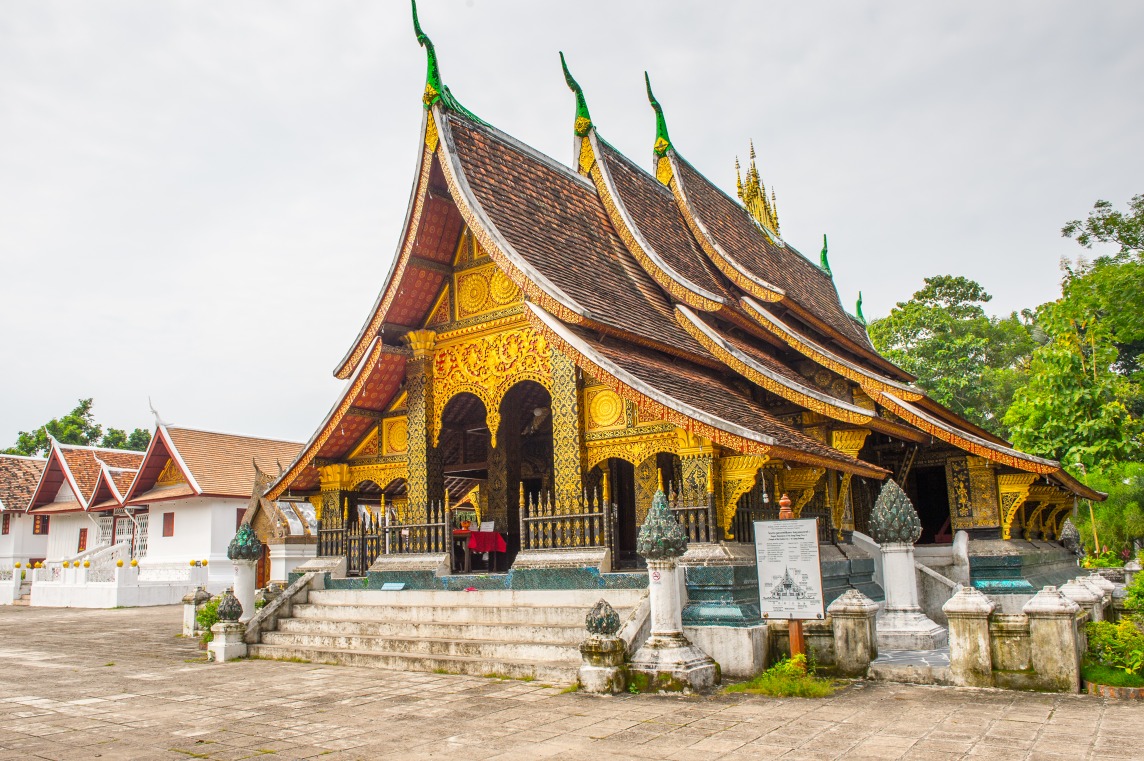
Its sole main road is bordered by two princely buildings after the roundabout heading south. Along the road to Wat Phou temple stand other small pagodas (the golden monastery or Wat Thong) and a Catholic church, the great Buddha of Sisoumang seated between two trees, as well as hotels and guesthouses of varying standards.
Monument and cultural heritage
Its cultural heritage officially includes Wat Phou, a 10-kilometer hydraulic system, and two ancient cities on the banks of the Mekong and Mount Phou Kao.
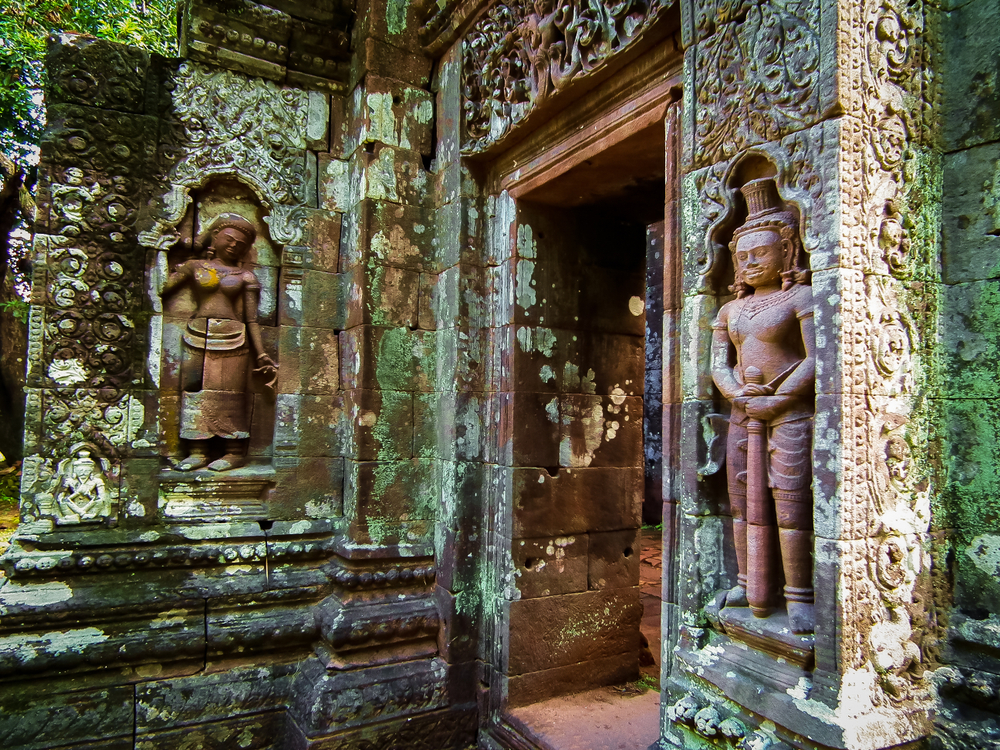
Since 2001, the Wat Phou temple complex has been inscribed on UNESCO's World Heritage List. Its beauty stems largely from its antiquity: its earliest structures date back to approximately the 5th century AD. Nevertheless, the ruins still standing generally date from the 12th century. This pre-Angkorian archaeological site is shrouded in lush forest and towering mountains. Numerous wonders adorn its grounds: the Dvarapala, the Trimurti, its sculpted facades and cliffs, its great stone elephant, and more. Moreover, Wat Phou stands alone as the last monument in Laos bearing traces of the Khmer Empire, with its temple of Nang Sida and Tao Tao, and the monastery of Tomo.
The spirit of local culture
Whether Lao Loum or Lao Thin, Champassak's population remains devoted to preserving their cultural heritage through various manifestations, including:
Its shadow theater and puppet shows
Each evening, the resonance of traditional Laotian instruments echoes through the town. This announces a performance by an ensemble of 14 artists (musicians, singers, actors, and puppeteers). They stage with wit and suspense the adventures of the Ramayana and other tales of the land.
The Wat Phou Festival
The must-see event in Champassak! It honors the discourse delivered by Buddha on his first teachings and his own passing. It takes place annually at the famous Wat Phou temple. The three days of celebration occur from the 15th day of the waning moon in the 3rd month (late January–February). It coincides with the major Buddhist festival of Makha Busa.
Laotian pilgrims (from 17 provinces and the municipality of Kampheng Nakhon) and from neighboring countries (Thailand and Cambodia) gather to celebrate (pirogue races, duck-catching games, volleyball, pétanque, cock and buffalo fights, dancing, alms-giving to monks, evening concerts, and numerous entertainments) and to honor Buddha (liturgical chants, processions, recitations).
Excursions from Champassak
Many travelers consider this town a departure point to reach by boat some of Laos's scenic wonders, including:
Don Daeng
This vast island in southern Laos appeals for its natural character and the hospitality of its inhabitants. Ideal for rejuvenation and enjoying the horizon, it offers peaceful moments on its magnificent river beaches during the dry season. A bicycle ride facilitates the discovery of its multiple mini-villages, its splendid colorful temples, its stilt houses, and its rice paddies stretching to the horizon.
Si Phan Don or the 4000 Islands
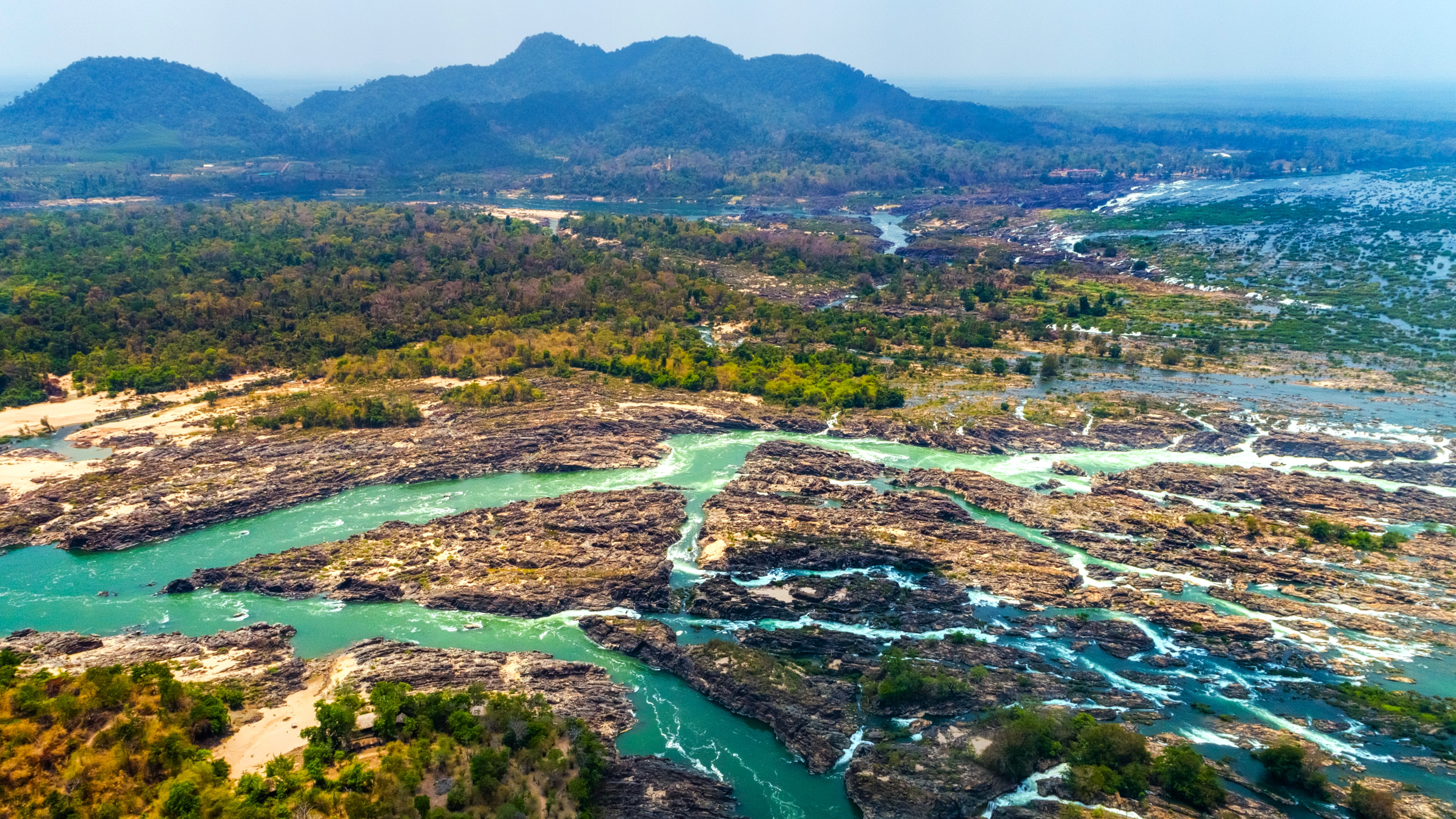
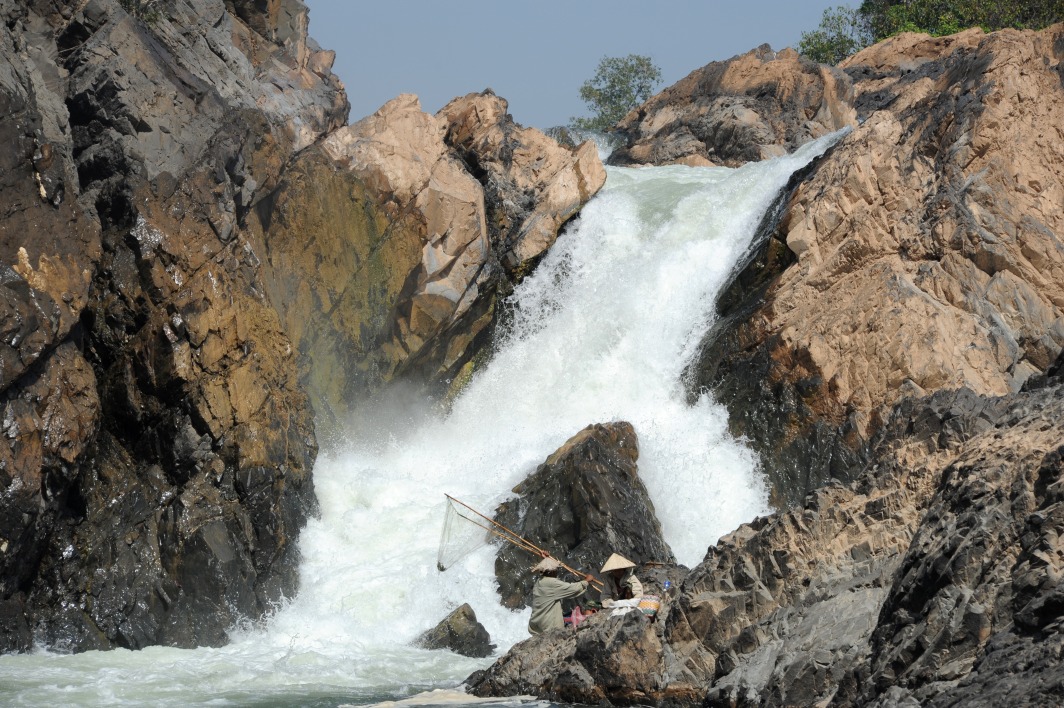
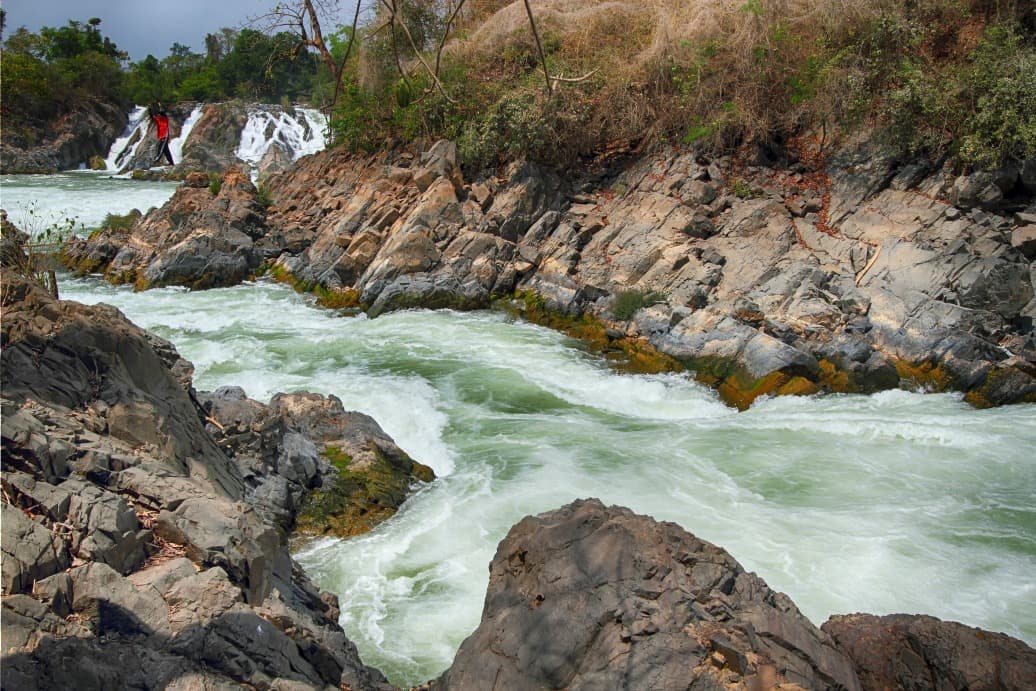
Navigating the Mekong by pirogue not only allows for a comfortable journey but also provides access to the famous 4000 Islands. These islands seduce many for their pure inspiration of leisure and rest. Don Khon, Don Det, and Kon Khon—these three main islands remain a must for genuine Laotian relaxation. The atmosphere is perfect for strolling, roaming by bicycle, and savoring the splendor of the landscape around the river.
The Boloven Plateau
Its fascinating and picturesque waterfalls (Tad Fane, Tad Lo, Itu cascades, Tad Champi, Tad Paxuam, Tat Yuang, Tat Meelok) remain the jewels of these highlands. Many travelers retain memories of trekking and hiking that linger long after departure. This area is also highly prized for its organic coffee farms, its diverse plantations (tea, cardamom, fruit, rubber, teak, and more), fertile soils, and lush vegetation.
Climate
The best times to explore the region and its surroundings fall between November and March—during the dry season. With an average annual temperature of 26.5°C, the climate proves pleasant during this period. It remains warm year-round, however. For trekking enthusiasts, note that nights can be cool.
This territory enjoys a savanna climate with dry winters and an average annual rainfall of 4666.1 mm. Traveling during the rainy season limits accessible sites and renders the landscape wilder.
From France, arriving at this former royal capital necessarily passes through Paksé International Airport. Champassak is reached from this city via:
- by bus from the South Terminal: the journey takes a maximum of 1 hour. Buses are available at the terminal until 3 p.m.
- by songthaew or shared taxi from the bus station: 20,000 kips per journey
- by minivan: 110,000 kips minimum (available only through two travel agencies in Paksé: Pakse Travel and Explore Asia)
- by scooter: this option is very convenient for experienced riders, with rental starting from 60,000 kips per day depending on the model
- by boat along the Mekong: approximately 2.5 hours to cover the distance between the two towns
To explore the town center and quickly reach peripheral sites, scooter is the better choice. For those staying in this peaceful locale, a bicycle remains equally engaging and invigorating for getting around: along the Mekong and through the surrounding countryside.
What to do?
- explore the Wat Phou temple complex and perhaps attend its annual festival
- visit the town's other temples: Wat Nyutthitham and Wat Phuthawanaram
- enjoy an evening of shadow theater Champassak-style
- unwind at Champassak Spa to prepare for your adventures across Laos
- relax along the 4000 Islands
- follow the Mekong by bicycle, motorbike, or boat and savor the riverbank and water views
- plan several days of trekking and hiking on the Boloven Plateau
- tour the diamond-shaped Don Daeng Island and enjoy its peaceful countryside charm
Want to discover this destination?
Our local advisors design your tailor-made trip.