Ho Phra Keo Museum
Ho Phra Keo Museum
Once a royal sanctuary of the Emerald Buddha, Ho Phra Keo displays in Vientiane a collection of Laotian, Khmer and Thai Buddhist art.
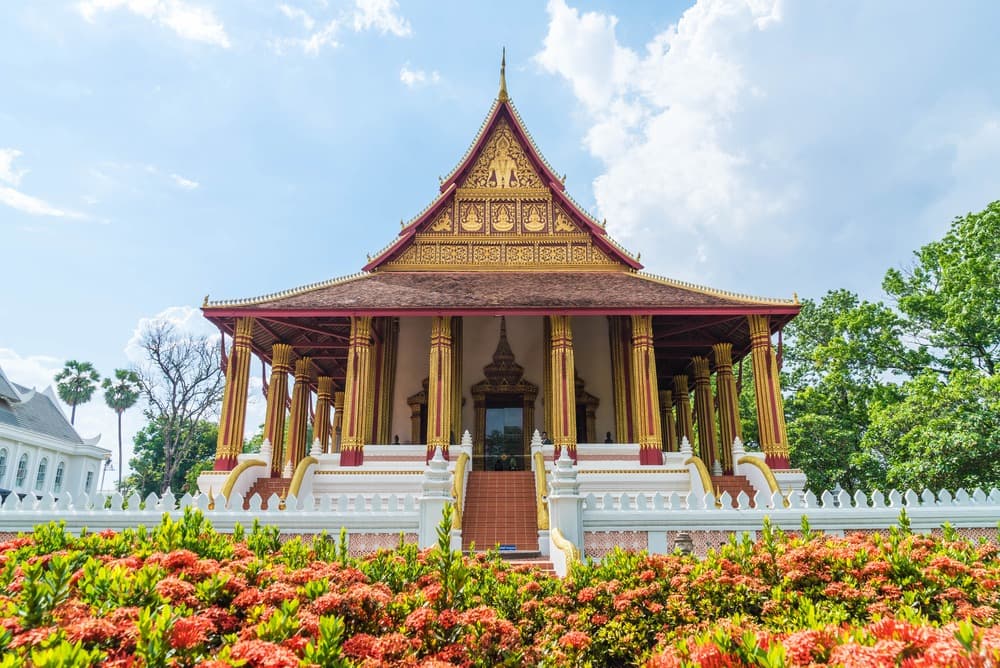
A former royal temple converted into a museum, Ho Phra Keo stands on Setthathirath Road, a stone's throw from the presidential palace of Vientiane. Built in 1565 to house the Emerald Buddha statue, it now houses one of the most representative collections of Buddhist art in Laos: stone sculptures, bronze drums, Khmer stelae and manuscripts inscribed on palm leaves.
Why visit Ho Phra Keo
The site offers three compelling reasons. Historical significance first: it was the most prestigious royal sanctuary of the Lan Xang kingdom. Architectural interest second: the reconstruction of 1936–1942, overseen by Prince Souvanna Phouma, blends Laotian, Thai and Khmer influences in a restrained ensemble. Curatorial value third: the collection spans nearly fifteen centuries of Buddhist art, from the 6th century through pieces from the 19th.
Allow 1 to 1.5 hours for a thorough tour, longer if you wish to examine the inscriptions and sculptures in the ordination hall.
A history of destruction and reconstruction
Ho Phra Keo came into being in 1565, under the reign of King Setthathirath, on the royal palace grounds. Its initial purpose was clear: to house the Emerald Buddha statue, the kingdom's palladium. The name "Temple of the Emerald Buddha" has remained attached to it. The Laotian court conducted religious ceremonies and royal rituals there.
In 1779, an invasion led by General Chakri ravaged the structure. The emerald statue was taken to Bangkok, where it remains today at Wat Phra Kaew. In 1828, Thai troops destroyed Wat Ho Phra Keo a second time. The site lay in ruins for over a century.
Reconstruction took place between 1936 and 1942 under the direction of Prince Souvanna Phouma, trained in architecture in France. This building, now deconsecrated, houses the museum today. The statue currently on display is not the original that departed for Bangkok.
What you will see on site
Exterior architecture
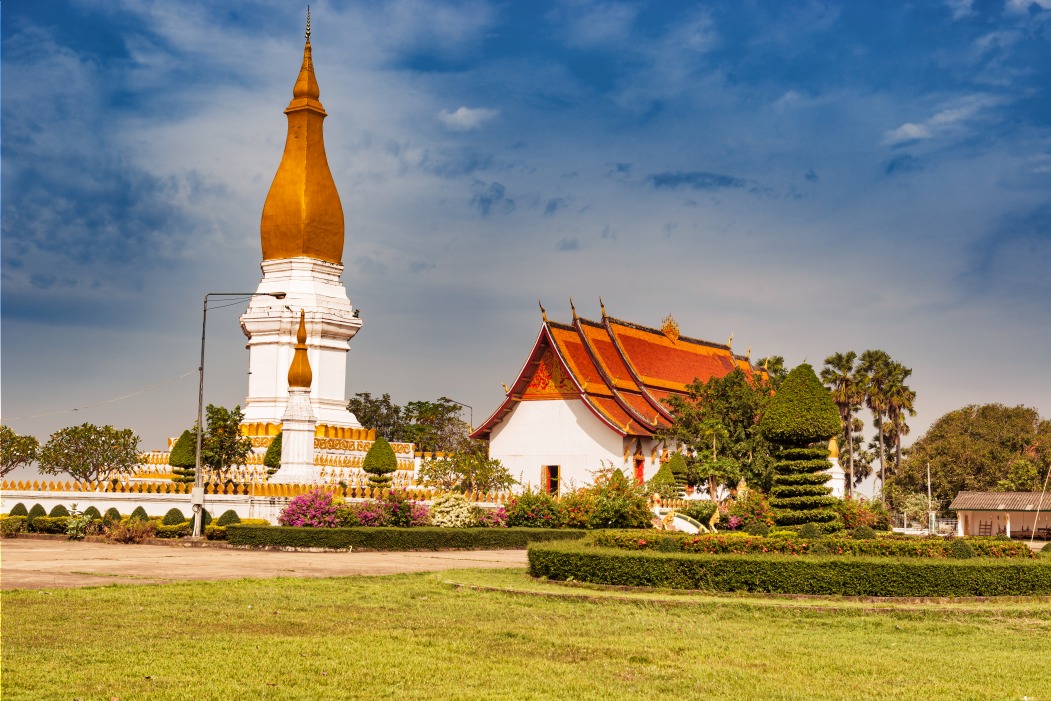
The two-tiered roof is adorned with gilded motifs. The walls are carved with scenes drawn from Buddhist texts and ancestral legends. Golden doors and intricate windows frame the entrance. A stone balustrade, ornamented with dragons, secures the access stairs. The absence of vivid polychrome reinforces the impression of an ancient edifice, despite its relatively recent reconstruction.
Interior collection
The main museum displays an altar dedicated to the Emerald Buddha, accompanied by several major pieces:
- a gilded throne that once belonged to the royal court;
- Buddhist stone tablets of Khmer origin;
- bronze drums in the shape of frogs, typical of Southeast Asian ritual art;
- ancient manuscripts inscribed on palm leaves;
- stelae bearing inscriptions in Lao and Mon.
In the main ordination hall, stone sculptures dating from the 6th century are preserved alongside Khmer stelae and wooden sculptures. A 17th-century bronze statue draws attention: it depicts the Buddha in an unusual seated posture, the so-called "chair pose," European-style.
Gardens
The building is surrounded by gardens planted with frangipani and lotus pools. The ensemble offers a peaceful setting, conducive to a rest after viewing the interior.
Practical information
- Address: Setthathirath Road, southeast of Wat Si Saket, in immediate proximity to the presidential palace.
- Duration of visit: 1 to 1.5 hours on average.
- Admission: modest entrance fee, payable in kip on site.
- Hours: open daily during daytime hours, with a break at lunchtime. Verify current hours upon arrival.
- Dress code: shoulders and knees covered, as at any Laotian Buddhist site.
- Photography: permitted outside; restrictions possible inside.
Nearby attractions
Ho Phra Keo is logically visited with Wat Si Saket, located across Setthathirath Road. This temple is Vientiane's oldest intact temple and houses thousands of miniature buddhas within its cloisters. The presidential palace, an immediate neighbour, is not open to visitors but its façade frames the avenue. Continuing southward, the Mekong riverbank (Thanon Fa Ngum) offers a pleasant stroll in the late afternoon. To plan the next leg of your Laos itinerary, explore the night markets of Luang Prabang or natural spaces such as Phou Khao Khouay National Park.
How to get there
The museum is located in Vientiane's historic centre, accessible on foot from most hotels in the district. From the lively bar and restaurant quarter, head east via Thanon Setthathirath or Thanon Fa Ngum, which runs along the Mekong. Tuk-tuks and ride-hailing apps also serve the site with ease. No dedicated shuttle is necessary.
Frequently asked questions
Frequently asked questions
No. The original was taken to Bangkok in 1779 and is now housed at Wat Phra Kaew within the Thai Grand Palace. Ho Phra Keo displays an altar dedicated to it and other Buddhist pieces, but not the original statue.
No, the building was deconsecrated after its reconstruction and functions solely as a museum. No religious ceremonies are held there.
Plan for approximately 1 to 1.5 hours, longer if you combine the visit with Wat Si Saket across the way.
The dry season, from November to February, offers the most comfortable conditions: moderate temperatures and low humidity. Visits are possible year-round, as the museum is fully sheltered.
No, the presidential palace is not open to visitors. You can only admire its façade from the street.
Extend your visit
Ho Phra Keo fits naturally into a day devoted to Vientiane's historic centre. To build a comprehensive Laos itinerary that combines Buddhist heritage, Mekong landscapes and mountain villages, explore our bespoke Laos journeys.
Nearby
Interested in this visit?
We can include it in your personalised itinerary.