Blue Lagoon
Blue Lagoon
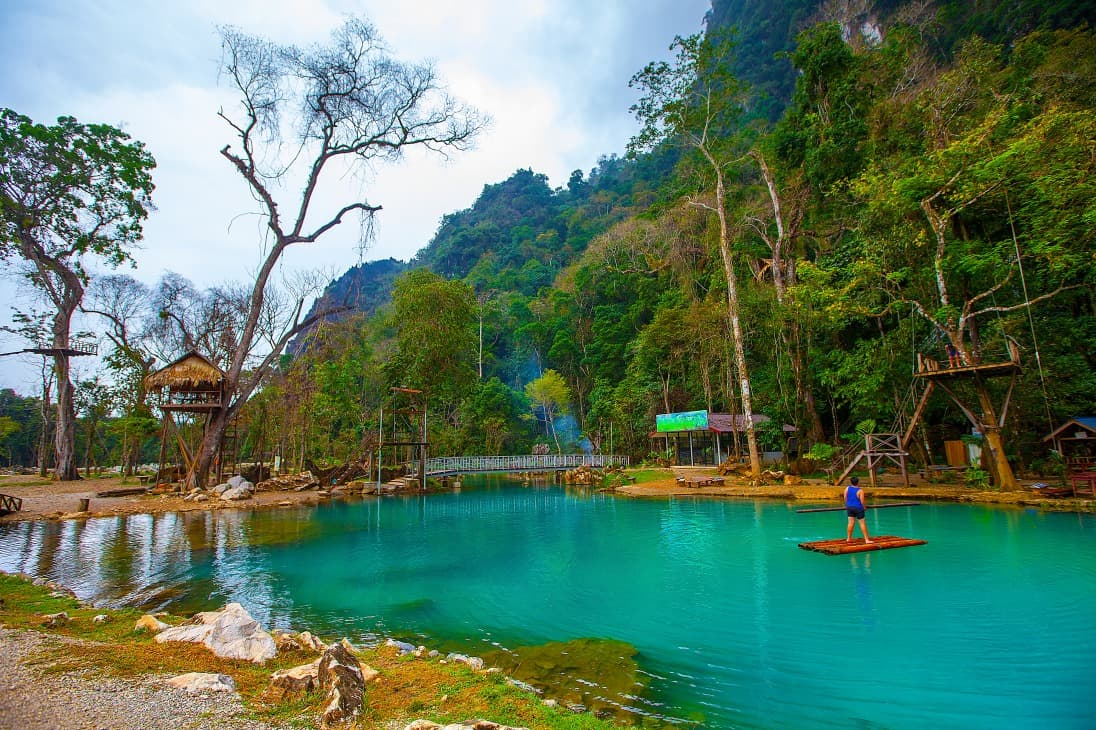
A basin of turquoise water fed by an underground spring at the foot of Phu Kham cave, Blue Lagoon is one of the standout excursions from Vang Vieng.
The Blue Lagoon of Vang Vieng is a basin of turquoise water fed by an underground spring, nestled at the foot of a limestone hill that shelters Phu Kham cave. The site combines swimming, karst views and cave exploration, in a rural area just a few kilometers west of town.
Why visit Blue Lagoon
The main appeal lies in the water's striking milky blue color, caused by the emergence of a cool underground spring. The water's low temperature contrasts sharply with the warm climate of the Nam Song plain, making swimming refreshing even at the height of the dry season.
The site is developed for enjoyable swimming: several wooden ladders provide easy entry into the water, and a large tree leaning over the basin serves as a natural diving platform, complemented by a water slide and zip line installed on the shore. It's one of the simplest excursions to organize from Vang Vieng for a half-day nature outing.
Be aware, however: owing to the site's popularity, several competing "blue lagoons" have been developed by local residents in the surrounding area (Blue Lagoon 2, 3, 5...). The historic site, the one backed by Phu Kham cave, is often referred to as "Blue Lagoon 1". Confirm your exact destination before departure to avoid any confusion.
What to see and do here
The basin and its surroundings
The lagoon is small but with areas of varying depth. The areas around the ladders remain shallow; the center of the basin is deeper. A few safety rules apply:
- avoid jumping from the tree if you cannot judge the depth;
- do not dive after consuming alcohol;
- supervise children closely, as the banks are steep in places.
Small huts along the basin's edge serve drinks and light refreshments, allowing you to extend your stay.
Phu Kham cave
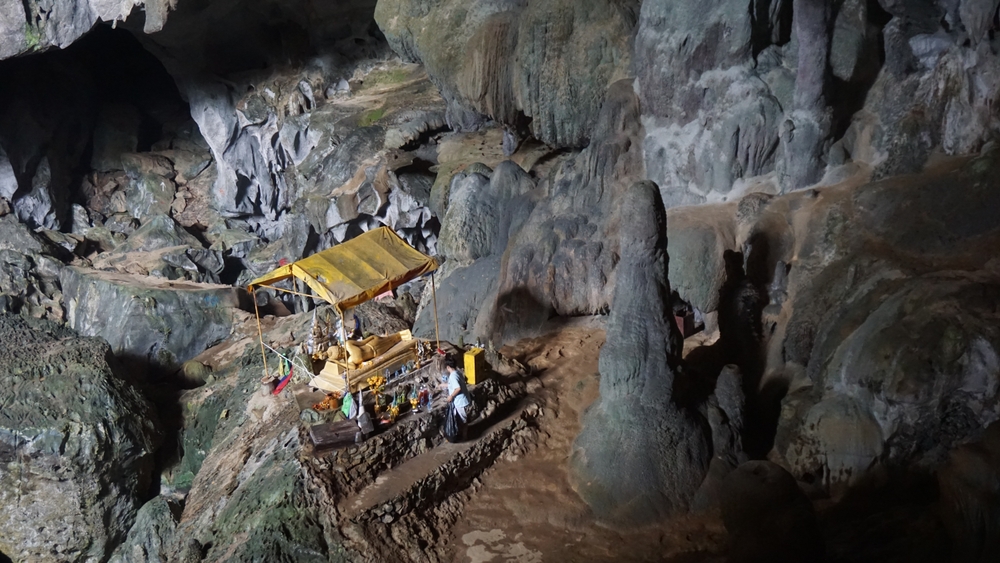
Just above the lagoon, a steep trail leads to Phu Kham cave, also known as the "golden cave" because of the golden reclining Buddha that rests in the first chamber. The climb involves a few dozen meters of elevation gain via carved steps and rocky passages.
Inside, a flashlight is essential (available for rent at the entrance if needed). The rocks are slippery, natural light is virtually absent beyond the first chamber, and it's advisable to stay with a guide or local companion to avoid getting lost in the galleries.
Practical information
- Entrance fee: modest site entry, moderate fee for flashlight rental. Rates vary; check on site.
- Opening hours: open during daylight, closing in late afternoon. Best to arrive in the morning to enjoy the peace before tour groups arrive.
- Equipment: swimsuit, towel, closed-toe shoes for the cave, headlamp if possible, water, insect repellent.
- Safety: no lifeguard on duty; exercise caution with young children and inexperienced swimmers.
When to visit
The dry season, November to March, offers the best conditions: clear water, easy access, passable bamboo bridge. Late dry season (April-May) is very hot, making swimming particularly pleasant but the climb to the cave more strenuous.
During the rainy season (June to September), water can become murky after heavy downpours, the bamboo bridge becomes slippery or impassable, and trails to the cave are muddy. Visitor numbers are significantly lower, however.
To avoid crowds, visit early morning or late afternoon on weekdays.
How to get there
Blue Lagoon lies west of Vang Vieng, across the Nam Song River. Two bridges cross the river from town: a permanent bridge, passable year-round, and a more picturesque bamboo bridge not recommended on rainy days.
Three options for the journey:
- Shared tuk-tuk: the simplest option, negotiated as a round trip with waiting time;
- Bicycle or scooter rental from Vang Vieng, about thirty minutes along a dusty track in the dry season;
- Organized excursion often combining the lagoon, cave and other points of interest in the valley.
Nearby attractions
Blue Lagoon integrates easily into a Vang Vieng stay and a broader Laos itinerary:
- Vang Vieng and its karst landscape along the Nam Song;
- Phou Khao Khouay National Park, another hiking and waterfall destination to the southeast;
- Nam Ou River, a natural extension for routes heading north;
- Luang Prabang Night Market, the classic next stop after Vang Vieng.
Frequently asked questions
Frequently asked questions
Plan your trip
Blue Lagoon fits naturally into a northern Laos circuit between Vientiane, Vang Vieng and Luang Prabang. To build a customized itinerary, check out our Laos tours.
Interested in this visit?
We can include it in your personalised itinerary.