Tham Phu Kham Caves
Tham Phu Kham Caves
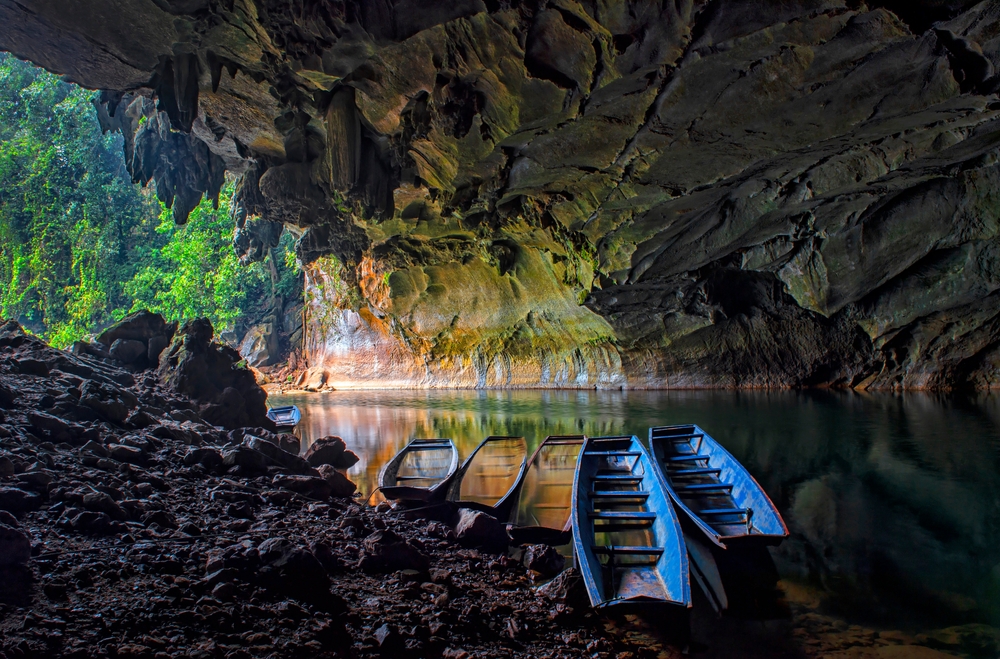
Just outside Vang Vieng, Tham Phu Kham combines an active Buddhist shrine, limestone chambers and a turquoise natural pool nestled at the base of a dramatic karst massif.
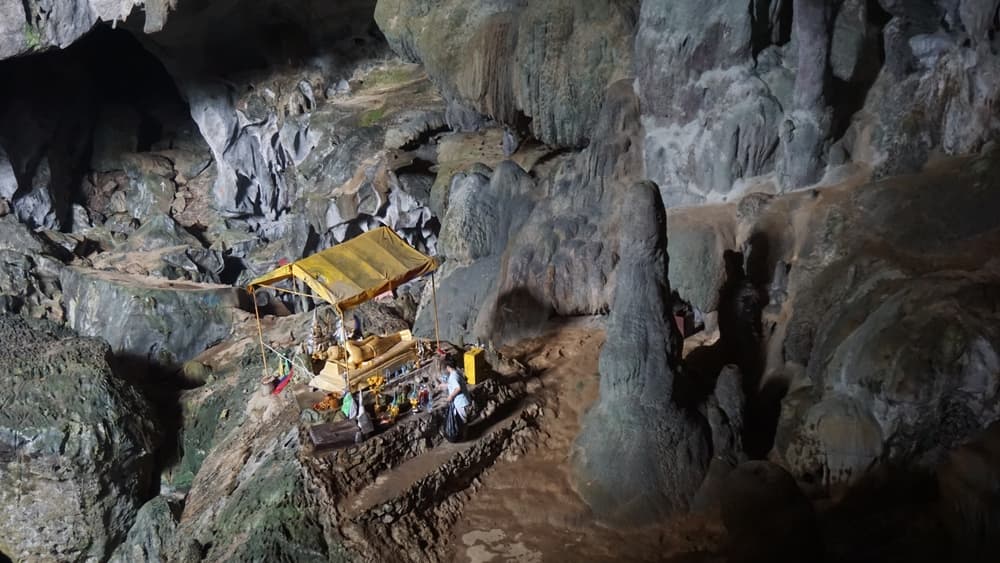
Tham Phu Kham caves lie just a few kilometres west of Vang Vieng, in Vientiane province. Carved into a limestone massif, they shelter a reclining bronze Buddha that draws pilgrims from across the region. The jungle trek, the turquoise pool at the foot of the rock face and the atmosphere inside the chambers make this an excursion in its own right from town.
Practical Information at a Glance
- Entry: paid (site access fee)
- Access: bicycle, scooter or tuk-tuk from Vang Vieng; crossing the Nam Song by boat is typically included in the journey
- Dress code: shoulders and knees covered to enter the main cave (active place of worship)
- Footwear: removed before approaching the Buddha
- Suggested duration: 2 to 3 hours (cave + swimming)
- Torch: recommended for exploring the darker chambers
What to Expect
The main cave opens into a vast chamber where a reclining bronze Buddha presides over offerings and stalagmites. Secondary galleries extend deeper into the rock; some require crawling. Below, a turquoise natural pool fed by underground springs invites swimming. Rope swings and basic diving platforms are scattered around the water's edge.
History and Context
The name Tham Phu Kham roughly translates to "cave of the golden mountain". The site has been venerated by Laotians for generations: families come to leave offerings at the reclining Buddha, particularly during Buddhist festivals. The cave gained international attention with Vang Vieng's tourism boom in the 2000s.
Highlights of Your Visit
The Jungle Trek
A steep path carved through dense vegetation leads to the cave entrance. The climb takes roughly fifteen minutes and rewards you with views over Vang Vieng's plains and the surrounding karst peaks.
The Reclining Buddha
The centrepiece of the site, this bronze statue rests in the main chamber. Natural light filtering through the cave opening creates a serene atmosphere, heightened by incense sticks and flowers left by pilgrims.
The Natural Pool
At the foot of the massif, the blue-green pool is the gathering spot for visitors by late morning. The water stays refreshing even during the hot season. Swimming is free; wooden huts provide changing facilities.
Etiquette and Visiting Guidelines
- Remove your shoes before approaching the Buddha and altars.
- Dress modestly when entering the cave (shoulders and knees covered).
- Avoid pointing your feet toward statues.
- Keep your voice low in the main chamber; pilgrims may be in prayer.
- Do not touch offerings or statues.
Photography Tips
Natural light at the cave entrance is best mid-morning, before crowds arrive. Inside, a torch or phone flash is essential. For the pool, lighting is optimal between 9 and 11 am, when the sun illuminates the water directly. Always ask permission from pilgrims before photographing them near the altars.
Location and Access
The site sits approximately 6 km west of Vang Vieng. The route crosses rice paddies before reaching the Nam Song bank, which you cross by boat. From the landing, a dirt path leads to the base of the massif. The bike ride from central Vang Vieng takes about 20 to 30 minutes. Scooter access is possible to the parking area by the river. The site is not wheelchair-accessible due to the steep ascent.
Nearby Attractions
- Vang Vieng — the essential base, with riverside restaurants and kayak agencies.
- Tham Jang Cave — another cave accessible from Vang Vieng, historically used as a refuge during invasions.
- Blue Lagoon — a popular natural pool in the Vang Vieng area, accessible by bicycle.
Interested in this visit?
We can include it in your personalised itinerary.