Luang Namtha
Luang Namtha
Gateway to northern Laos, Luang Namtha combines Nam Ha trekking, ethnic villages, and morning markets in a pristine valley.
Like most cities and towns in Laos, Luang Namtha holds little appeal within itself—it's often viewed merely as a stepping stone to excursions beyond its center. Rumors certainly suggest this. True, much of its urban landscape bears the scars of the past: remnants of bombardment during the Vietnam War. Yet the town captivates with the beauty of its surroundings, the warmth of its local residents, and its simple way of life. The absence of tour operators and luxury hotels has allowed this locale to preserve traditional Laos. A tranquil destination, travelers come here to recharge and breathe in fresh air, not to experience wild nights.
History
Archaeological evidence suggests the earliest settlements in Luang Namtha Province date back over 6,000 years. Stone tools discovered in the Nam Jook river valley (Vieng Phoukha) and cliff paintings at Nale testify to this ancient presence.
According to the Xieng Khaeng chronicles, significant population migrations occurred between the 16th and 19th centuries in the area south of Muang Sing: in Vieng Phoukha and throughout the Nam Tha Valley. In 1587, 17 families of Tai Yuan—originally from Chiang Saen—settled in this valley near the village of Vieng Tai.
Later, Muang Houa Tha was established in 1642 in the same valley. In 1628, the temples of That Phoum Phouk and That Phasat were built as symbols of friendship between this settlement and Chiang Saen.
Muang Houa Tha experienced great prosperity during the 17th century. However, a series of natural disasters disrupted this stability in early 1709, forcing the population to relocate to Muang Sing, Muang Nan (Thailand), and Muang Ngerm (Sayabouli). For 155 years, the Nam Tha Valley lay abandoned.
In 1890, Chao Luangsitthissan brought the Tai Yuan back to the region to rebuild Muang Houa Tha. Two years later, he constructed the renowned Wat Luang Khon. In 1894, the arrival of French, Siamese, and British colonists placed the locality under French administration. New settlers soon populated the valley and the banks of the Nam Tha River: the Tai Dam in Tang Jai village, Tai Neua, Tai Kao, Akha, Lanten, Lahu, and Yao peoples.
France withdrew from Laos around the 1950s after Indochina's defeat. Yet rather than finding peace, Muang Houa Tha became embroiled in conflict between the Royal Lao Army (RLA) and the Pathet Lao forces. The RLA troops fought fiercely against the Pathet Lao and the Vietnamese People's Army during the Battle of Luang Namtha between January and May 1962, but to no avail. Hostilities ceased following the RLA's withdrawal.
On May 6, 1962, the region fell under Pathet Lao control and was renamed Luang Namtha Province. It had previously formed a single province with Houa Khong under royalist control.
Between 1975 and 1983, the two sectors were divided into distinct territories. As a result, the town of Luang Namtha, capital of its namesake province, relocated 7 km in 1976 due to severe flooding and the devastation of the Indochina War.
Today
Far from clichés of subjugation and oppression, this town now defines itself as a charming destination with two distinct faces: its "new" town to the north with clean streets and a relaxed atmosphere, and its "old" town scarred by 1970s bombardments. For those seeking authentic discovery, a wealth of activities awaits: cycling, hiking, and trekking to mountain ethnic communities within its National Protected Area, among others. Essential attractions include:
Nam Ha National Park
A protected area since 1993, this place draws visitors with its remarkable fauna and flora. With considerable luck, one may encounter wild animals such as tigers and elephants. It's the ideal experience for jungle trekking enthusiasts.
Isolated villages with traditional stilt houses
Si Ban Pieng Ngam appeals for its artisanal activities, while Ban Nam Ngaen fascinates with its Lao Lao distillery. Tai Deang and Tai Kao inhabit these remote settlements. Located 6 kilometers from Luang Namtha, the celebrated Lanten village of "Ban Nam Dee" captivates with its bamboo paper production and the Nam Dee waterfall.
Muang Sing Morning Market
Some 50 km from Luang Namtha, the remarkable Muang Sing morning market (6 to 8 a.m.) displays and sells to the highest bidders poppy seeds, fruits and vegetables, rice, fresh fish, confections, ginger, dried rat, and unusual grilled skewers (bat, frogs, squirrels, cockroaches, insect larvae, etc.).
The Tribal Museum of Muang Sing (admission: 5,000 kips per person; Akha film screening: 5,000 kips; hours: Monday to Friday 9:00-11:30 a.m. and 1:30-3:30 p.m.)
A former residence of Prince JaoPha, this museum displays ethnic costumes and presentations about Laos's cultures and history.
Luang Namtha Provincial Museum
Crafted and ethnic objects, a collection of Buddha paintings, and traditional weapons are exhibited here.
The traditional Tai Kalom house in Ban Vieng village
This structure follows Kalom architecture (formerly Tai Yuan).
Among the region's most beautiful temples are:
Wat Mahaphot with its KouVieng ramparts and the legend of its ruins
Xieng Tae Min in Muang Sing with its Stupa containing Buddha's reputed apple, its fountain, and sacred stone
That Phoum Pouk with its new stupa and ruins of the original monument
In the main town, near the airport: the grand Wat Ban Luang Khon, Wat Ban Vieng Nuea, and Wat Ban Vieng Tai
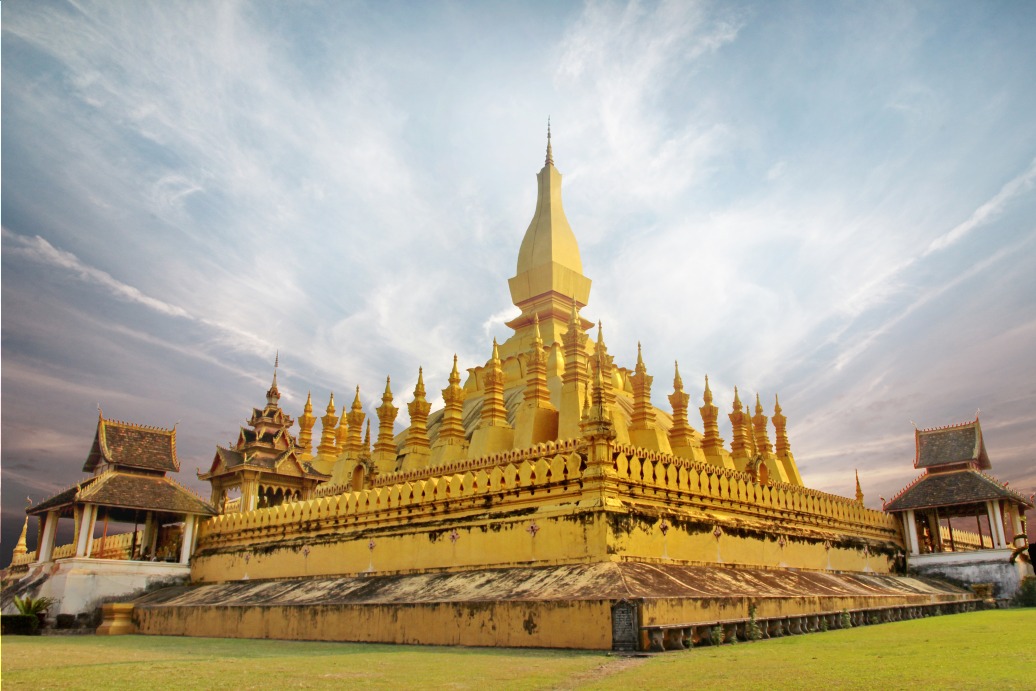
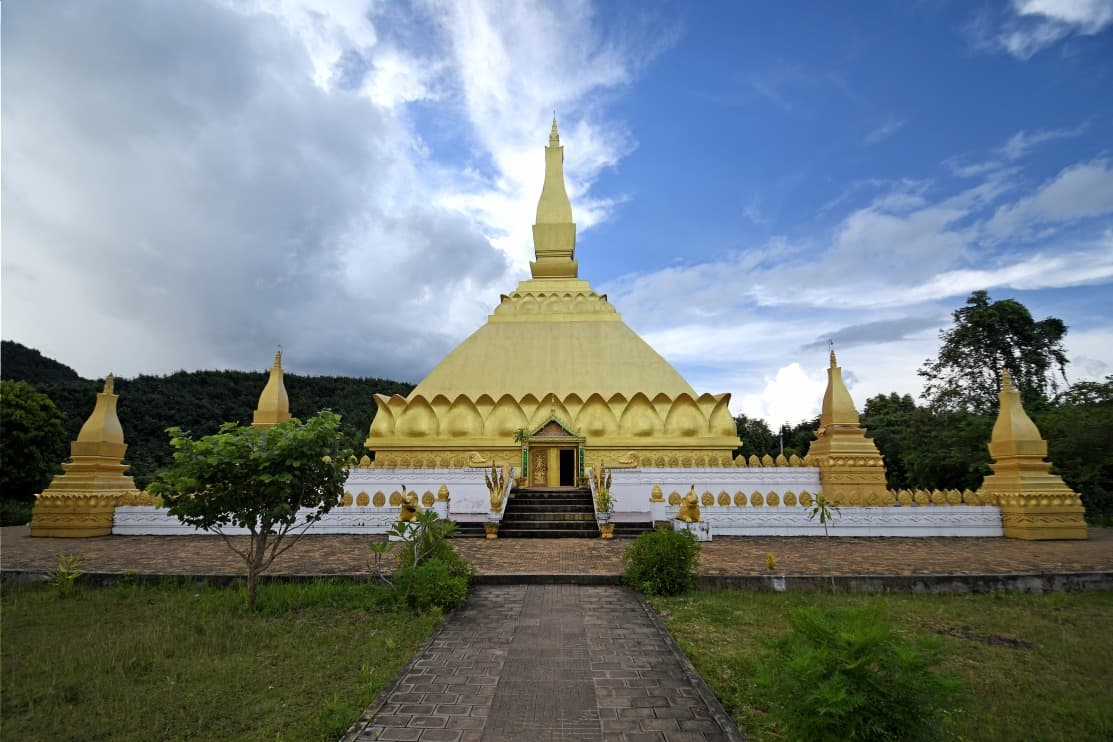
Luang Namtha Stupa, the second friendship stupa, rebuilt in 2004
Beyond tourism, residents earn their livelihood through agriculture, lignite and copper mining, craftsmanship, wood processing, and transportation.
Climate and Geography
Capital of its namesake province, the city of Luang Namtha lies in northwestern Laos within Namtha District. It's the province's largest city. The name means "the area around the Tha River," and it nestles in the broad valley of this river (a Mekong tributary originating at the Chinese border). The landscape is scattered with rice paddies and surrounded by towering mountains.
The province's climate features a rainy season from May to October and a dry season from November to February. Temperatures can exceed 40°C.
Since its capital sits in a basin at 700 meters elevation, the dry season brings pleasant conditions. Days are mild (averaging 25°C), and nights are cool.
Practical Information
Here's an essential survival kit of information for any traveler organizing a visit to Luang Namtha:
· Most villages lack electricity.
· Internet cafés dot the main street, and some guesthouses offer free Wi-Fi.
· Two banks and a post office exchange cash and traveler's checks.
· BCEL ATMs allow maximum withdrawals of 1,000,000 kips with a 2% service fee.
By Air
Luang Namtha Airport operates Lao Airlines flights to and from Vientiane. Shared tuk-tuks wait outside the terminal.
By Road
Bus or minibus travel is available from neighboring countries: China (Mengla and Jing Hong) and Vietnam (Dien Bien Phu).
Travel is also possible from other Laotian towns. From Luang Prabang, the journey takes one to two days by bus or truck-bus, depending on road conditions and season.
By Boat
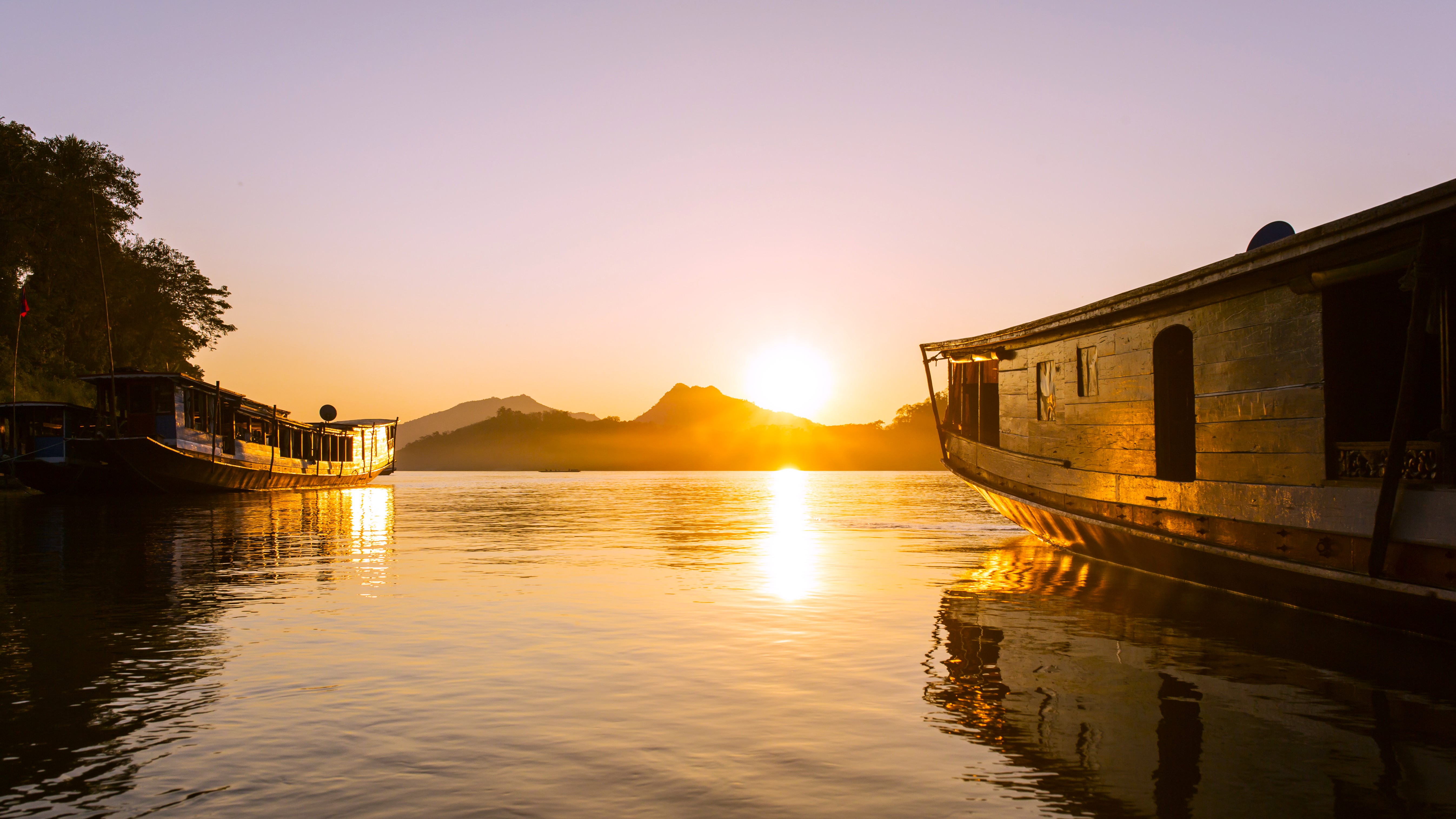
During the dry season before November, travel on the Nam Tha River and the Mekong is possible via motorized longtail boat. The crossing from Houei Sai takes two days, while from Pak Beng takes two and a half days.
In Luang Namtha, dirt roads are well-suited for hiking and mountain biking, though the southern asphalt road is pothole-ridden and the road to Muang Sing is in poor condition. To explore the town and surroundings:
On foot: the two towns of Luang Namtha are only 6 km apart, making walking convenient.
By tuk-tuk: rides cost a minimum of 10,000 kips per person.
By bicycle: a town map costs 3,000 kips at Internet KNT. Cycling routes are marked on it. To rent a mountain bike, inquire at shops along the main road.
By semi-automatic motorcycle: this is an excellent way to visit surrounding villages and appreciate the beauty of its rustic countryside (Muang Nale, Vieng Phoukha, Muang Sing). Daily rental runs between 30,000 and 50,000 kips, including helmets and maps.
By car rental: pick-ups with drivers are available for hire in Luang Namtha. Though pricier, this option covers greater distances.
By bus: the most popular choice for reaching Muang Sing and Oudomxai.
Things to Do:
· Experience artisan shopping at the Muang Sing morning market
· Learn sericulture fundamentals from surrounding villages and silk-weaving families
- Arrange a boat excursion on the Nam Tha River to Pak Tha between January and March
- Embark on an adventure trekking through the lush jungle of Nam Ha National Park
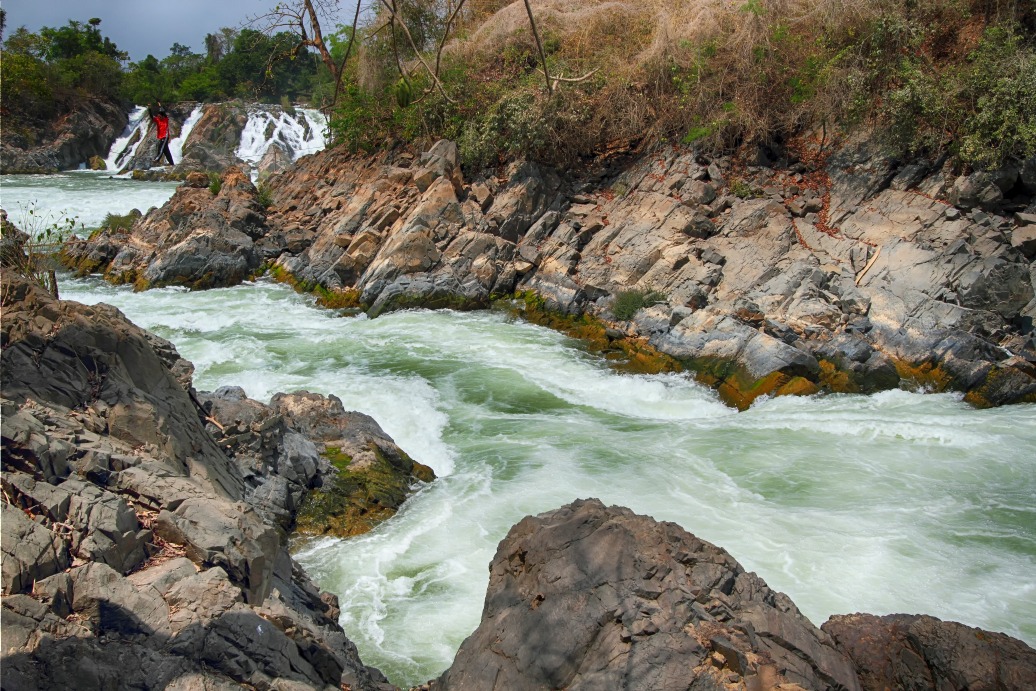
- Visit the Nam Dee waterfall and exchange smiles with Lanten women crafting bamboo leaves
· Hike toward minority villages hidden in nearby hills
- Choose a motorcycle road trip to savor its beautiful countryside
- Discover Vieng Phoukha, 50 km from Luang Namtha, and marvel at its limestone karst landscape and Kao Rao caves
- Visit Muang Sing to see its tribal museum and the Gneung Phou Ku Lom waterfall
- Relax in one of the herbal saunas for a plant-based bath and soothing massage
· Visit the town's pagodas one by one
- Taste the renowned Lao Lao rice whisky (a potent spirit of 50 to 60 percent alcohol)
Want to discover this destination?
Our local advisors design your tailor-made trip.