Ethnic minorities of Luang Namtha
Capital of its namesake province, Luang Namtha is a sought-after destination for many travelers passing through Laos.
Capital of its namesake province, Luang Namtha is a destination sought by many travelers passing through Laos. The Namtha, a tributary of the Mekong that winds through this city in northern Laos and inspired its name, offers remarkable biodiversity within this commune of 30,000 inhabitants and in the surrounding villages. Numerous treks, hikes, and explorations are organized daily. These are excellent ways to easily meet the minorities present here, who form a significant part of the region's authenticity and traditional character.
Recently touched by Chinese immigration, the city bordering the Middle Kingdom, Luang Namtha is developing accordingly but still retains remnants of regional traditional diversity. These remains are largely preserved thanks to the presence of minorities in the few villages nearby. But these ethnicities too arrived from China in the past. The area, somewhat isolated as it is surrounded by mountains, abounds with rice paddies and logically places rice cultivation as a cornerstone of its history and current development.
The Lantens
Arriving from China in the 15th and 16th centuries, the Lantens, related to the Yao Miens, are a Taoist people. This religion has endured since their departure from China toward Vietnam, Thailand, and northern Laos. Lanten men must, to be recognized by the spirits and elevated to the rank of ancestors of their family, learn to write in Chinese, assimilate the fundamental principles of religion, and be ordained as Taoist priests after a lengthy 3-day ceremony.
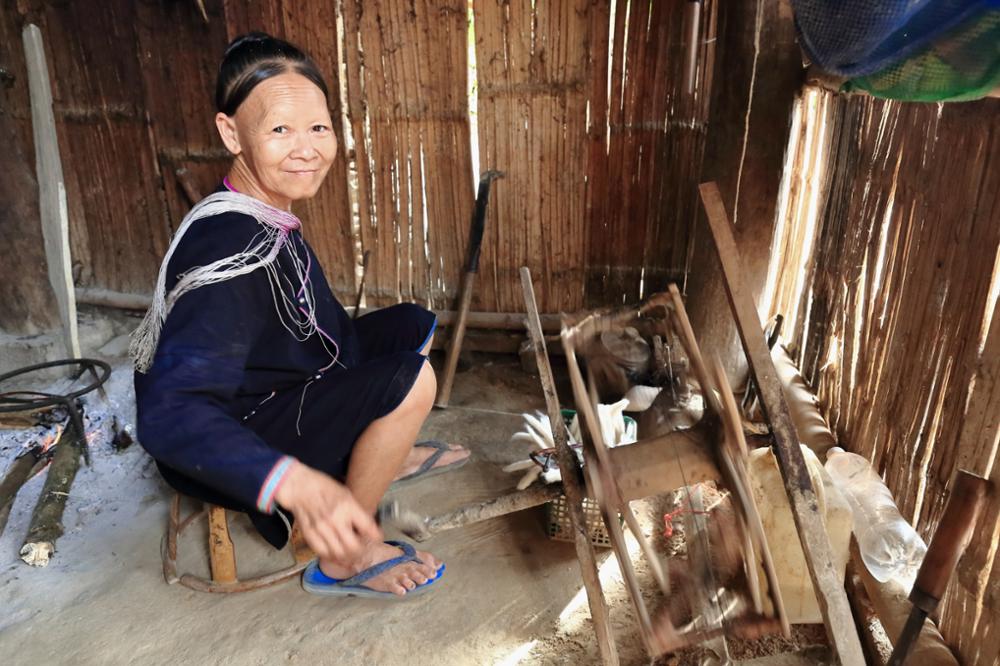
Beyond rice cultivation, the Lantens around Luang Namtha engage in other professional activities such as bamboo paper production, or cotton weaving. The latter must be steeped in coconut milk after being spun, and before being dyed, to make it sufficiently strong. Cotton flowers are very common in the mountains surrounding Luang Namtha. The women of the tribe then use this material for embroidery. Dressed in their long black vests, they have a reputation for being excellent seamstresses. This people believe that one can even judge a woman's qualities as a mother and wife according to her embroidery skills.
The Akhas
The Akhas are an animist mountain people who emigrated from China to Burma, Thailand, and Laos about 100 years ago, but are today found only in the north of the latter. Although they do not have their own writing system, the Akhas are extremely attached to their history and traditions. It is said that some men are capable of tracing their family tree back over 60 generations, allowing them to perpetuate their knowledge.
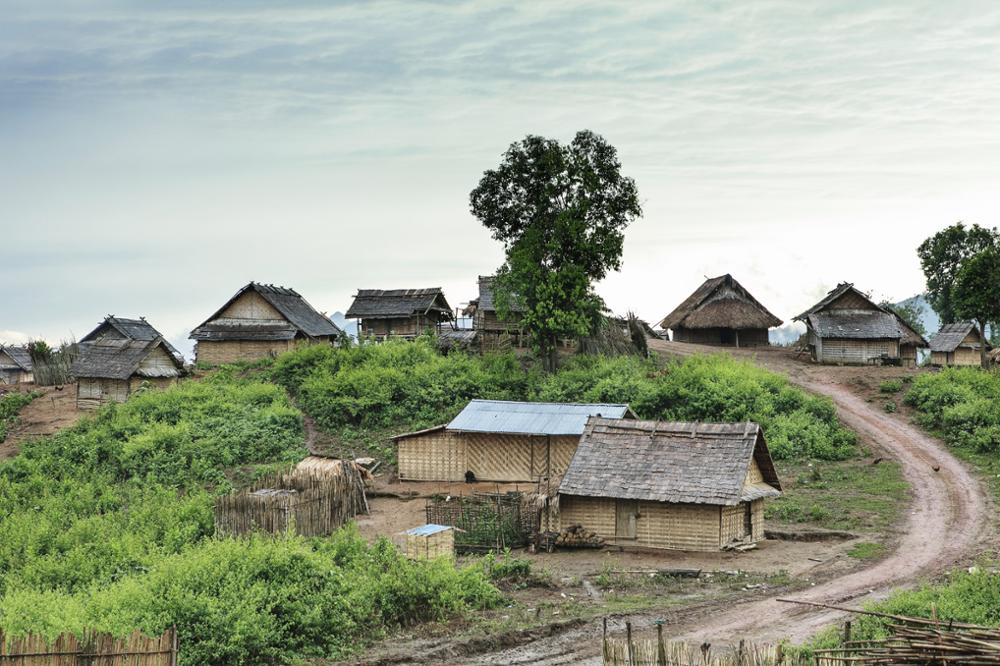
This people, nomadic or semi-nomadic, move more or less regularly through the mountains surrounding Luang Namtha. Their villages are highly characteristic, and you will have no trouble recognizing them. They feature a large entrance gate that symbolizes the boundary between the world of humans and that of spirits. This portal must protect the population against thieves, murderers, wild beasts, and diseases. A swing is also installed in the center of each Akha hamlet. It is used during the harvest festival in August and September. Residents gather around it to have fun and relax. As you enter the village you will recognize the women by their pharaonic-style black headdress adorned with white stones.
Frequently asked questions
The Lantens are a Taoist people related to the Yao Miens, who arrived from China in the 15th and 16th centuries. They settled in Vietnam, Thailand, and northern Laos. You can meet them in the villages around Luang Namtha during treks organized by local agencies. Lanten women are recognized for their long black vests and embroidery skills.
The Akhas are a semi-nomadic animist mountain people, today found primarily in northern Laos. Without their own writing system, they transmit their history orally, with some men able to recite over 60 generations of their family tree. Their villages are distinguished by a large gate symbolizing the boundary between the world of humans and that of spirits, and by a central swing used during the harvest festival in August and September.
Several local trekking agencies in Luang Namtha offer day trips or multi-day excursions to visit the Lanten and Akha villages in the surrounding area. It is recommended to use a local guide to respect the customs of the communities and maximize the cultural experience. Contact the tourism office of Luang Namtha province for up-to-date information on available operators.
The dry season, from November to April, is generally the ideal time to visit Luang Namtha and explore the ethnic villages in the surrounding mountains. The trekking trails are more passable and the vegetation less dense. If you wish to attend the Akha harvest festival with its traditional swing, plan your visit for August or September, during the wet season.
Among the Lantens, embroidery is much more than simple craftsmanship: it is considered a reflection of a woman's qualities, including her abilities as a mother and wife. Lanten women create their fabrics from cotton steeped in coconut milk to strengthen it, then carefully dye and embroider the cloth. This skill is passed down from generation to generation and constitutes a strong identity marker of the community.