Northwest and Mekong
From the Mekong of teak merchants to Akha villages on the Chinese border, Laos's most rural region, explored by slow boat and on foot.
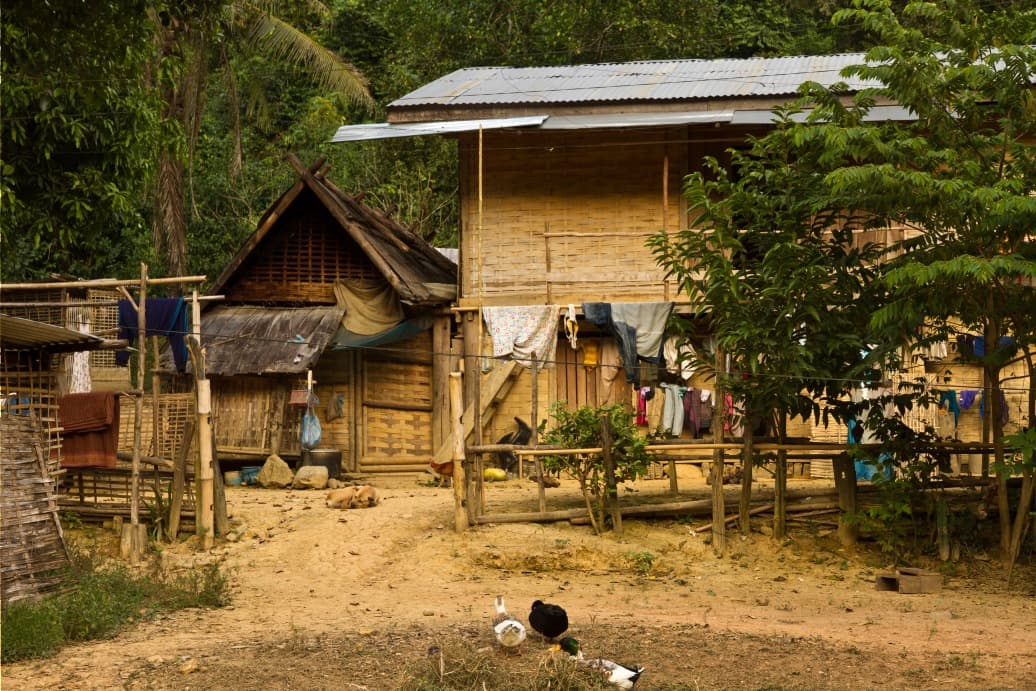
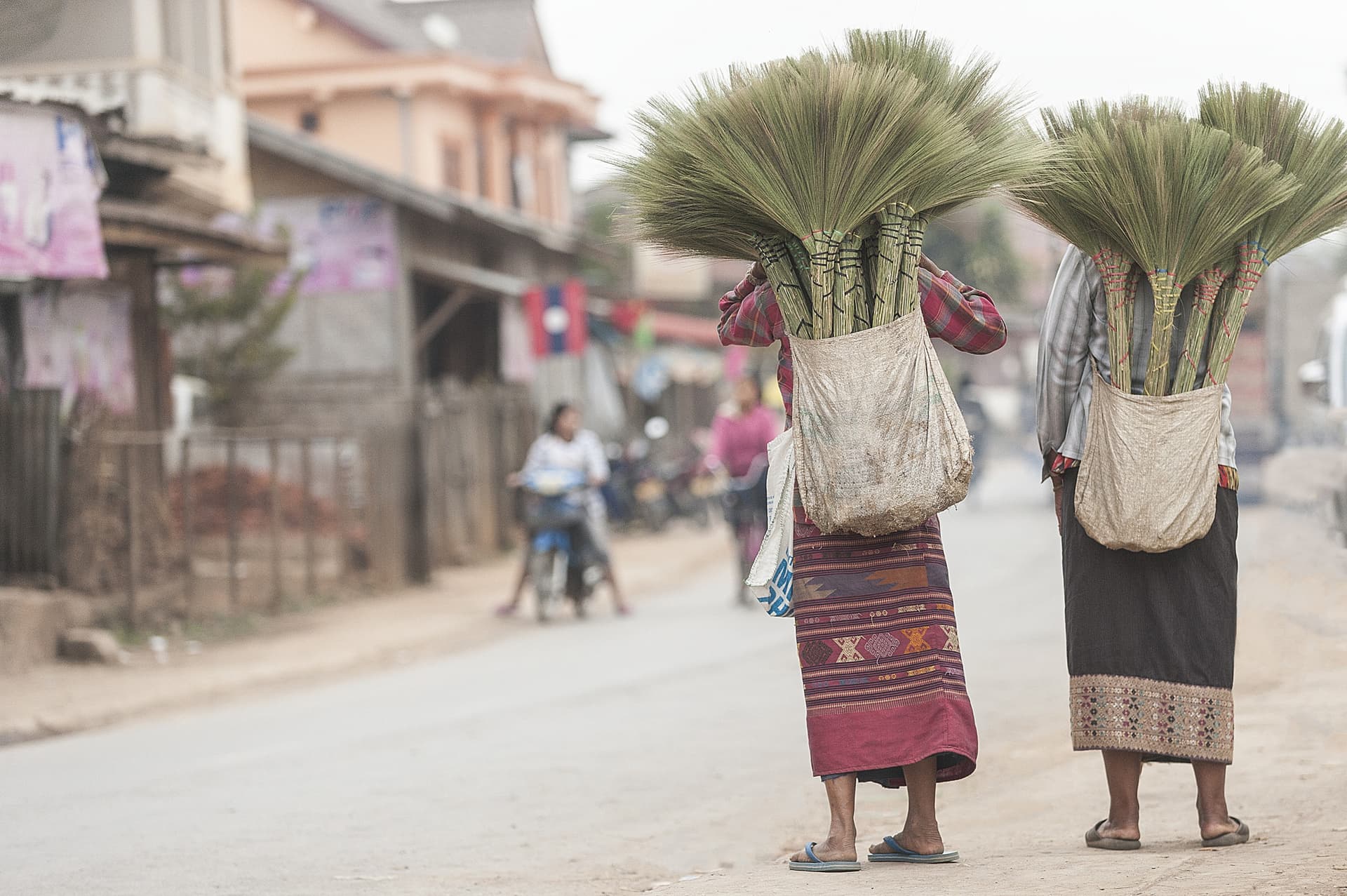
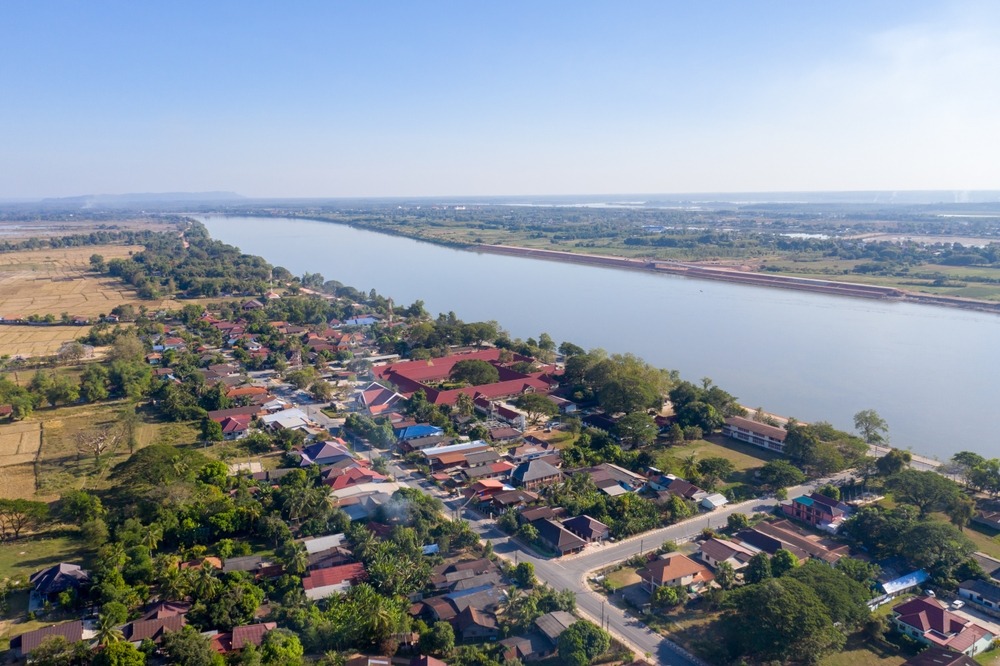
Northwestern Laos is organized around two axes: the Mekong, which marks the border with Thailand for nearly 300 kilometers between Huay Xai and Pakbeng, and Route 3, which heads toward China via Luang Namtha and Boten. It is the least populated region of the country, characterized by medium mountains covered in dry forest, narrow rice-growing valleys, and market towns where Thai, Hmong, Khmu, Akha, Lanten, and Tai Dam communities cross paths. For our team based in the capital, it is also the most commonly used overland entry point for travelers arriving from Chiang Rai on the Thai side.
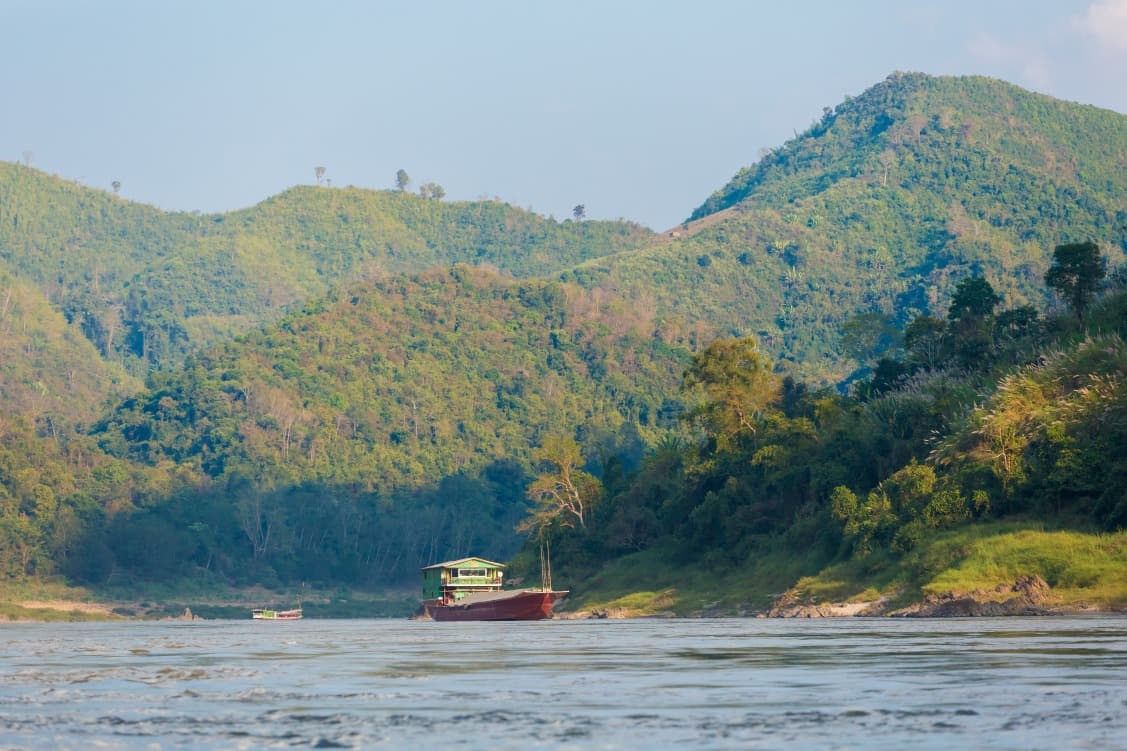
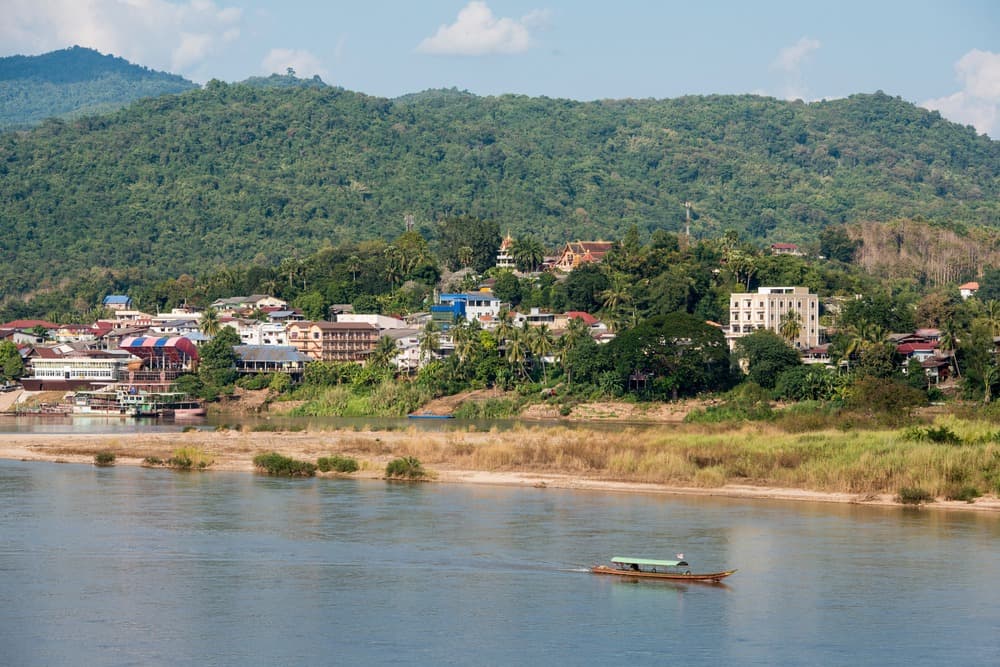
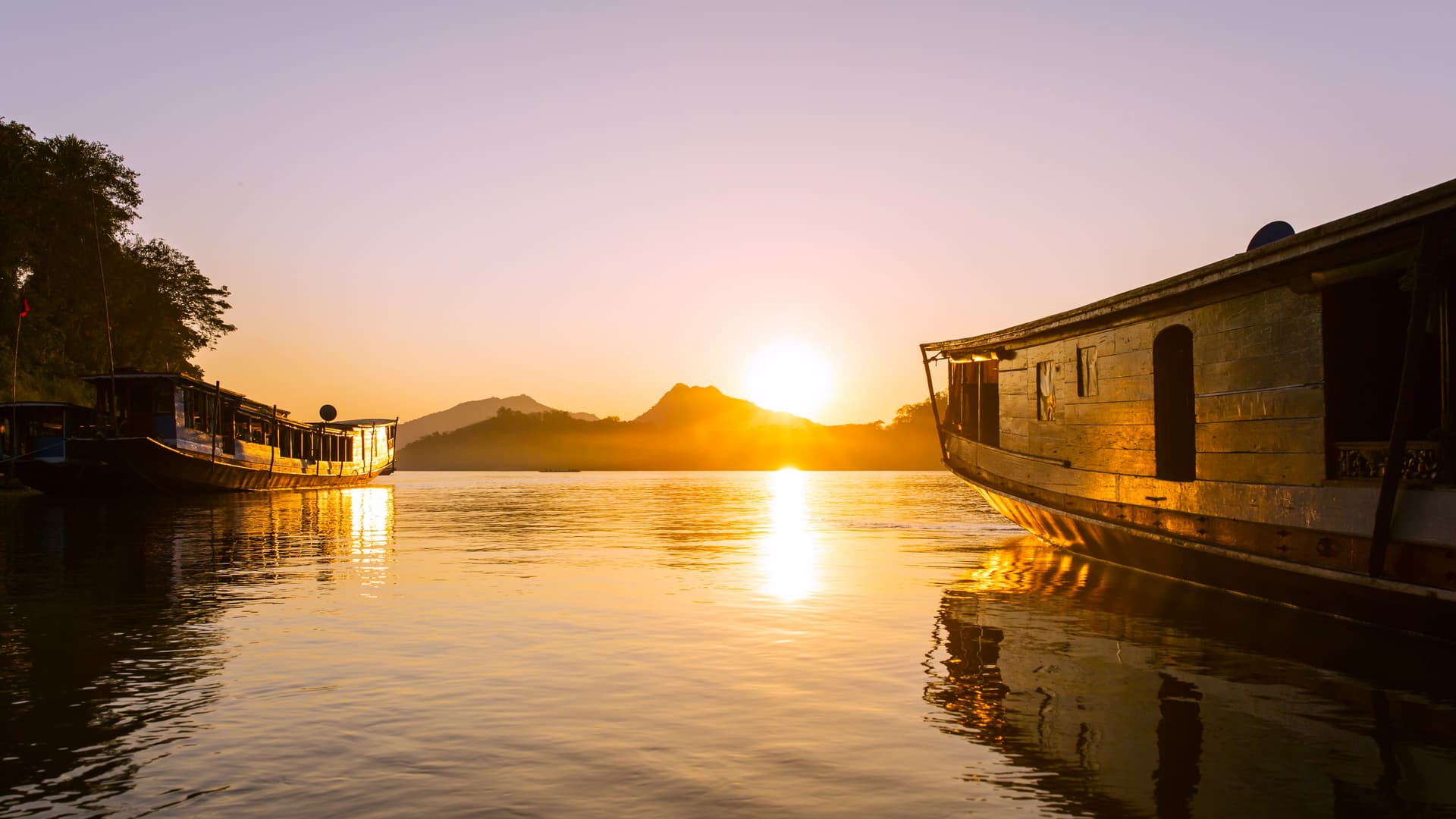
Huay Xai, capital of Bokeo Province, is hardly a stopover town. Positioned on the left bank of the Mekong facing Chiang Khong, it historically thrived on teak trade, precious stones extracted from neighboring hills, and long ago opium. Today, it is the departure point for the slow boat that descends the Mekong to Luang Prabang over two days, with a mandatory stop at Pakbeng, a village street clinging to the riverbank midway. The boat covers roughly 300 kilometers at an average of 15 km/h, allowing time to watch net fishermen, buffalo watering, and isolated Khmu villages where you occasionally dock to offload goods.
An hour's trek from Huay Xai stretches the Bokeo Nature Reserve, 123,000 hectares of primary forest home to the black-crested gibbon, rediscovered here in 1997 after being presumed extinct. This is the terrain of the Gibbon Experience, a conservation program funded by ecotourism: travelers sleep three days in treehouses built 30 to 40 meters up in the canopy, accessible only by zip-line, some stretching over 500 meters long. It is physically demanding, sometimes rustic, and gibbon sightings are never guaranteed, but the initiative has stabilized the population and provided salaries to former poachers in the area.
Further east, Luang Namtha is the hub for trekking in Akha country. The town itself holds little interest, rebuilt after Indochina War bombing, but it provides access to the Nam Ha NPA, a protected area managed with UNESCO since 1999, where two- to four-day itineraries lead to Akha eupa and Khmu villages rarely connected by road. Guides are consistently local, trained on-site, and revenues are redistributed to host communities. Muang Sing, 60 kilometers north near the Chinese border, retains a morning market where Tai Lue and Akha women sell mountain vegetables and medicinal plants before 7 a.m.
On the culinary side, you find northern Laotian cuisine: buffalo laap with bitter herbs, khao soi soup (different from its Thai cousin, here based on fermented soybean paste and pork), sticky rice steamed in bamboo tip khao baskets. Akha villages distill a red rice liquor served in bamboo tubes, to be consumed in small quantities. The region's major festival is the Akha New Year in December, featuring swing dances and wooden spinning-top fights.
This region demands effort: distances along Route 3 remain long, seven hours of driving between Huay Xai and Luang Namtha, and hotel comfort stays basic outside two or three addresses in Luang Namtha. This is precisely what preserves it from mass tourism and what makes it, for travelers who accept a slow pace, the most authentically rural part of Laos.
To discover
Mekong slow boat descent. Two days of navigation between Huay Xai and Luang Prabang, night in Pakbeng, on the same route teak caravans took in the early twentieth century. Daily departures at 9:30 a.m., roughly eight hours of navigation per day.
Gibbon Experience in Bokeo. Three days in primary forest, nights in treehouses perched 40 meters high connected by zip-lines. Black-crested gibbon conservation program, accessible to fit hikers.
Akha treks around Luang Namtha. 2- to 4-day itineraries in the Nam Ha NPA with local guides and nights staying with local families. Akha eupa villages are recognized by their sculpted doors and the silver headdresses of the women.
Morning market at Muang Sing. Small border market where Tai Lue, Akha, and Yao communities meet between 5 a.m. and 7 a.m. Mountain vegetables, medicinal herbs, woven textiles. Just 10 kilometers from the Chinese border.
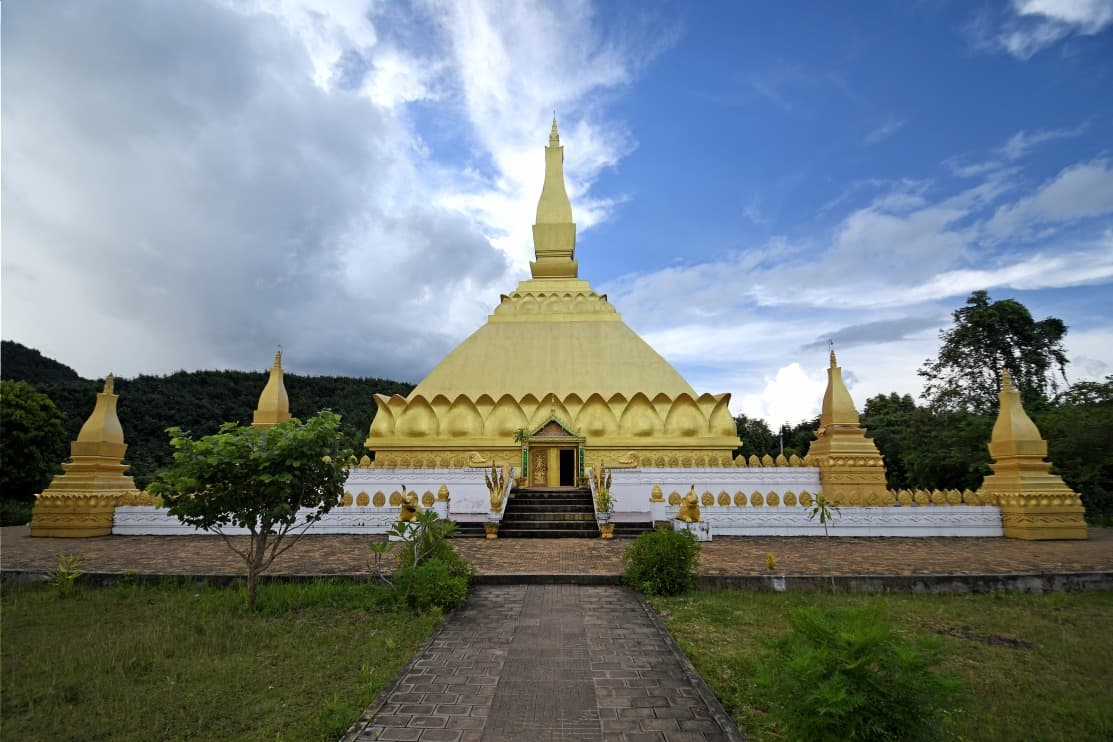
That Phoum Pouk Stupa. A sixteenth-century Buddhist relic collapsed under 1966 bombing and left as is beside its rebuilt replica. A quiet witness to America's secret war in Laos.
When to visit
The best window stretches from November to February: clear skies, daytime temperatures of 18 to 28 degrees, and cool mornings of 10–12 degrees in the mountains around Luang Namtha, where a fleece jacket is necessary. This is also when the Mekong level remains high enough for comfortable navigation. March and April are marked by agricultural burning: visibility drops sharply, skies turn gray-yellow, and temperatures climb to 35 degrees. We advise against this period for travelers sensitive to air quality or those visiting for photography.
The rainy season sets in from late May through September. Rain falls mainly in late afternoon, in short but intense showers, and trekking trails around Muang Sing become slippery. The Mekong, meanwhile, runs high and powerful, making the boat descent faster but more monotonous. October is an interesting intermediate period: lush greenery, full rivers, light visitor numbers, and brief rain passages still possible but short.
Practical advice
We recommend a minimum of five days for the region, seven if combining the Mekong descent with the Gibbon Experience and a short trek in Luang Namtha. The most common entry point is the Huay Xai border from Chiang Khong in Thailand, accessible by bus from Chiang Rai. Luang Namtha has a small airport with daily flights from Vientiane, allowing you to skip the seven-hour drive from Huay Xai. The most natural combination links with Luang Prabang and the North, since the slow boat leads directly there. For a complete country itinerary, you then head toward Vientiane and Central Laos, followed by the south via the Bolovens Plateau and Si Phan Don.
Hotel comfort remains modest: clean but simple guesthouses in Huay Xai and Pakbeng, two or three upscale options in Luang Namtha, and rustic nights with local families on trek (mattresses on the floor, shared facilities). The region suits hikers, travelers curious about highland cultures, and those who embrace long days on road or boat as an integral part of travel. It appeals less to families with young children or travelers seeking consistent hotel comfort.