Vat Si Mueang (Wat Simuang)
Vat Si Mueang (Wat Simuang)
Vat Si Mueang is the most frequented temple in Vientiane by Laotians themselves. It shelters the lak mueang, the founding pillar of the capital, and pulses with authentic daily devotion.
Vat Si Mueang rises in the eastern quarter of Vientiane, a few hundred metres from the Mekong. This Buddhist temple is the most visited in the Laotian capital—not by tourists, but by Laotians themselves. It houses the founding pillar of the city — the lak mueang — and remains a place of intense daily prayer, where offerings of lotus flowers and incense never cease.
Practical Information at a Glance
- Admission: Free
- Dress code: Shoulders and knees must be covered; sarongs available at the entrance
- Footwear: Remove shoes before entering the sim (ordination hall)
- Suggested duration: 30 to 45 minutes
- Access: By tuk-tuk, bicycle or on foot from downtown; no direct confirmed bus line
What You'll See
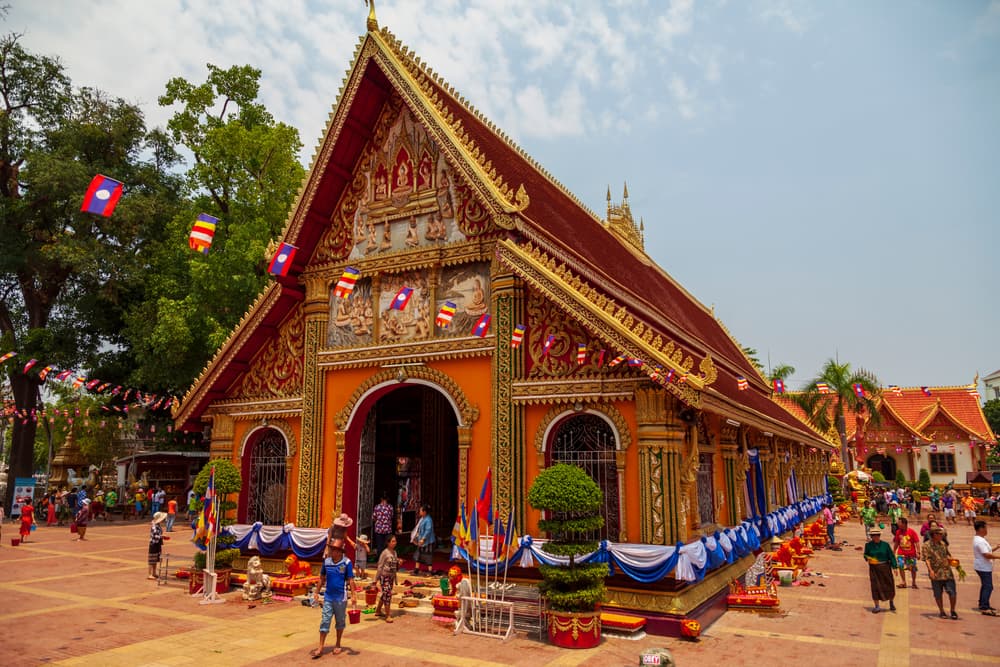
The complex comprises two main buildings. The ancient sim, renovated, houses the sacred pillar draped in golden cloth and surrounded by permanent offerings. The new sim, built in the 20th century, welcomes several Buddha statues including a large golden seated image. The courtyard is constantly animated: devotees at prayer, saffron-robed monks, vendors of lotus flowers and incense sticks at the temple's edges.
History and Context
According to tradition, the temple was founded in 1563 when the capital of the Lane Xang kingdom was transferred to Vientiane under King Setthathirath. Legend recounts that a young pregnant woman, Si Mueang, sacrificed herself by jumping into the pit dug for the founding pillar, thereby conferring protective power upon it. This pillar — the lak mueang — is considered the spiritual guardian of Vientiane. The temple was damaged during the Siamese invasion of 1828 and subsequently rebuilt.
Highlights of Your Visit
The lak mueang
The founding pillar, draped in silk and flower garlands, is the heart of the temple. Devotees kneel before it to make wishes, often holding offerings of lotus flowers. The atmosphere of sincere devotion is striking.
Daily Offerings and Rituals
Early morning and late afternoon see ritual activity at its peak. Entire families come to thank the pillar after a wish has been granted, sometimes accompanied by traditional musicians hired for the occasion.
The Buddha Statues of the New Sim
The recent building houses a collection of statues in varied styles—Laotian, Thai, Khmer—testifying to the cross-influences of regional Buddhist art.
Etiquette and Visiting Rules
- Cover shoulders and knees; sarongs are lent at the entrance.
- Remove your shoes before entering the sim.
- Speak softly; prayer ceremonies are continuous.
- Do not turn your back to Buddha statues when photographing yourself.
- Ask discreetly before photographing devotees at prayer.
Photography Tips
The golden light of late afternoon illuminates the façade of the ancient sim and its multi-tiered roofs. The inner courtyard, with its trees and colourful offerings, provides rich photographic framing. Photography is permitted in the courtyard and in the new sim; verify restrictions in the ancient sim before bringing out your camera.
Location and Access
Vat Si Mueang stands on Thanon Setthathirath, in the eastern quarter of central Vientiane, approximately one kilometre east of Patuxai. The temple is easily accessible on foot or by bicycle from most downtown hotels. Tuk-tuks serve the site without difficulty. Wheelchair access to the outer courtyard is possible; the sim entrance has steps.
In the Vicinity
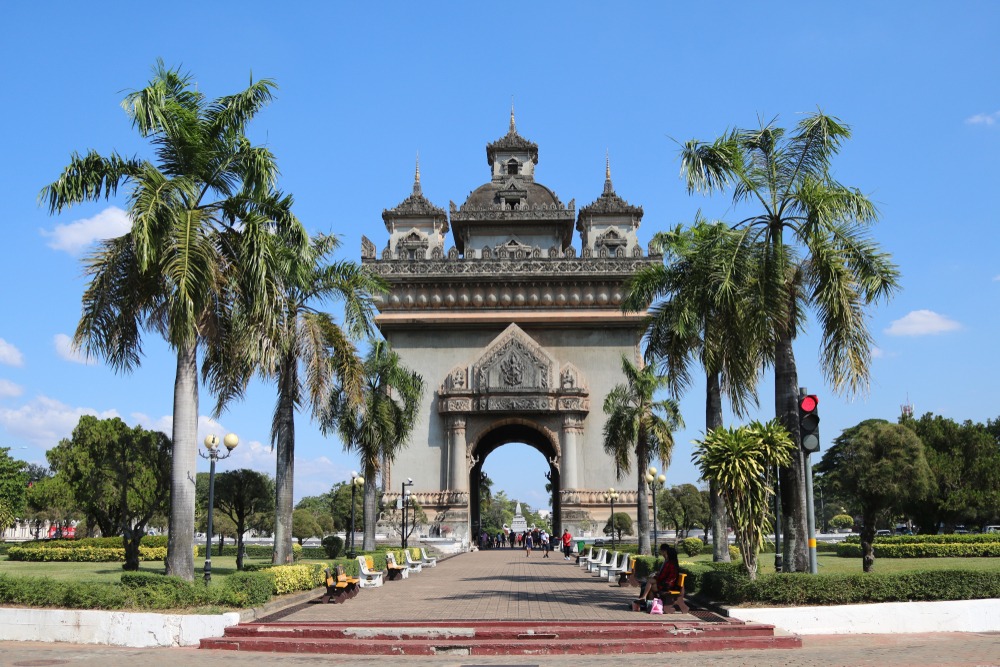
- Patuxai — Vientiane's triumphal arch, a few minutes' walk west, offers a panoramic view over the capital's boulevards.
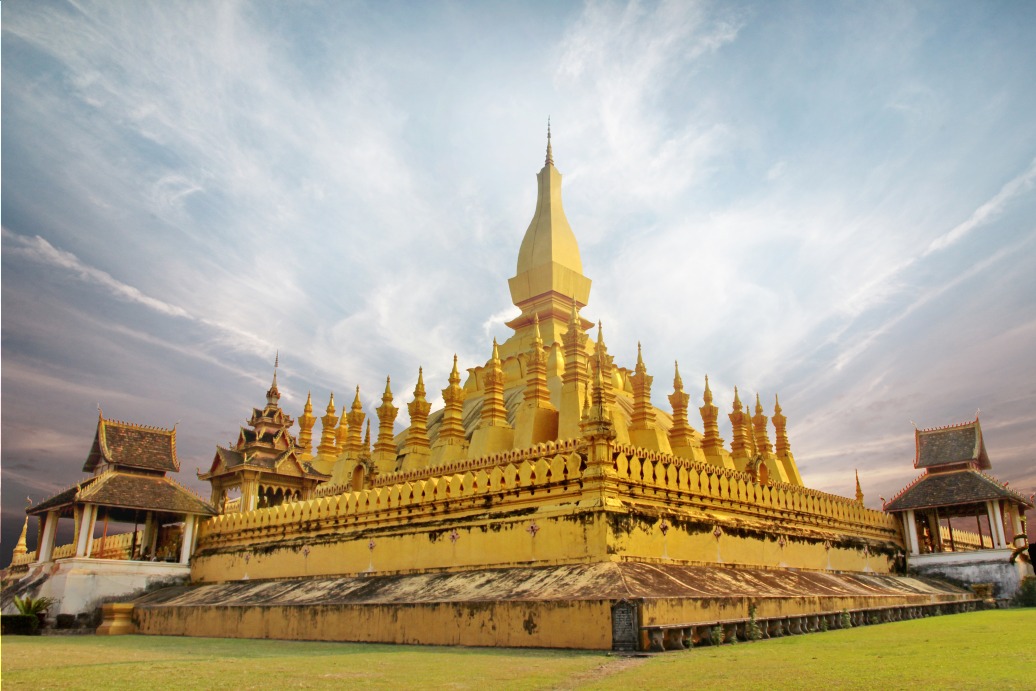
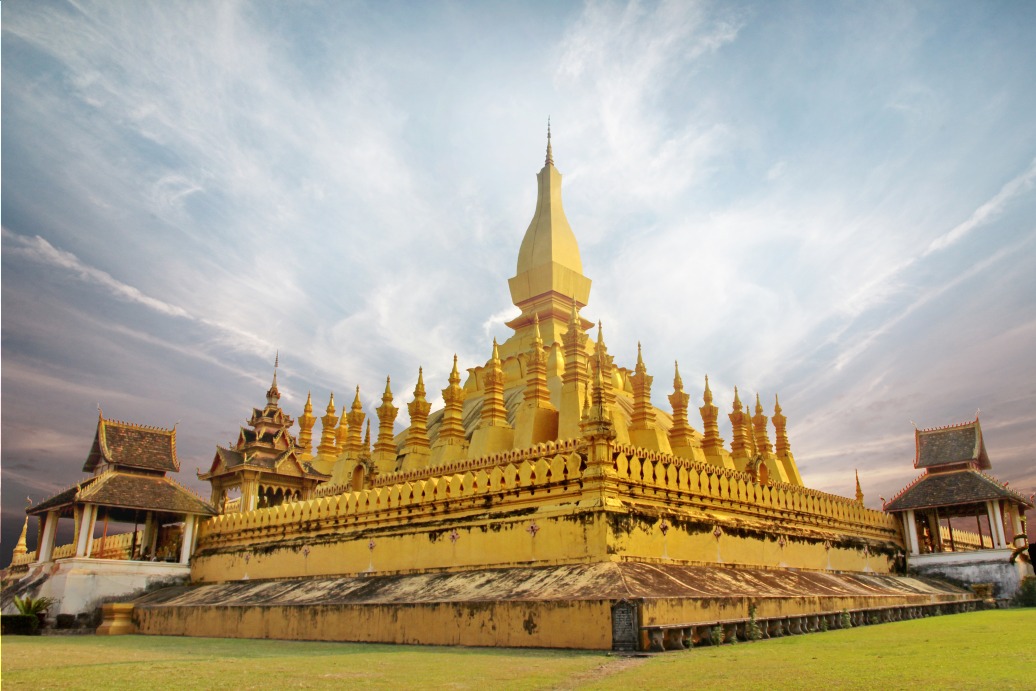
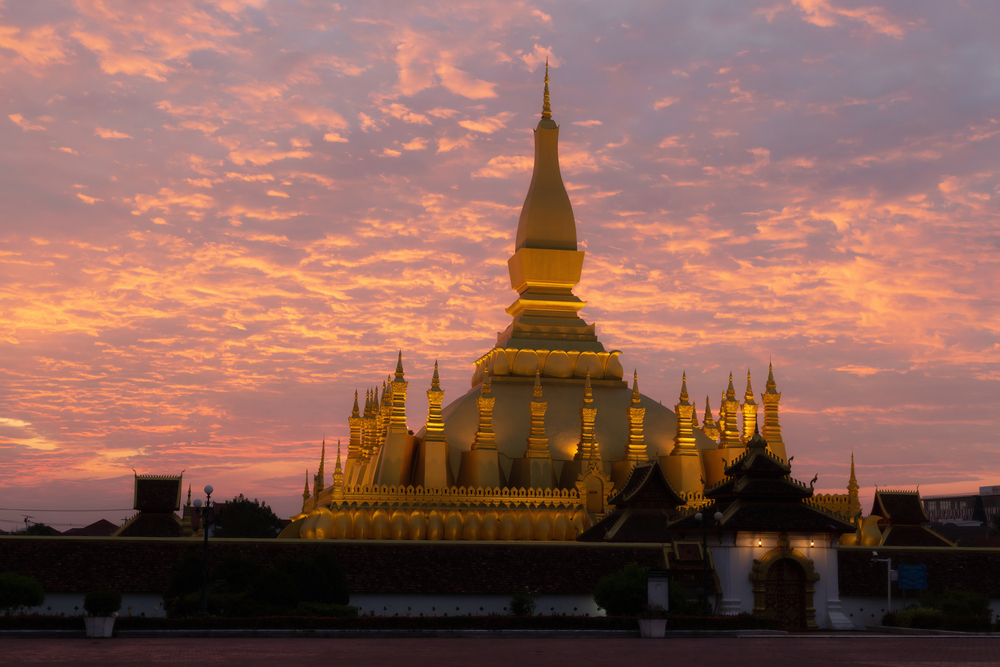
- That Luang — Laos's grand national stupa, the symbol of the country, is located about two kilometres north.
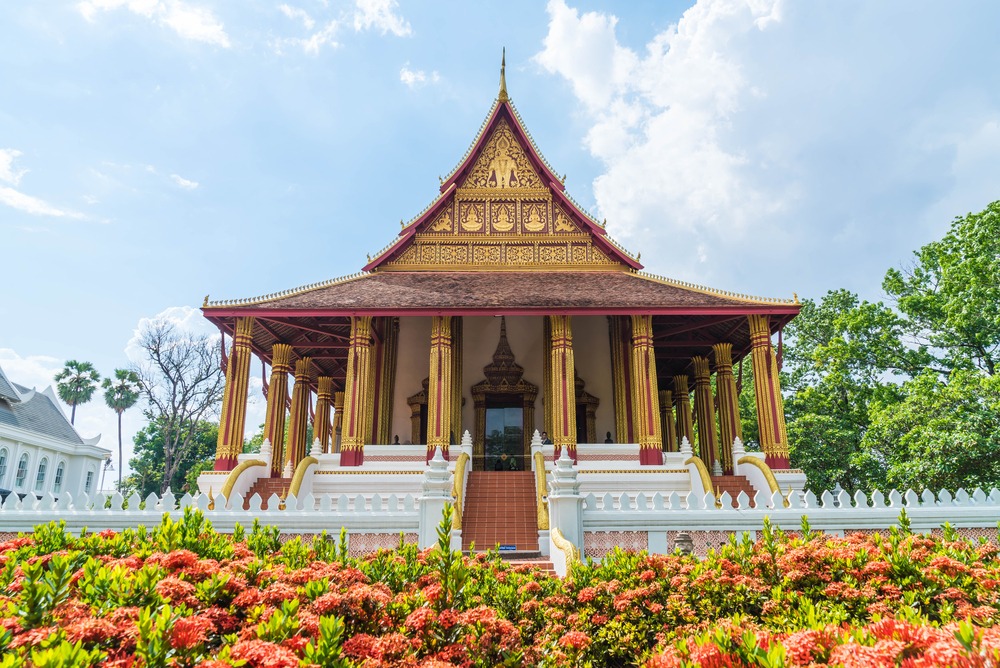
- Vat Phra Kaew — A former royal temple converted into a Buddhist art museum, to the west in the historic centre.
- Mekong Riverside — The promenade along the river, lively at sunset, is accessible on foot from the temple.
Frequently asked questions
Admission is free. Offerings (lotus flowers, incense sticks) are on sale outside if you wish to participate in the rituals.
Shoulders and knees must be covered. Sarongs are available at the entrance if your clothing is not appropriate. Remove your shoes before entering the sim.
The temple is lively year-round. The dry season (November to April) offers the most comfortable conditions. During Buddhist festivals such as Boun Ok Phansa, the atmosphere is particularly intense.
Yes. Vat Si Mueang combines easily with Patuxai and Vat Phra Kaew in a half-day on foot or by bicycle in central Vientiane.
It is permitted in the courtyard and generally in the new sim. Be discreet in the ancient sim and do not photograph devotees at prayer without their permission.
Thirty to forty-five minutes are sufficient to explore the complex. Allow more time if you wish to observe the rituals or attend a ceremony.
Nearby
Interested in this visit?
We can include it in your personalised itinerary.