Bolovens Plateau
Volcanic plateau at 1,350 meters in southern Laos, home to arabica coffee and Katu villages, between basalt waterfalls and plantations inherited from the 1930s.
The Bolovens Plateau occupies the southeastern corner of Laos, spanning the provinces of Champassak, Sékong, and Attapeu. This basalt tableland peaks at 1,350 meters around Paksong and descends in gentle slopes toward the Mekong Valley at Paksé, which sits at just 100 meters above sea level. The temperature contrast is immediate: while Paksé registers 33°C in March, Paksong remains at 22°C with mornings around 15°C. This coolness owes to abundant rainfall—up to 3,500 mm annually on the heights—and altitude, making the Bolovens one of the country's rare temperate zones.
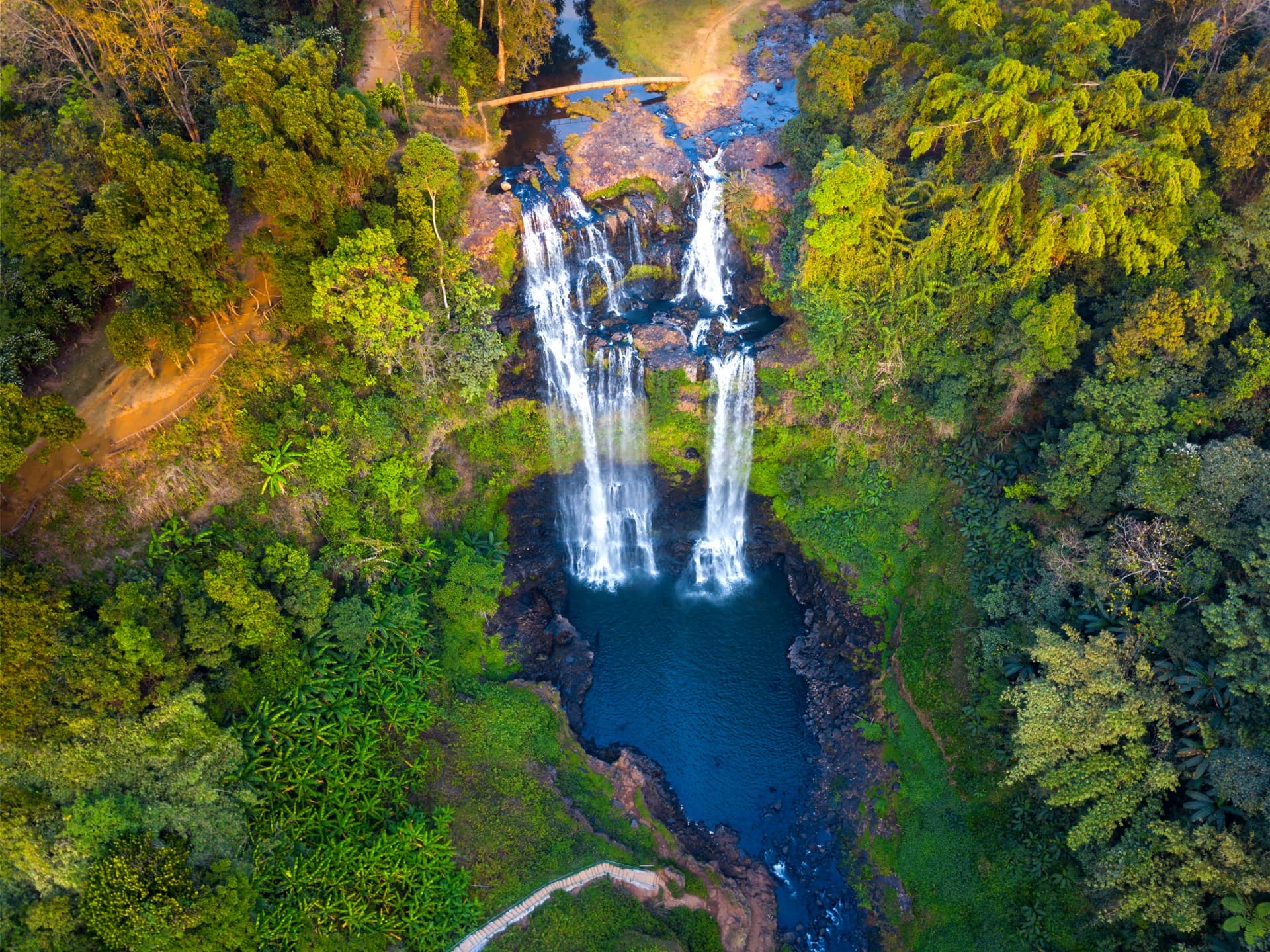
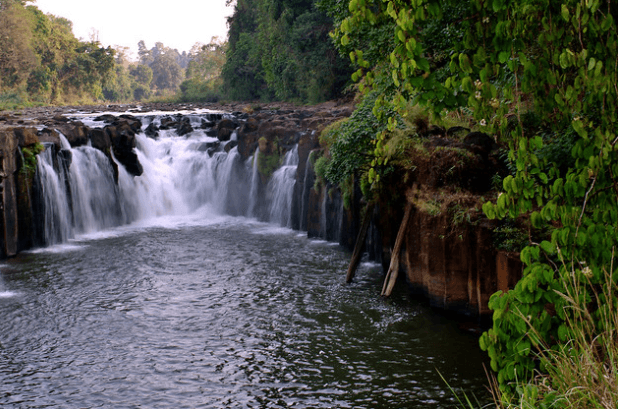
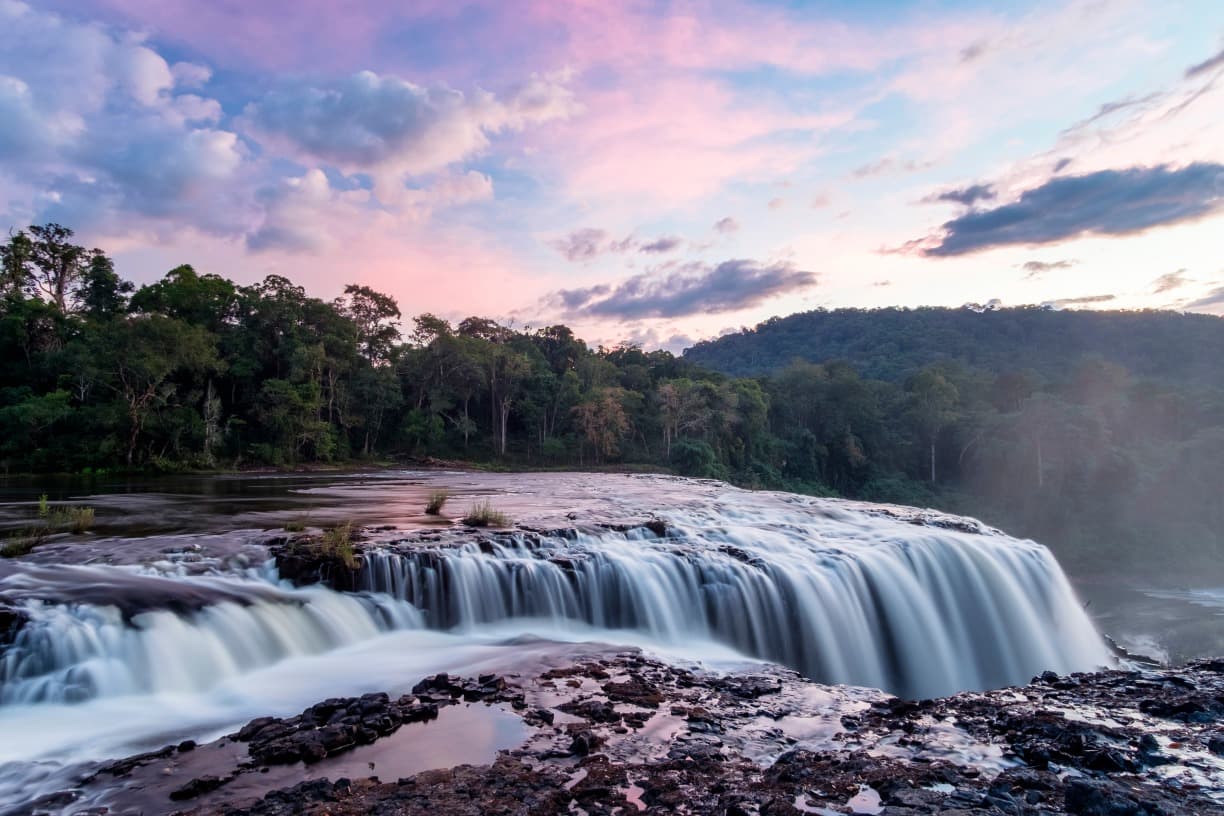
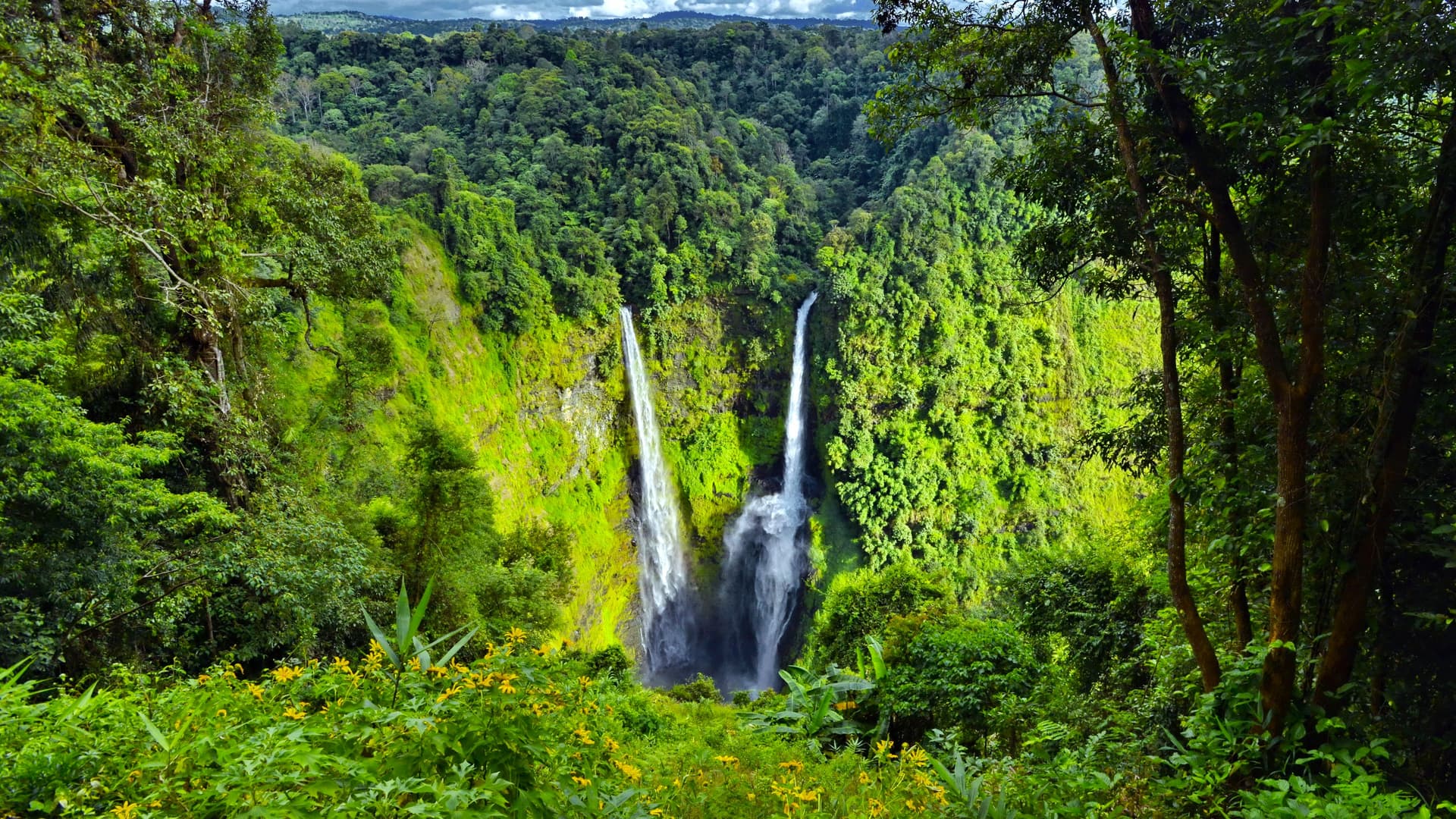
Geology shapes the entire landscape. Pleistocene lava flows created a fertile basalt foundation, carved by rivers that tumble toward the Mekong and Sékong in cascades. Tad Fane plunges in two parallel streams of 120 meters into a forested cirque. Tad Yuang, 40 kilometers from Paksé, features a single 50-meter waterfall with a pool suitable for swimming. Tad Lo, on the Houay Set River, chains three tiers at the foot of which a small welcoming hamlet has developed. Beyond, the circuit known as the great loop connects Tad Katamtok, Tad Faek, and Tad Soung over 220 kilometers of partly unpaved roads.
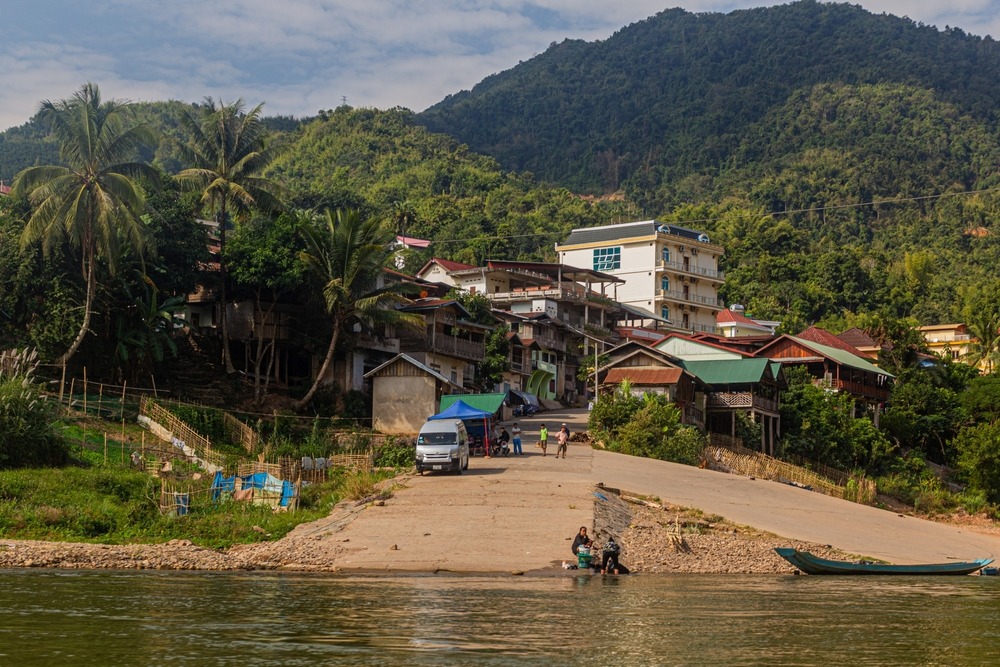
The Bolovens are inhabited by a mosaic of Mon-Khmer groups: Laven (who gave their name to the plateau), Katu, Alak, Nge, and Ta-oy. These communities, long marginalized, live in villages of stilt houses arranged in circles around a communal house. At Kok Phoung Tai, an Alak village 15 kilometers from Paksong, we work with a family that welcomes travelers for overnight stays in a traditional house, sharing meals of galangal chicken and bamboo shoot soup. Animist rituals remain alive, and buffalo sacrifices during end-of-harvest ceremonies still punctuate the calendar of certain Katu hamlets, generally in March.
The plateau's economy rests on coffee, introduced by French colonists in the 1920s-1930s. Arabica (typica and catimor varieties) grows above 1,000 meters, robusta lower. Laos produces roughly 35,000 tons annually, with most coming from the Bolovens. Around Paksong, several cooperatives like the Jhai Coffee Farmers Cooperative and roasters such as Sinouk and Mystic Mountain open their facilities to visitors: cherry selection, pulping, drying on screens, roasting. Harvest extends from October to February. This is complemented by tea (in decline), cardamom, long pepper, and durian, whose June-to-August harvest attracts buyers from Thailand.
Recent history has left its marks. The plateau was heavily bombed during the Vietnam War, particularly on its eastern edge where the Ho Chi Minh Trail passed. UXO (unexploded ordnance) remains present in certain forest areas, which is why we stay on marked trails when hiking around Tad Lo or in the Sékong region. The Attapeu Museum and Ban Beng Memorial document this period, accessible from Paksé in a long day's drive.
Visiting the Bolovens means stepping off the Luang Prabang–Vang Vieng–Vientiane circuit into rural, agricultural Laos, starker in its landscapes but more accessible for human connection. Road travel remains the preferred means of exploration: the network has improved along the Paksé-Paksong-Sékong axis, but lateral tracks to villages remain rustic in the rainy season.
To discover
Tad Fane and Tad Yuang waterfalls. Two parallel jets of 120 meters plunging into a forested cirque at Tad Fane, then swimming possible at the base of Tad Yuang, reachable in 1 hour from Paksé.
Overnight with a local family at Kok Phoung Tai. An Alak stilt village where we arrange stays with a family, centered on galangal chicken and visits to coffee and cardamom fields.
Roastery visit in Paksong. Selection, pulping, and roasting of arabicas grown above 1,000 meters, with tasting. Harvest can be visited October through February.
Bolovens great loop. 220 kilometers of roads and tracks connecting Tad Lo, Tad Katamtok, and Katu villages in Sékong Province, best covered in two days by vehicle with driver.
Paksong morning market. Stalls of highland vegetables, aromatic herbs, green coffee, and dried meats, frequented by Laven and Alak producers descending from nearby hamlets from 6 a.m. onward.
When to visit
The best period for exploring the Bolovens spans November to February. Rain is scarce, tracks are passable, and temperatures on the plateau range between 15°C in the morning and 25°C in the afternoon at Paksong, versus 20°C to 32°C in the valley at Paksé. Bring a fleece for evenings at altitude, especially at Tad Fane Resort where nights sometimes dip to 12°C in January. March and April remain dry but heat rises sharply in the valley (up to 38°C at Paksé), while the plateau stays manageable.
From May to October, the southwest monsoon strikes the Bolovens with particular intensity: it is one of the wettest spots in the country, with totals exceeding 600 mm in August. Waterfalls reach peak flow and landscapes turn saturated green, but lateral tracks to villages become difficult, some wooden bridges are washed away, and skies often remain overcast. We advise against the complete great loop between June and September.
Practical advice
We recommend a minimum of 3 days on the plateau to have time visiting two or three waterfalls, a coffee operation, and a village, without rushing between sites. Allow 4 to 5 days for the complete great loop extending to Sékong or Attapeu. The logical entry point is Paksé, reachable by direct flight from Vientiane (1 hour 15 minutes) or by road from Si Phan Don (3 hours, 150 kilometers). From Paksé to Paksong, allow 1.5 hours on Route 16.
The most coherent combination is Bolovens plus Si Phan Don in the south, over 8 to 10 days, possibly heading back toward Vientiane and central regions for a full 15-day circuit. Hotel comfort remains modest: a few decent options in Paksé and around Tad Fane, otherwise simple guesthouses and homestays. The Bolovens suit contemplative travelers, rural landscape enthusiasts, and those seeking contact with lightly-touristed communities, as well as families with children from age 8 onward, provided they accept sometimes lengthy drives and unpretentious comfort.