Wat Mai Suwannaphumaham
Wat Mai Suwannaphumaham
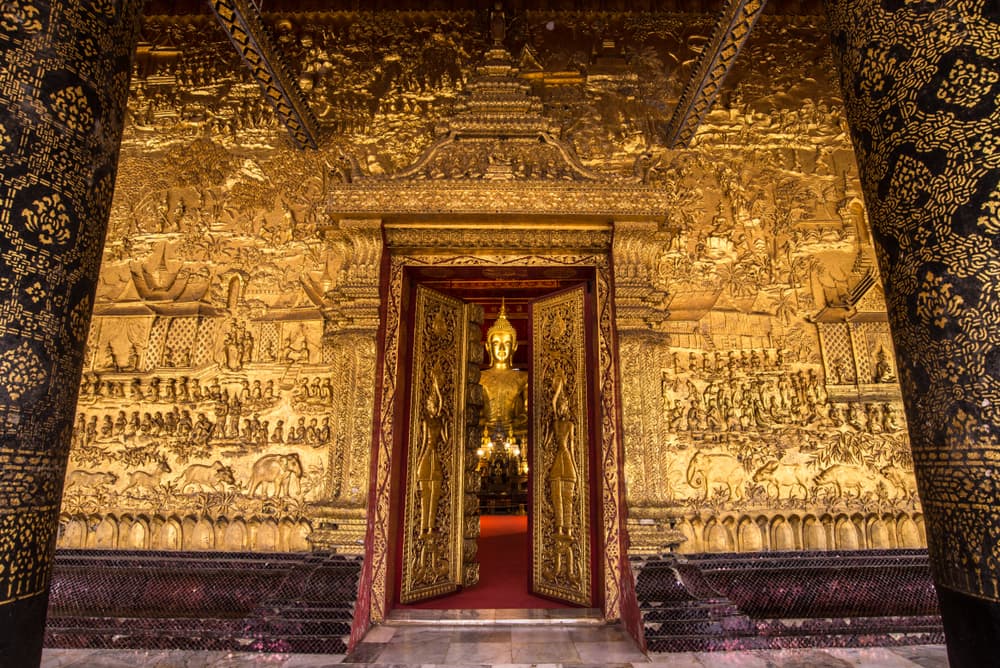
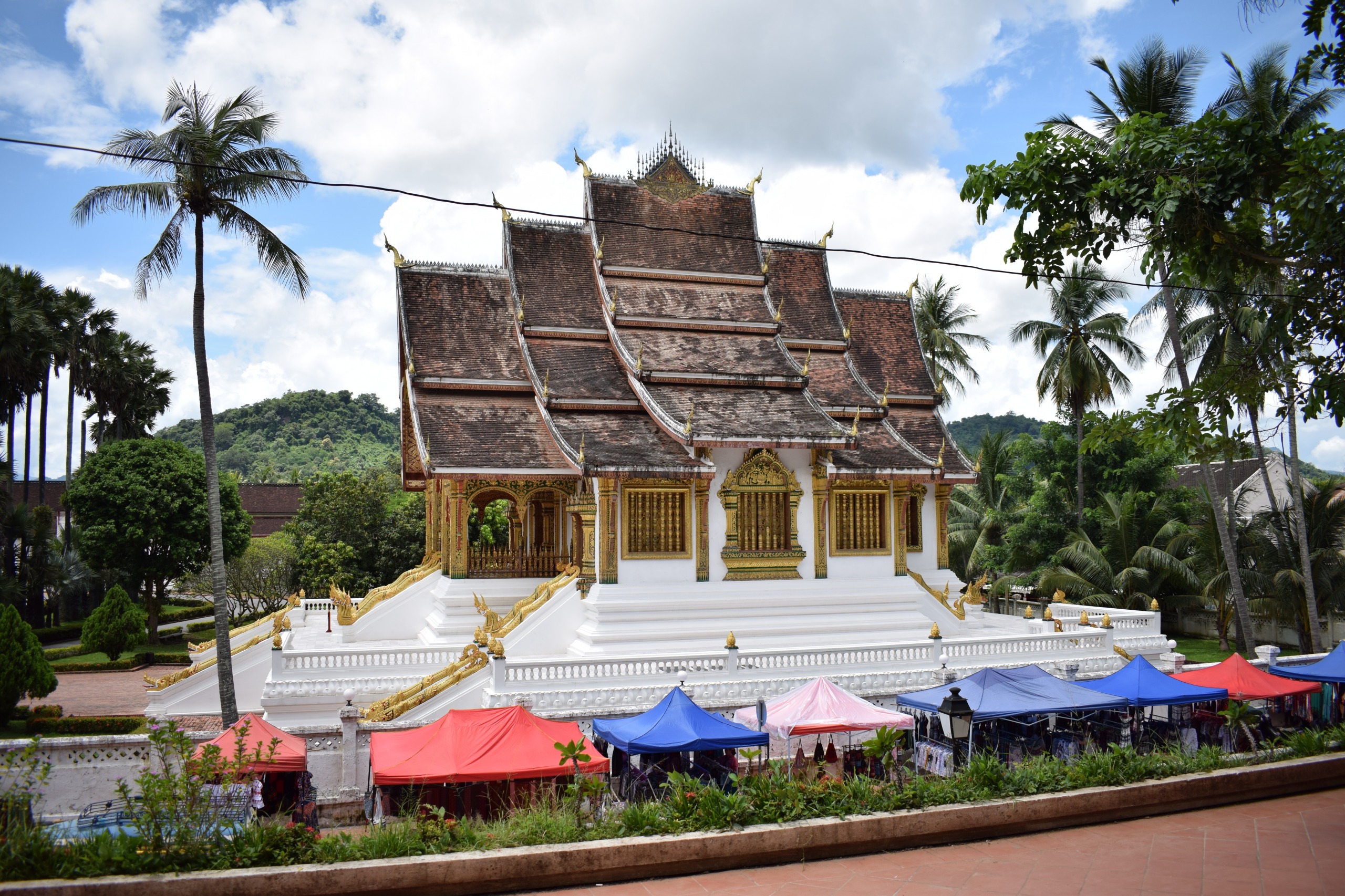
Wat Mai Suwannaphumaham is one of Luang Prabang's most revered temples, distinguished by its gilded façade with five tiers of roofs and intricate bas-reliefs depicting the life of Buddha.
Wat Mai Suwannaphumaham — often abbreviated as Wat Mai — is one of the most revered Buddhist temples in Luang Prabang. Built in the 18th century, it stands out for its façade featuring five superimposed roof levels and gilded bas-reliefs of exceptional refinement. Located in the heart of the UNESCO World Heritage peninsula, it welcomes the Buddha of Prabang each year during Lao New Year celebrations.
Practical Information at a Glance
- Entrance: Paid admission (modest fee, standard local rate for Luang Prabang temples)
- Dress code: Shoulders and knees must be covered for both men and women
- Footwear: Remove shoes before entering the sim (ordination hall)
- Recommended duration: 30 to 45 minutes
- Access: On foot from central Luang Prabang, on the main Sisavangvong Street
What to See
The façade of the viharn (prayer hall) concentrates the temple's artistic significance. Its gilded stucco panels depict scenes from Buddha's life and episodes from the Lao Ramayana. Inside, several gold and bronze Buddha statues occupy the main altar. The courtyard also houses stupas and smaller secondary pavilions.
History and Context
Construction of Wat Mai began during the reign of King Sotika Koumane in the late 18th century; the work spanned several decades. The temple served as the residence of the Supreme Patriarch of Lao Buddhism. During French colonization, it escaped the destructions that affected other monuments in the region. In 1995, Luang Prabang was inscribed on the UNESCO World Heritage List, bringing increased international visibility to Wat Mai.
Highlights of Your Visit
The Gilded Façade
The gilded stucco bas-reliefs across five tiers constitute the temple's visual signature. Each panel tells a story: observe the details of figures, mythical creatures, and royal court scenes. Morning light makes them particularly striking.
The Buddha of Prabang
During Lao New Year (Pi Mai, in April), the Buddha of Prabang — the nation's most venerated sacred image — is transferred here from the neighboring Royal Palace. Outside this period, it is housed in the Royal Palace Museum.
The Monastic Atmosphere
Monks reside permanently in the temple. Early morning, before the tourist influx, the atmosphere is especially contemplative: chanting, offerings, incense fragrance.
Etiquette and Visiting Rules
- Cover shoulders and knees; sarongs can be borrowed or rented at the entrance.
- Remove your shoes before entering any covered building.
- Speak quietly and avoid turning your back to Buddha statues.
- Do not touch the monks, especially if you are a woman.
- Ask permission before photographing monks up close.
Photography Tips
The façade faces east: morning light (between 7 a.m. and 9 a.m.) illuminates it directly and makes the gilding shine. Late afternoon light creates raking shadows that emphasize the reliefs. Avoid flash inside the sim. A standard or slightly wide-angle lens is sufficient to frame the entire façade from the courtyard.
Location and Access
Wat Mai is located on Sisavangvong Street, the main thoroughfare of Luang Prabang's peninsula, just steps from the Royal Palace Museum. The entire historic center can be explored on foot or by bicycle. Tuk-tuks serve the peninsula from the night market and bus station. Wheelchair access is limited due to steps and packed earth courtyard surfaces.
Nearby Attractions
- Royal Palace Museum — just steps away, the former royal palace converted into the national museum.
- Mount Phousi — sacred hill at the center of the peninsula, panoramic views of the city and the Mekong.
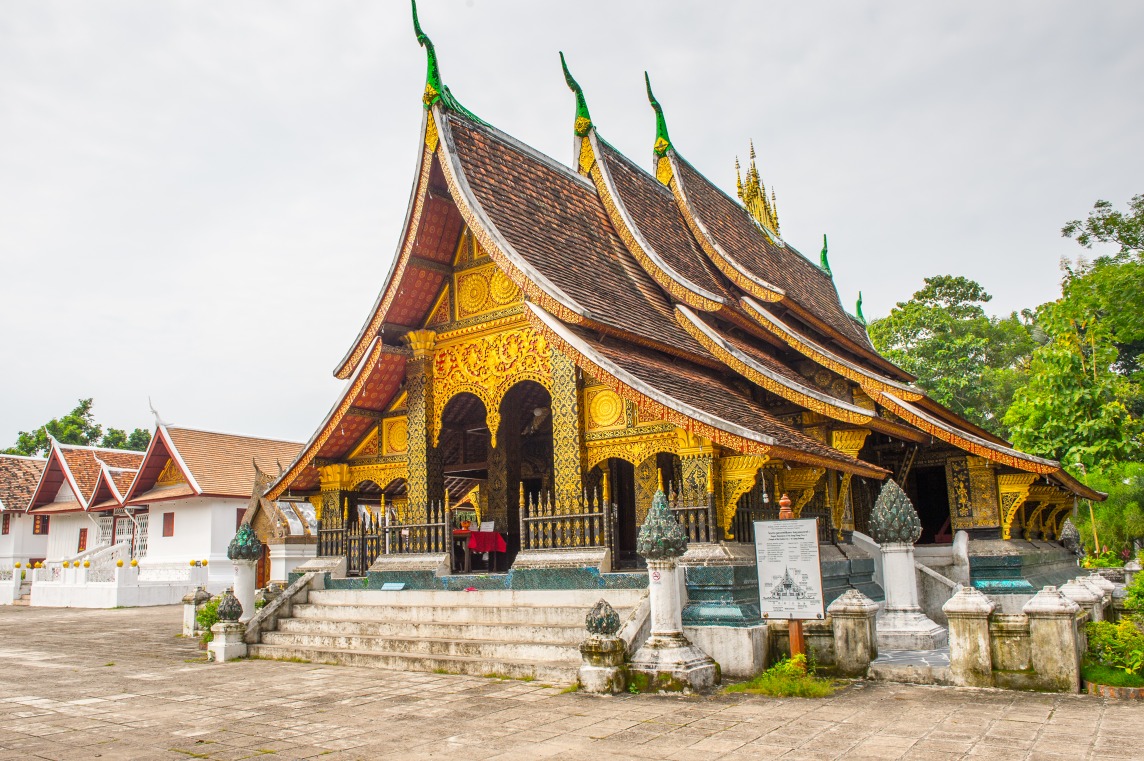
- Wat Xieng Thong — 16th-century royal temple at the northern tip of the peninsula, considered the most beautiful in Luang Prabang.
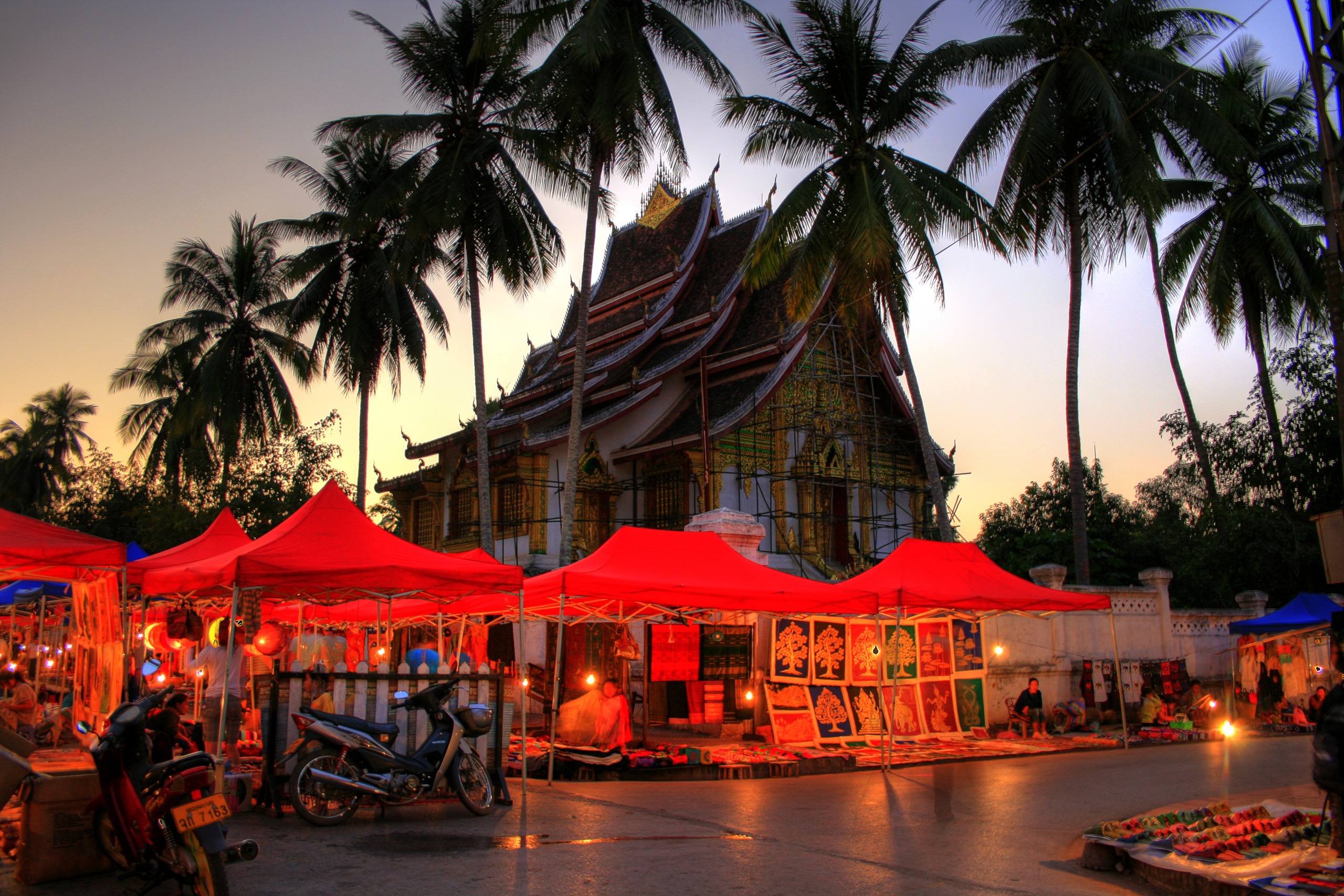
- Luang Prabang Night Market — Hmong and Lao craftsmanship, just two steps away on the same street.
Frequently asked questions
The temple is open year-round. In April, during Lao New Year (Pi Mai), the atmosphere is exceptional: the Buddha of Prabang is displayed here and ceremonies are abundant. The dry season (November to March) offers optimal visiting comfort.
Yes. Shoulders and knees must be covered to enter the premises. Sarongs are usually available at the entrance if you are not appropriately dressed. Shoes are removed before entering buildings.
Absolutely. The Royal Palace Museum is literally adjacent to Wat Mai. Plan a half-day for both sites, starting early in the morning to avoid heat and crowds.
Photography is generally permitted in the courtyard and on the façade. Inside the sim, check for prohibition signs and avoid flash. Always ask monks for permission before photographing them.
Thirty to forty-five minutes are sufficient to explore the courtyard, façade, and interior of the sim. If you wish to observe monastic life or wait for the right light for photography, allow an hour.
Nearby
Interested in this visit?
We can include it in your personalised itinerary.