Stupa Sikhottabong
Stupa Sikhottabong
Golden tower standing nearly 29 m on the Mekong riverbank, 6 km from Thakhek: millennia-old history, royal vihara, open-air museum and annual festival.
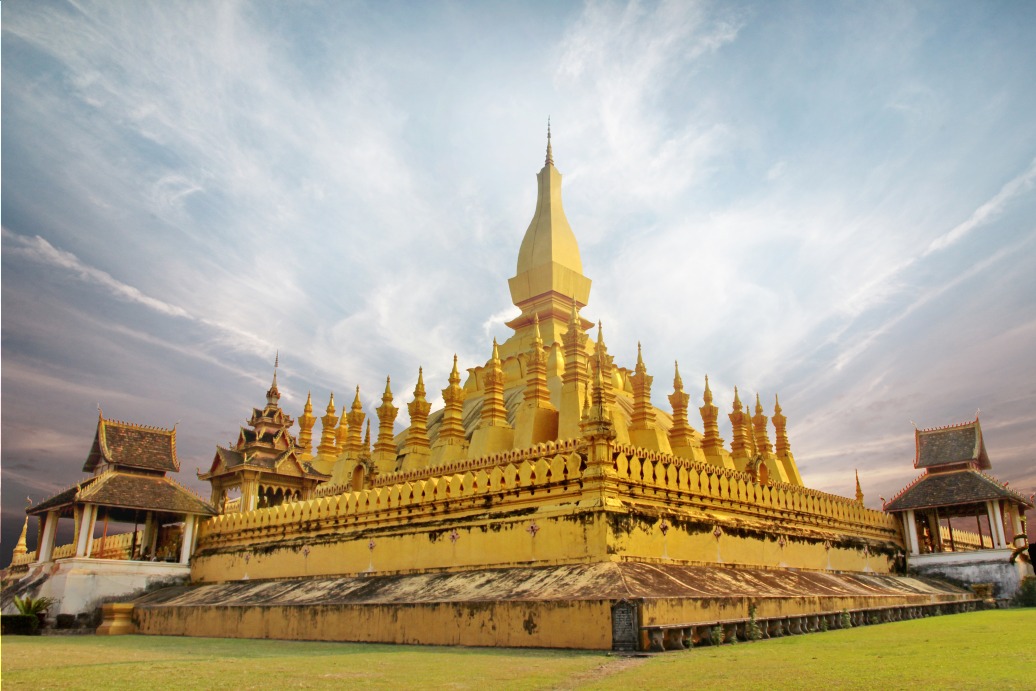
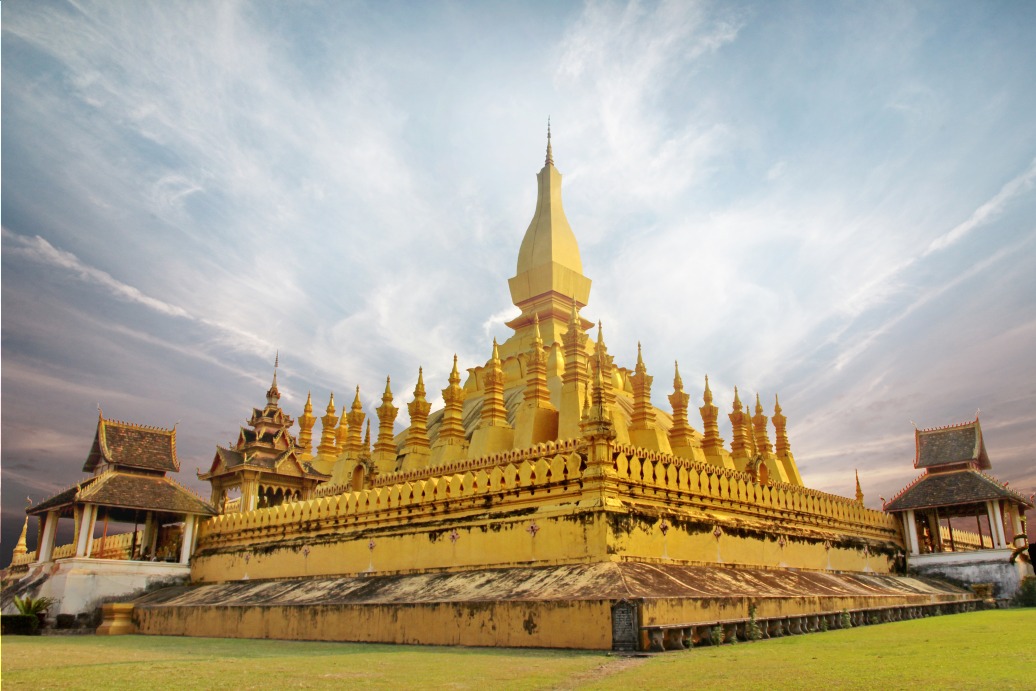
The Stupa Sikhottabong rises 6 km south of Thakhek, on the banks of the Mekong River, in Khammouane Province. This golden tower, nearly 29 meters high, ranks among the principal Buddhist structures in central-southern Laos. An active pilgrimage site, it hosts a major annual festival between January and February and preserves a history spanning more than fifteen centuries, marked by great Lao sovereigns.
Why visit Stupa Sikhottabong
The site combines three principal attractions: a golden tower with distinctive regional architecture, an active religious complex, and an open-air museum dedicated to traditional Khammouane housing. Its position on the Mekong riverbank, away from Thakhek's urban bustle, also makes it an appreciated stopping point for its peaceful setting. Visitors encounter both pilgrims from Laos and Thai devotees crossing the river from Nakhon Phanom.
History
According to local tradition, the stupa's original foundations were built at the same time as the That Inhang in Savannakhet, during the Sikhottaboun Laung empire (local sources mention the 5th-6th centuries BC, though this dating should be regarded as legendary). The structure reportedly served as a repository for the remains of four Buddha lords. Its construction is attributed to King Sumintharath (Sumitta Thammavongsa Atherat), under the reign of King Nanthasane, the first monarch of the Sikhottaboun kingdom.
In the 16th century, during the Lan Xang kingdom period, King Saysetthathirath rebuilt the monument by covering the original stupa with 1.30 meters of new height, giving it its present-day appearance. In 1806, King Anouvong and the king of the city of Kabong (Muang Kao) undertook another restoration. The stupa was subsequently incorporated into a temple complex of the same name dating from the 19th century.
Following the proclamation of the Lao People's Democratic Republic in 1975 (independence having been first declared in 1945), the site established itself as a major place of worship in the province, around which an annual festival developed, becoming one of the most followed in Khammouane.
What to see on-site
The golden tower
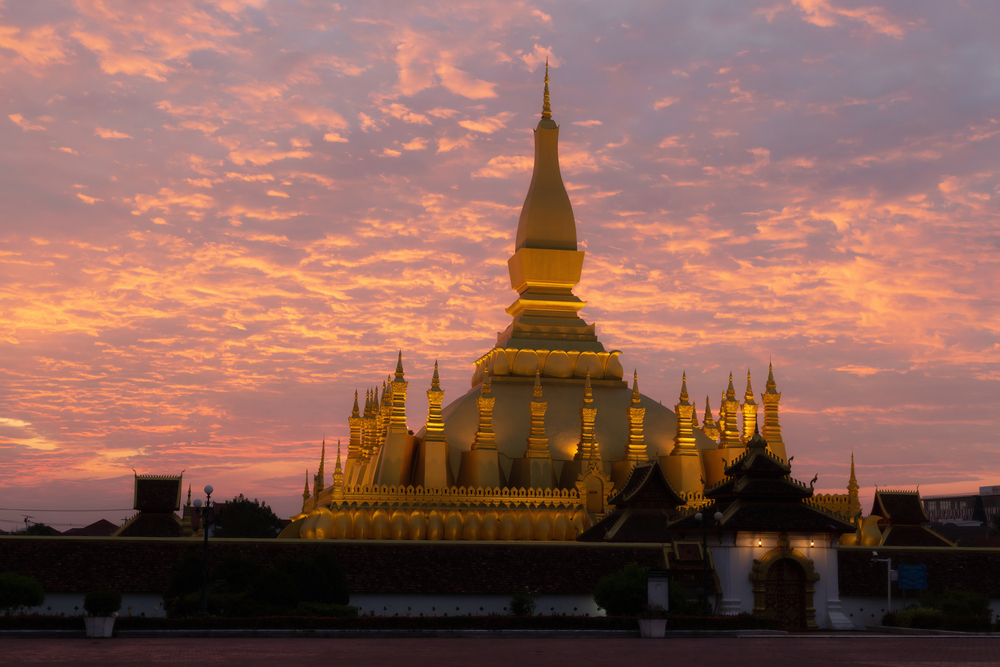
The stupa reaches approximately 29 meters in height (sources vary between 24 and 29 m) and exemplifies the architecture of the Thakhek era. Its base presents four sides, its tones alternate gold and white, and its summit adopts the shape of a banana flower, a recurring motif in Lao Buddhist art.
The vihara
Located in the courtyard, the vihara houses a seated golden Buddha, whose commissioning is attributed to King Chao Anouvong. The hall remains open to the faithful for prayer and offerings.
The open-air museum
Adjacent to the complex, this museum groups nine wooden buildings reproducing the traditional styles of Khammouane Province housing. A complete visit usefully complements the stupa discovery and provides a concrete overview of the region's vernacular architecture.
The courtyard and Mekong riverbank
The outer courtyard opens onto a patio directly overlooking the river. It is one of the few developed vantage points between Thakhek and Nangbok offering an unobstructed view of the Mekong and the Thai bank.
When to visit
The site is accessible year-round, but the highlight remains the annual festival, held during the third month of the lunar calendar (between January and February), beginning at the full moon. Over several days, the complex welcomes Lao and Thai pilgrims — many coming from Nakhon Phanom — religious ceremonies, performances, and a commercial fair gathering over 130 vendors.
Outside the festival period, the dry season (November to February) remains the most comfortable for visiting, with moderate temperatures and minimal rainfall. The hot months (March-May) call for an early morning or late afternoon visit.
Practical information
- Dress code: shoulders and knees covered, as for any active Buddhist site. Shoes should be removed before entering the vihara.
- Admission fee: moderate entrance charge, with a possible supplement for the open-air museum.
- Duration of visit: allow 1 to 1.5 hours for the stupa and museum. Plan for a half-day if you visit during the festival.
- Photography: permitted outdoors, more discreet indoors in the vihara, especially in the presence of worshippers.
How to get there
The stupa is located in the village of Ban Muangsoum, Thakhek District, 6 km south of the city center on Route 13 B connecting Thakhek to Nangbok. The access is flat, running along the Mekong.
- By tuk-tuk: the simplest solution from central Thakhek, a short ride to negotiate before departure.
- By bicycle or scooter: pleasant route along the river, approximately 20 minutes.
- On foot: feasible from Thakhek's southern neighborhoods, counting 1 to 1.5 hours of walking one way.
Nearby attractions
- Chao Anouvong Park in Thakhek, dedicated to the king who restored the stupa.
- Tham Kang Caves, in the Khammouane karst.
- Nahm Dong Park, natural area near Thakhek.
- Phou Khao Khouay National Park, for extending northward.
Frequently asked questions
Frequently asked questions
In the village of Ban Muangsoum, Thakhek District, Khammouane Province, 6 km south of Thakhek city center, on Route 13 B heading toward Nangbok and on the Mekong riverbank.
The festival is held during the third month of the lunar calendar, between January and February depending on the year, and begins at the full moon. It lasts several days and combines religious ceremonies, performances, and a commercial fair.
The golden tower reaches approximately 29 meters according to local sources (some references cite a height of 24 m). Its present-day form dates mainly from the 16th-century reconstruction.
Yes: the site is an active place of worship. Cover shoulders and knees, and remove your shoes before entering the vihara that houses the golden Buddha.
Allow 1 to 1.5 hours for the stupa, vihara, and adjacent open-air museum. During the festival, plan for a half-day to enjoy the ceremonies and fair.
Extending your journey
Stupa Sikhottabong fits naturally into an itinerary centered on Thakhek and the Khammouane region. To build a complete stay including karst landscapes, the Mekong, and religious sites throughout the country's center, explore our Laos travel ideas.
Nearby
Interested in this visit?
We can include it in your personalised itinerary.