Mekong River
Mekong River
Cruises, Friendship Bridges, Pak Ou Cave, 4000 Islands: practical guide to the Mekong in Laos, the world's tenth-largest river by discharge and a major axis of the country.
The Mekong, or Mae Nam Khong ("mother of waters"), flows through Laos for nearly 1,900 km and shapes much of the country's economic, cultural and tourism life. A waterway of communication, pantry, natural border and cruise route, it links the karst landscapes of the north to the waterfalls of the 4000 Islands in the south. Here's what you need to know before navigating the world's tenth-largest river by discharge.
Why navigate the Mekong in Laos
The Mekong is the backbone of Laos. It borders or crosses six major cities — Luang Prabang, Vientiane, Paksane, Thakhek, Savannakhet and Paksé — and sustains fishing, rice paddy irrigation and trade with neighboring countries. For the traveler, it's also a logical way to connect distant sites without enduring sometimes slow roads.
Three compelling reasons motivate a cruise:
- Access to sites reachable only by boat, such as the Pak Ou Cave.
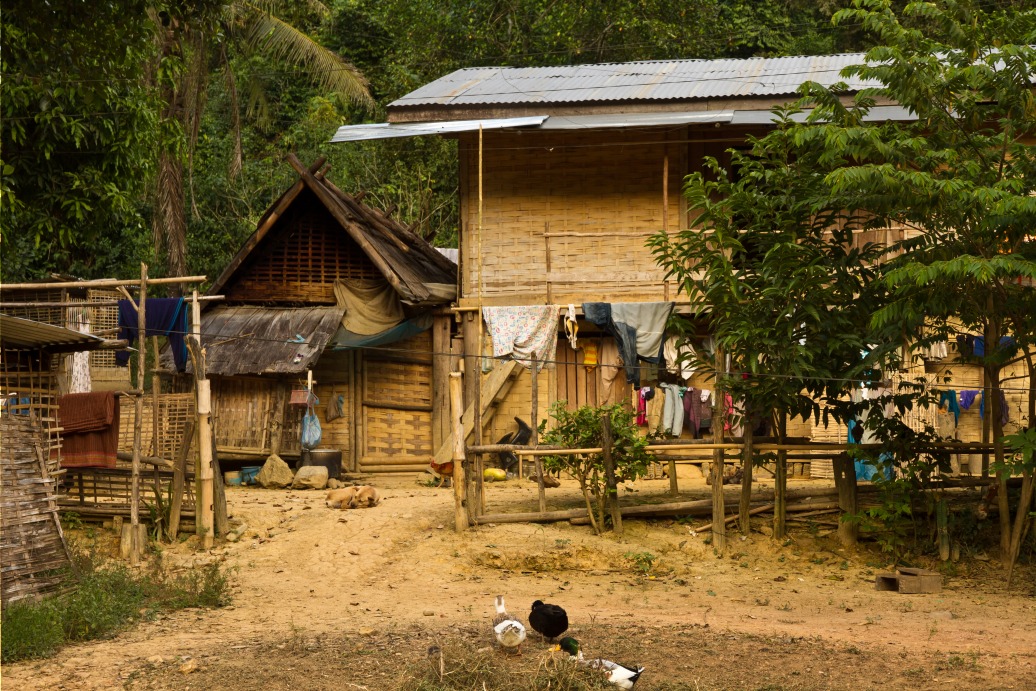
- Encounter with riverside ethnic groups, notably the Khmu and the Akha.
- Discovery of varied landscapes: karst formations in the north, rice plains in the center, the fluvial archipelago of the 4000 Islands in the south.
Historical landmarks
Long perceived as an untamable waterway, the Mekong more often isolated peoples than united them, serving as a natural frontier between rival kingdoms. At the turn of the modern era, it marks the boundary between two competing powers, Siam (present-day Thailand) and Tonkin (northern Vietnam), between which Laos and Cambodia found themselves caught.
On the European side, Portuguese explorer Antonio de Faria is considered the first Westerner to reach the Mekong, in 1540. Expeditions remain rare; it wasn't until 1641-1642 that Dutchman Gerrit Van Wuysthoff and his crew sailed up the river to Vientiane. From 1893 onward, the French protectorate established itself in Laos using the Mekong as a penetration route, laying the foundations of Indochina.
After the Vietnam War, tensions between Thailand and the newly communist states froze river exchanges. The creation of the Mekong Commission gradually allowed regional cooperation around river management to resume.
What to see along the river
In the north: from Huay Xai to Luang Prabang
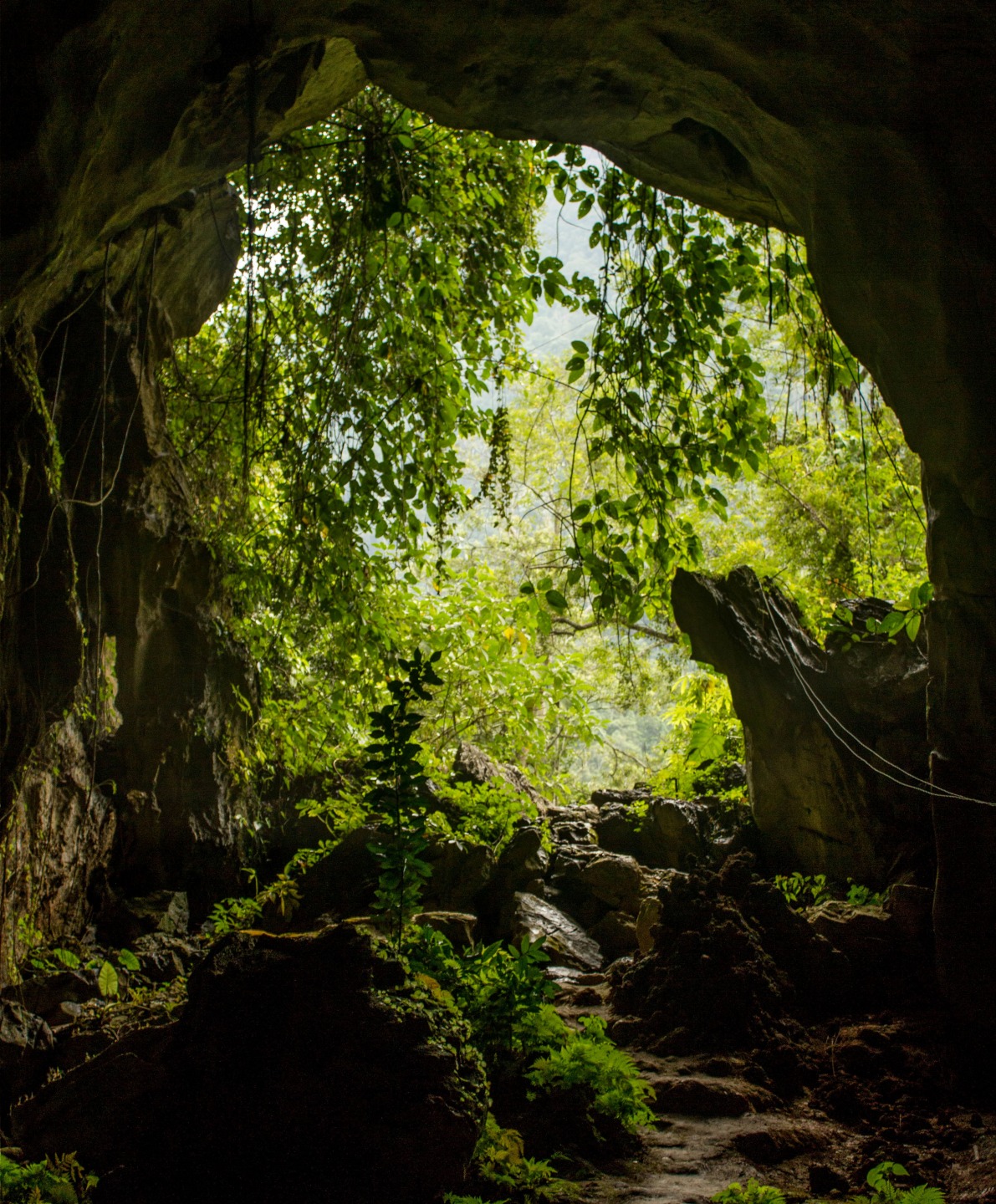
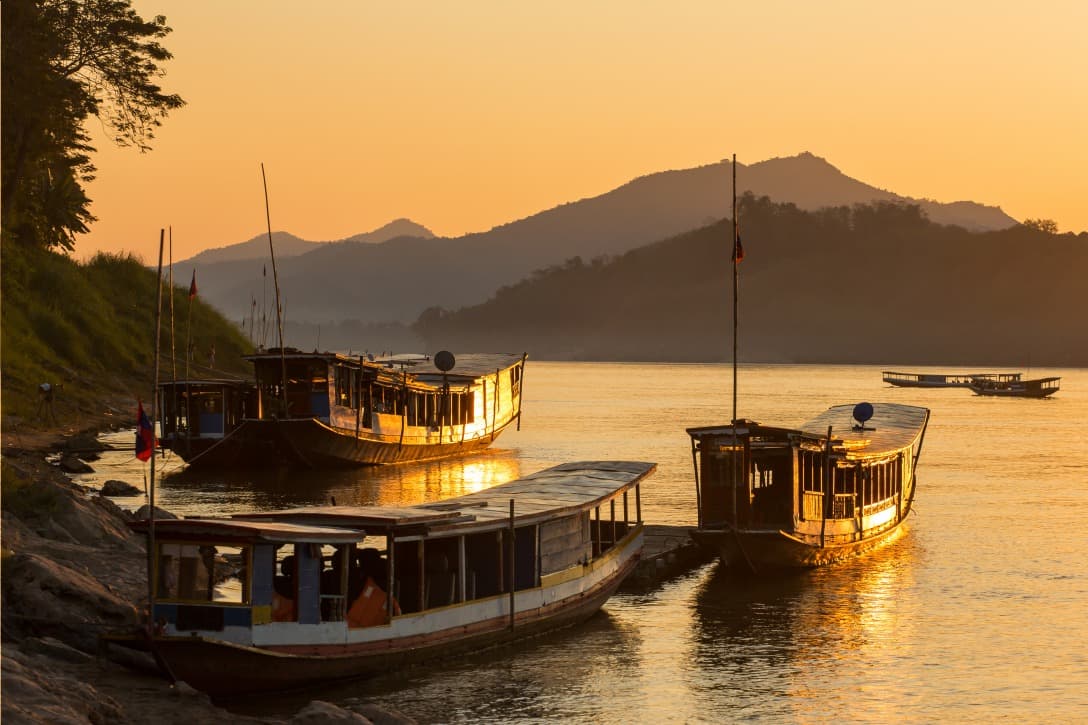
Departing from the Lao-Thai border post of Huay Xai, in the Golden Triangle region, the classic cruise descends toward Luang Prabang over two days, with an overnight stop in the village of Pakbeng. The second day leads to the Pak Ou Cave, a troglodyte sanctuary nested in a karst formation and accessible only by boat, where hundreds of Buddha statues are enshrined. The route also passes Ban Xanghai, a village known for rice whiskey distillation, and a Khmu village.
In the south: from Paksé to the 4000 Islands
Departing from Paksé, you reach the Angkorian site of Vat Phou, in Champasak, a UNESCO World Heritage site. Further south, the river widens to form Si Phan Don, the archipelago of 4000 Islands, where visitors stay on Don Khong, Don Khone or Don Det. Here the Mekong plunges into the Khone Phapheng and Li Phi waterfalls, among Southeast Asia's most powerful.
Wildlife and ecosystem
The Mekong basin is one of the world's richest regions biologically. A survey published in 2007 identified over 1,300 fish species, including a significant share of endemic species. The river is home to the giant catfish and the giant freshwater stingray, considered among the largest freshwater fish on the planet.
When to navigate the Mekong
Water levels vary greatly with the monsoon, directly influencing navigation:
- Dry season (November to April): lower water levels, calmer navigation, clear skies. Most comfortable period for long cruises. Late in the dry season, some stretches can be tight.
- Rainy season (May to October): higher levels, stronger currents, lush landscapes. Some services may be reorganized depending on floods, especially around the 4000 Islands and waterfalls.
To observe the Khone Phapheng waterfalls at maximum discharge, late rainy season (September-October) remains most spectacular.
Practical information
- Types of boats: traditional slow boats (2 days, wooden benches or arranged seats), comfort cruise boats (private cabins, 2 to 3 days), speedboats (not recommended, noisy and riskier).
- Indicative durations: Huay Xai → Luang Prabang in 2 days with an overnight in Pakbeng; Paksé → Si Phan Don in half a day to one day depending on stops.
- Prices: from budget backpacker (shared slow boat) to premium (cruise with cabin and guided excursions). Differences are substantial; compare included services (meals, visits, transfers).
- What to bring: sun protection, warm clothing for early morning, headlamp, plenty of water.
How to reach the main landing points
The Mekong originates in the Himalayas, in China's Qinghai province, crosses Yunnan, runs along Myanmar and Thailand, flows through Laos and Cambodia before emptying into the South China Sea via its Vietnamese delta. Its length is estimated between 4,350 and 4,909 km, with a basin of 810,000 km².
In Laos, several entry points are useful depending on your itinerary:
- Huay Xai (Bokeo province), via the Friendship Bridge No. 4 (480 m, inaugurated in 2013) connecting Chiang Rai in Thailand, for northern cruises.
- Vientiane, via the Friendship Bridge No. 1 (1,170 m, from Nong Khai, closed to pedestrians).
- Thakhek, via the Friendship Bridge No. 3 (1,423 m, opened in 2011, from Nakhon Phanom).
- Savannakhet, via the Friendship Bridge No. 2 (1,600 m, from Mukdahan).
- Paksé, via the Paksé Bridge (1,380 m, open to the public since 2000), for southern cruises.
Among the Lao tributaries on the left bank, the Mekong receives the Nam Tha, the Nam Ou, the Nam Ngum and the Nam Kading (Nam Theun), which themselves open interesting secondary routes.
Combine with
- The Nam Ou River, the Mekong's main tributary in the north, to extend a cruise toward Nong Khiaw and Muang Ngoi.
- The Luang Prabang night market, a natural stop between two days of navigation.
- The TAEC ethnology center, to contextualize the Khmu and Akha cultures encountered on the riverbanks.
- The Phou Khao Khouay National Park, accessible from Vientiane and fed by Mekong tributaries.
Frequently asked questions
Frequently asked questions
The northern descent (Huay Xai → Luang Prabang) takes 2 days with an overnight in Pakbeng. The southern section (Paksé → Si Phan Don) can be covered in half a day to one day. Longer cruises on comfort boats span 3 to 7 days depending on stops.
No. The cave, carved into a karst cliff, is only accessible by boat from Luang Prabang or during a cruise from Pakbeng.
Bridge No. 1 between Nong Khai and Vientiane is closed to pedestrians. Crossing is by shuttle bus, taxi or car. The other bridges have varying regulations depending on the period; check at the border post.
Yes, but with caveats. In the dry season, some stretches are less deep. In the rainy season, currents are stronger and some services are adjusted, particularly around the 4000 Islands waterfalls.
Mekong comes from the Lao Mae Nam Khong, literally "mother of waters", reflecting the river's nourishing role recognized by riverside communities.
Plan your trip
A Mekong cruise combines easily with Laos's major sites: Luang Prabang, the Bolaven Plateau, Vientiane or the 4000 Islands. To build a coherent itinerary based on season and available time, consult our Laos travel suggestions.
Interested in this visit?
We can include it in your personalised itinerary.