Mulberries Farm
Mulberries Farm
In Phonsavan, near the Plain of Jars, Mulberries Farm is a natural silk cooperative founded in 1993 by Kommaly Chanthavong.
Mulberries Farm, located in Phonsavan in Xieng Khouang province, is a natural silk production centre operated as a social enterprise. Just minutes from the Plain of Jars, it welcomes visitors to understand the entire sericulture cycle, from silk worm farming to final weaving, and to meet the artisans who keep this craft alive in northeastern Laos.
Why visit Mulberries Farm
Mulberries is not just a souvenir shop: it's a cooperative that promotes traditional Laotian weaving while supporting women living in rural areas and students in technical training. It is certified by Fairtrade and by the Lao Organic Department, two labels that attest to compliance with fair trade standards and organic agriculture.
The visit has a twofold appeal: to observe a complete textile craft on a single site, and to see how land once scarred by the bombing of the Indochina War has been gradually brought back into cultivation. For travellers interested in craftsmanship or responsible tourism initiatives, it's a coherent stop on a Laos itinerary.
History of the place
The farm was founded in 1993 by Kommaly Chanthavong, a recognised figure in Laotian weaving and nominated for the Nobel Peace Prize as part of the 1000 Women collective in 2005. Originally, the acidic soil, damaged by bombing, made any cultivation difficult. Over the years, the team amended the land to establish mulberry plantations and a silk production workshop.
The project has remained true to its original objective: to provide income to women in surrounding villages, finance children's education and train young adults. The weavers work partly on site, partly from home, which allows several villages to be integrated into the production cycle.
What to see and do
The silk cycle
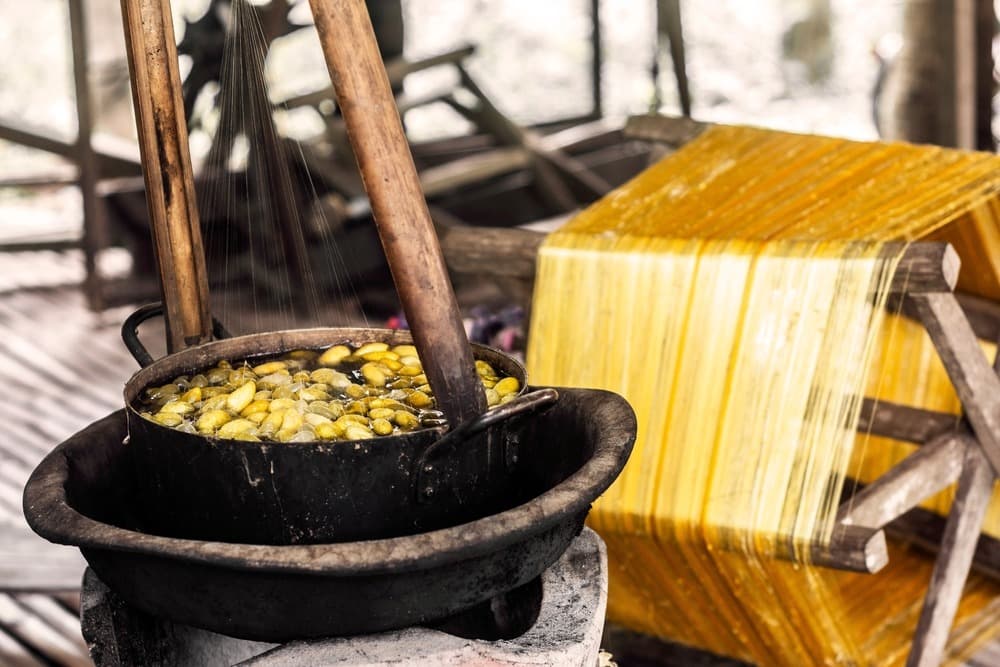
The visit logically follows the stages of sericulture. Silk worms are fed for about four months with white mulberry leaves before spinning their cocoon. Each cocoon then provides a continuous thread of approximately 600 metres, which is then unwound and spun by hand.
Natural dyes
The threads are coloured with plant materials grown or harvested locally: indigo for blues, annatto seeds for reds and oranges, teak leaves for browns. Other hues, from pink to grey, are obtained from mulberry berries.
Complete use of the mulberry
One of the most striking aspects of the site is the complete use of the white mulberry. The leaves feed the worms; the berries are transformed into wine, jam and tea, or into dyes, soaps and shampoos; the larvae of nocturnal butterflies are sold as snacks at the local market.
Weaving and shop
The weaving workshop allows you to observe the manufacture of scarves, blankets, cushion covers and yardage. The on-site shop sells these pieces, with options to customise colours and certain patterns.
Practical information
- Location: Phonsavan, Xieng Khouang province, in the immediate vicinity of the Plain of Jars.
- Duration of visit: allow 1 to 2 hours to tour the buildings and shop, longer if you take part in a weaving demonstration.
- Visitors: visit suitable for families, individual travellers and school or university groups.
- Rates: modest entry fee; shop purchases depending on items.
- Secondary shop: Mulberries products are also available in the brand's shop in Vientiane and sold online.
How to get there
Phonsavan is connected to Vientiane by air and land. Lao Airlines operates several flights per week between Vientiane and Xieng Khouang airport; frequencies vary regularly, so check schedules when booking. By bus from Vientiane, allow about ten hours of travel on a mountain road.
Once in Phonsavan, the farm is reached in a few minutes by tuk-tuk or private car. Many travellers combine the visit with the Nam Ou Valley or other stops in the north of the country.
Nearby
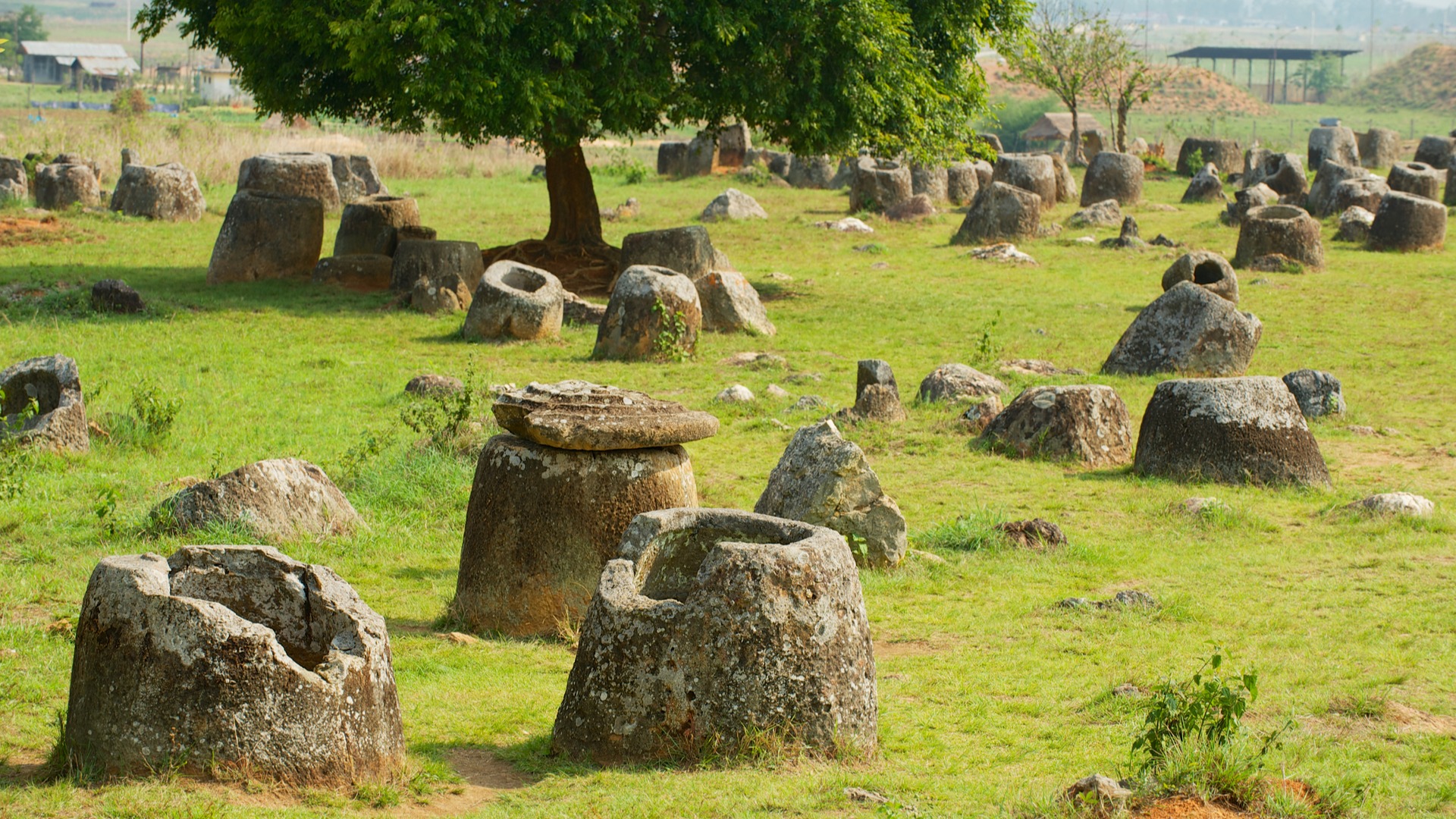
The main neighbouring attraction is the Plain of Jars, a megalithic site on the UNESCO World Heritage list, accessible from Phonsavan. To extend an itinerary focused on craftsmanship and culture, several addresses are relevant elsewhere in Laos:
- The TAEC Centre in Luang Prabang, dedicated to traditional arts and ethnic groups of Laos.
- The Lao Disabled Women Development Center, another social project that promotes weaving and sewing.
- Luang Prabang night market, where you'll find textiles and crafts.
- Phou Khao Khouay National Park, for a nature break on your way back to Vientiane.
Frequently asked questions
Frequently asked questions
It is located in Phonsavan, in Xieng Khouang province, just a few minutes from the Plain of Jars.
A standard visit takes 1 to 2 hours. Allow more time if you take part in an introduction to weaving or dyeing.
Yes. There is a Mulberries shop in Vientiane and the cooperative also offers online sales with delivery.
Yes. Watching the silk worm cycle and the dyeing stages is generally greatly enjoyed by families.
Lao Airlines operates several weekly flights to Xieng Khouang airport. By bus, the journey takes around 10 hours.
Planning your trip
Mulberries Farm fits naturally into an itinerary combining the Plain of Jars, Luang Prabang and northern Laos. To design a tailor-made stay incorporating this stop, consult our ideas for travel to Laos.

Interested in this visit?
We can include it in your personalised itinerary.