Si Phan Don (The 4,000 Islands)
Si Phan Don (The 4,000 Islands)
Si Phan Don, the "4,000 islands" of the Mekong, offers rare dolphins, powerful waterfalls and colonial heritage in a pristine natural setting in southern Laos.
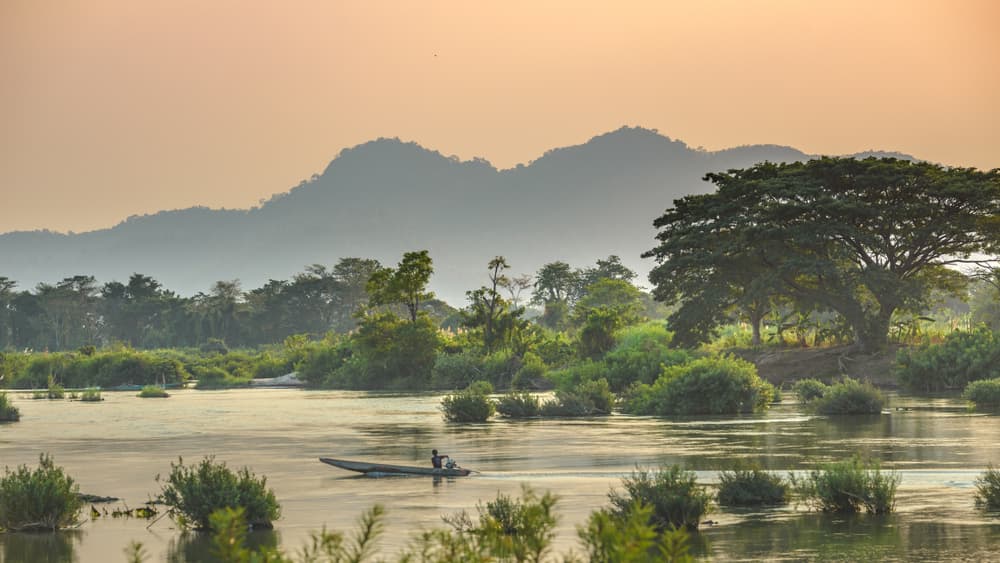
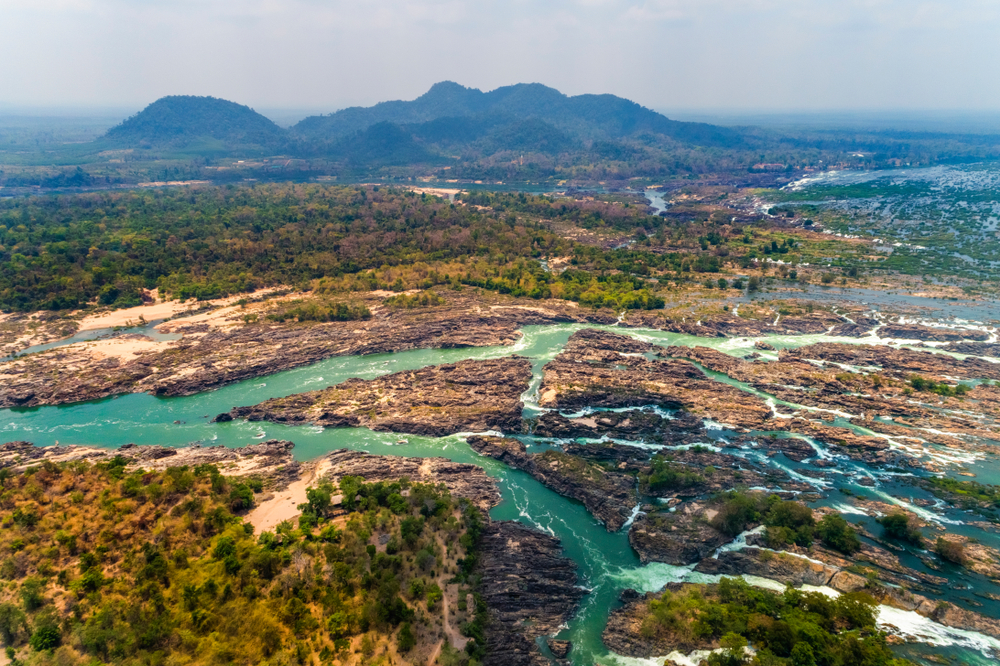
Si Phan Don — "the 4,000 islands" in Lao — refers to the archipelago formed by the Mekong at its widest point, in southern Laos, near the Cambodian border. The river spreads here across nearly 14 kilometres of width, submerging the plains in a mosaic of islands, islets and rapids. Three islands are inhabited and accessible to travelers: Don Khon, Don Khone and Don Det. Together they form a landscape of nature and unhurried rhythm, far from urban hustle.
Quick reference
- Access: from Pakse by bus or minivan to Nakasang, then by boat to Don Khone or Don Det (a few minutes).
- Recommended duration: 2 to 3 days to explore the main islands, waterfalls and observe dolphins.
- Dress code: casual; cover up when visiting village temples.
- Getting around the islands: by bike (rentals available locally) or on foot; no vehicles.
- Season: dry season (November–April) recommended — waterfalls are visible and trails are passable.
What to see
The landscape is dominated by the Mekong, its secondary channels and rapids. Don Khone and Don Det are connected by an old French colonial railway bridge. Khon Phapheng Falls, to the southeast, rank among the most powerful in Southeast Asia. In the calm waters between the islands, the Irrawaddy dolphin — a critically endangered species — can be spotted at dawn.
History and context
In the late 19th century, colonial France sought to make the Mekong a commercial route to China. The rapids at Si Phan Don made navigation impossible: the French built a small railway to bypass the obstacle, connecting Don Khone to Don Det. The locomotive and rails are still visible on Don Khone, relics of an infrastructure abandoned after independence.
Highlights of your visit
Khon Phapheng Falls
Located on the east bank of Don Khone, these falls rank among Southeast Asia's largest bodies of falling water. In the dry season, the rapids are spectacular; in the rainy season, the flow becomes impressive but access may be limited.
Irrawaddy dolphins
A small population of Irrawaddy dolphins survives in the Mekong channel between Don Khone and the Cambodian border. Early morning boat trips offer the best chances of spotting them. The species is protected; boats must maintain a regulated distance.
The colonial railway bridge
This metal bridge spanning the Mekong channel between Don Det and Don Khone is the only surviving structure from the Franco-Lao railway. Crossing it on foot or by bike offers direct views of the river and rapids below.
Village life
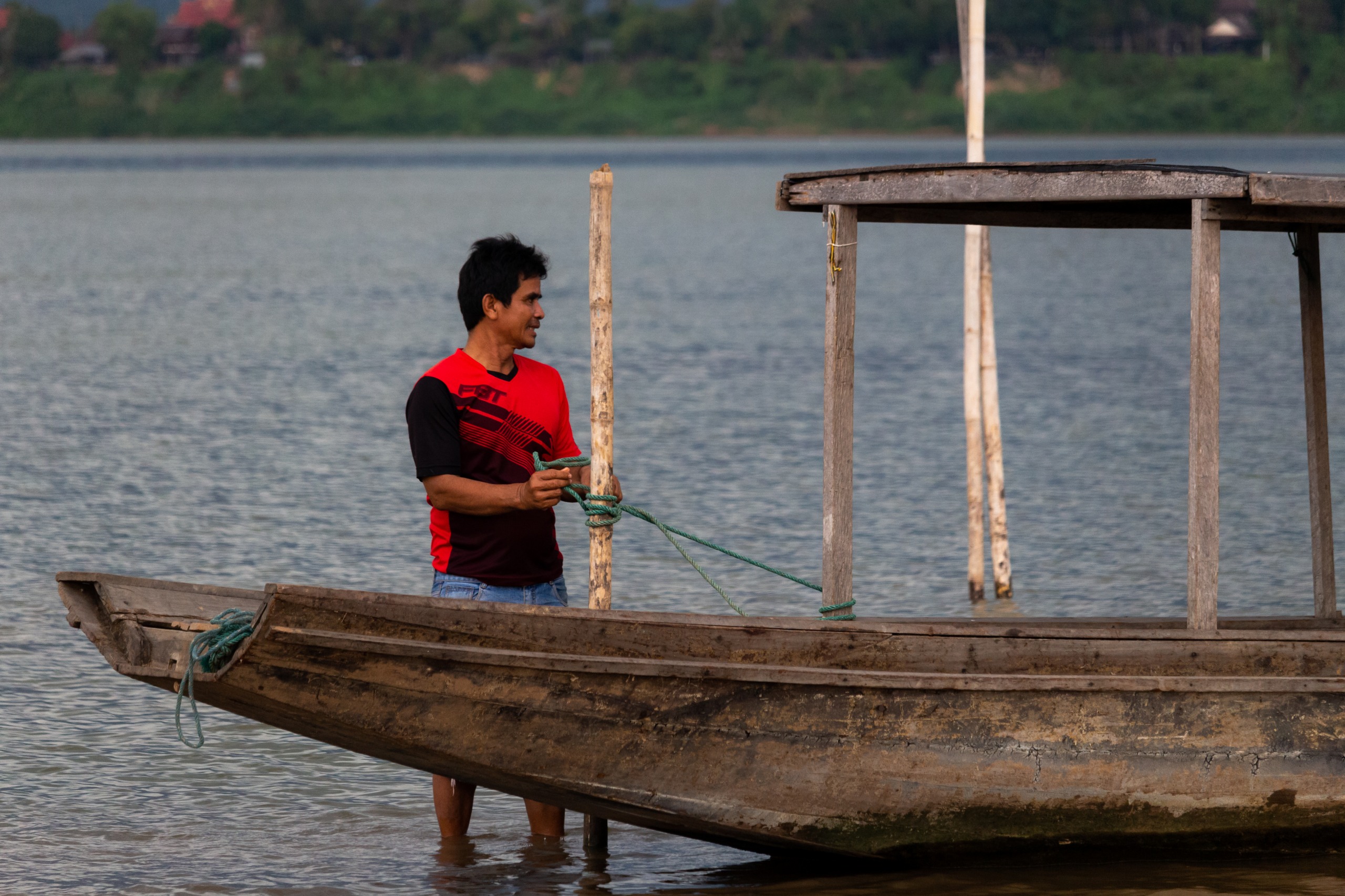
Don Khone and Don Det preserve fishing villages with wooden stilt houses. The pace is unhurried: nets drying in the sun, moored pirogues, neighbourhood temples. Don Det attracts more long-term travelers; Don Khone remains more unspoiled.
Photography tips
The golden light of sunrise over the Mekong, from Don Det's banks, is particularly favourable. Khon Phapheng Falls photograph best from the viewing platforms provided, late morning before heat haze. For dolphins, use a telephoto lens and avoid flash.
Location and access
Si Phan Don lies at the far south of Laos, approximately 130 km south of Pakse. The main boarding point is Nakasang village, on the east bank of the Mekong. Boats regularly serve Don Khone and Don Det. No roads cross the islands; bicycles are the standard means of transport. Accessibility for people with reduced mobility is limited due to earthen tracks and unequipped landing stages.
Nearby
- Pakse — the main city in southern Laos, the logistical starting point for Si Phan Don.
- Bolovens Plateau — highland plateau east of Pakse, renowned for its coffee plantations and waterfalls.
- Wat Phu Champasak — Khmer temple listed by Unesco, approximately 45 km north of Pakse.
Frequently asked questions
The dry season, from November to April, is most favourable: the falls are accessible, trails are passable and dolphins are easier to spot in lower waters.
Local boats provide connections from Nakasang. On the islands, bike rental is the most common solution; some routes are covered on foot.
Sightings are never guaranteed. Early morning outings increase your chances. The population is very small; respect the distances set by local guides.
Two days allow you to cover the falls, the colonial bridge and a dolphin trip. Three days provide a more comfortable pace to explore villages and riverside walks.
Yes, provided you accept simple comfort and bike travel. Children generally enjoy riverside rides and boat trips.
Yes. The border crossing at Don Khone allows you to reach northern Cambodia overland and by river, heading towards Stung Treng, then to Kratie or Phnom Penh.
Interested in this visit?
We can include it in your personalised itinerary.