French Influence in Laotian Architecture
The history of the French protectorate in former Indochina has long intertwined with tricolor explorers and diplomats. Auguste Pavie, one of them, arrived in Laos in 1887.
The history of the French protectorate in former Indochina has long intertwined with tricolor explorers and diplomats. Auguste Pavie, one of them, arrived in Laos in 1887. The seasoned explorer discovered the existence of a great city, or rather a constellation of countless villages, each centered around a Buddhist pagoda. Enter Luang Prabang, then a vassal of the Kingdom of Siam. Home to King Oun Kham. The two men forged a friendship, and Pavie accepted, accompanied by troops from Hanoi, to protect the city against invasion by Chinese rebels. This marked the beginning of a French protectorate over the Lao people, replacing Siamese control, and was formalized on October 3, 1893, in this new territory: Laos.
The capital of this new French Laos was established in Vientiane, and the country was divided into 10 provinces. The Kingdom of Luang Prabang enjoyed special status, with the king retaining legislative power, but France maintained a strong presence and built its administrative buildings. Vientiane, meanwhile, welcomed the French establishment that came here to settle.
A City Rebuilt
Today, only a tiny fraction of the capital's protectorate-era architecture remains in Vientiane. Everything has been renovated or destroyed multiple times. Upon arrival, however, the French undertook extensive reconstruction work on the city. Less than a century before, in 1828, Vientiane had been annexed by the Kingdom of Siam. The city was completely sacked, the Lao inhabitants were deported, and Siamese troops cleared and ravaged the site. Sixty years later, the French discovered a scarred, deserted city in ruins, unable to rebuild itself. They then constructed numerous neighborhoods filled with French-style residences, Venetian blinds taking pride of place. These shutters are still used today in Laotian architecture, as they promote cooling in the tropical climate.
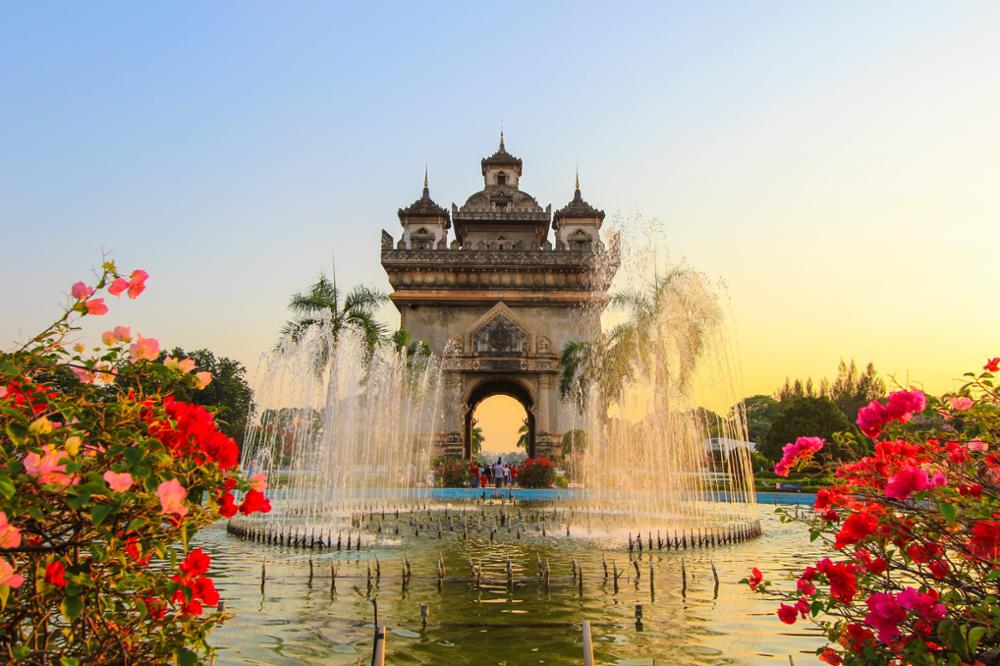
Although built by Tham Sayasithsena, a Laotian architect, the Patuxai, an emblematic monument of Vientiane, draws its inspiration from the Arc de Triomphe de l'Étoile in Paris.
Luang Prabang, a Different Picture
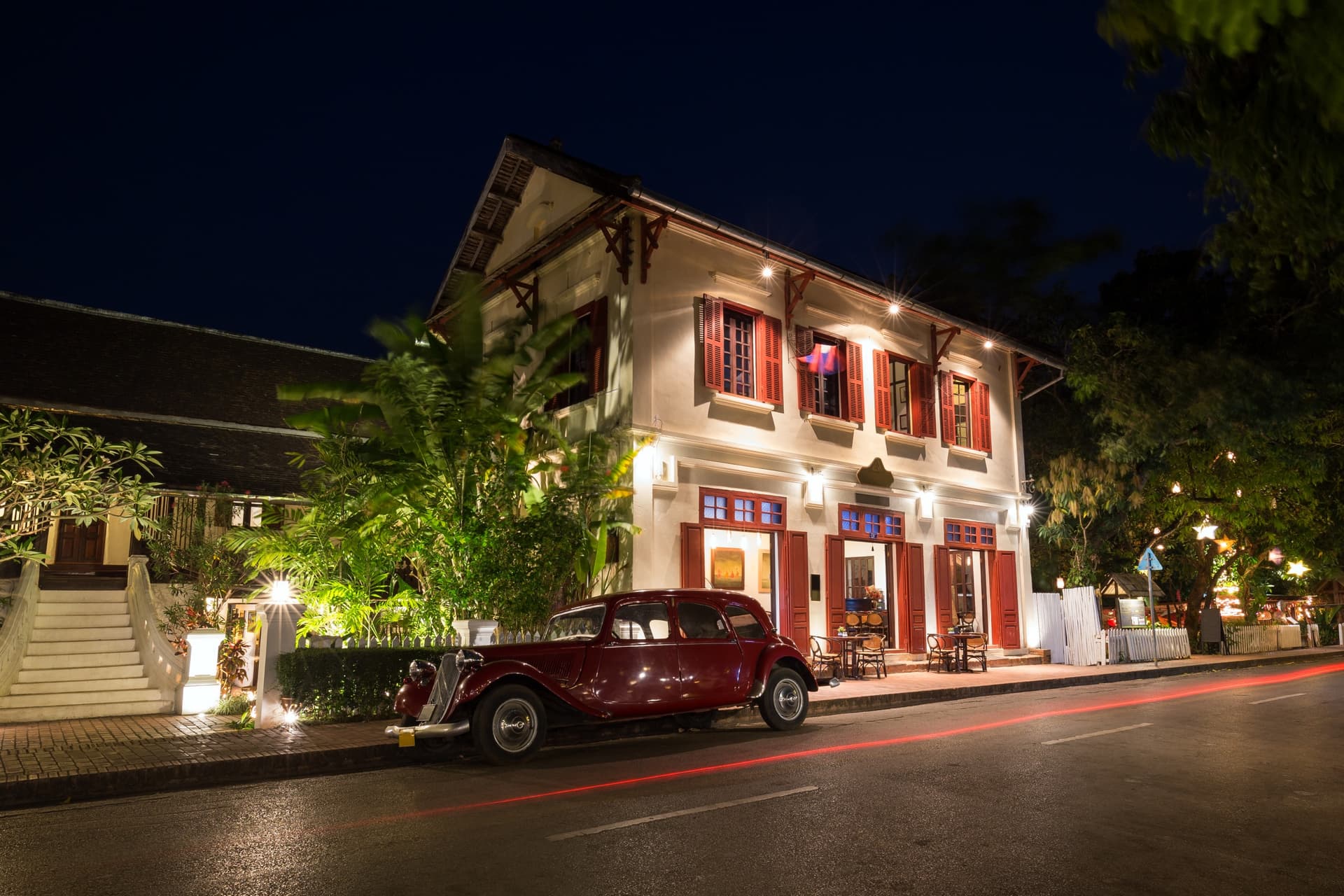
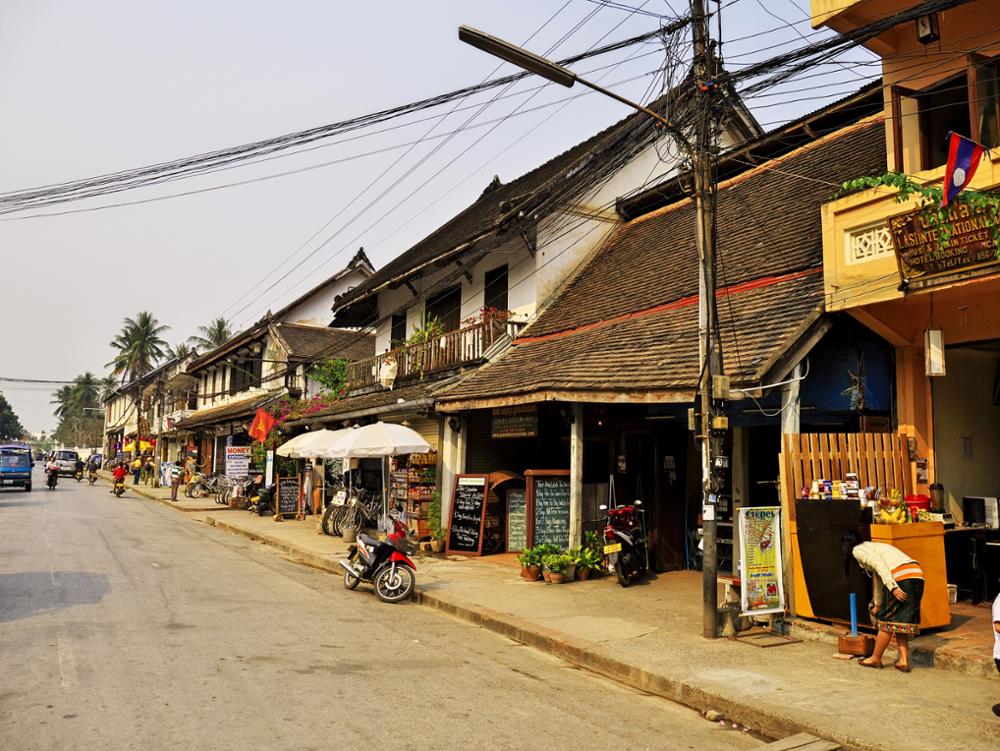
The story is quite different in the country's cultural capital. Today, the streets of Luang Prabang display striking cultural fusion. You can find colonial mansions, café terraces, flower pots, a Provençal atmosphere mingled with religious character. The temples and pagodas are of pure Laotian and Asian style. This blend formed in a remarkably short time. The first French arrivals thus discovered Luang Prabang, this city, or rather this collection of villages, built entirely of wood. Since this resource was abundant in the country. The French introduced brick and their expertise to construct numerous administrative buildings. The Laotians subsequently adopted this new technique and transformed their architecture to incorporate this material. Brick staircases, for example, became a status symbol during the twentieth century in Laos, marking the owner's success. Very few dwellings built entirely of wood remain today.
Frequently asked questions
The French protectorate over Laos was formalized on October 3, 1893, following the diplomatic efforts of Auguste Pavie, who had established ties with King Oun Kham of Luang Prabang as early as 1887.
The most emblematic example is the Patuxai in Vientiane, a monument inspired by the Arc de Triomphe in Paris. There are also numerous colonial mansions with shutters in the streets of Luang Prabang, as well as former administrative buildings constructed by the French.
The French introduced brick construction to Laos, replacing wood, the primary local building material. Venetian blinds, colonial facades, and brick staircases were adopted by the Laotians themselves and became symbols of social status and success during the twentieth century.
Only a small fraction of the original colonial architecture remains in Vientiane, as the city has undergone numerous renovations and demolitions over the decades. However, certain neighborhoods still retain facades with French influences, including shutters and balconies.
In Vientiane, colonial architecture has been largely remodeled or destroyed. In Luang Prabang, the blend is more visible and organic: colonial mansions stand alongside wooden Buddhist temples, creating a unique atmosphere that is part Provençal, part Asian, now protected by UNESCO.