Nong Khiaw
Nong Khiaw
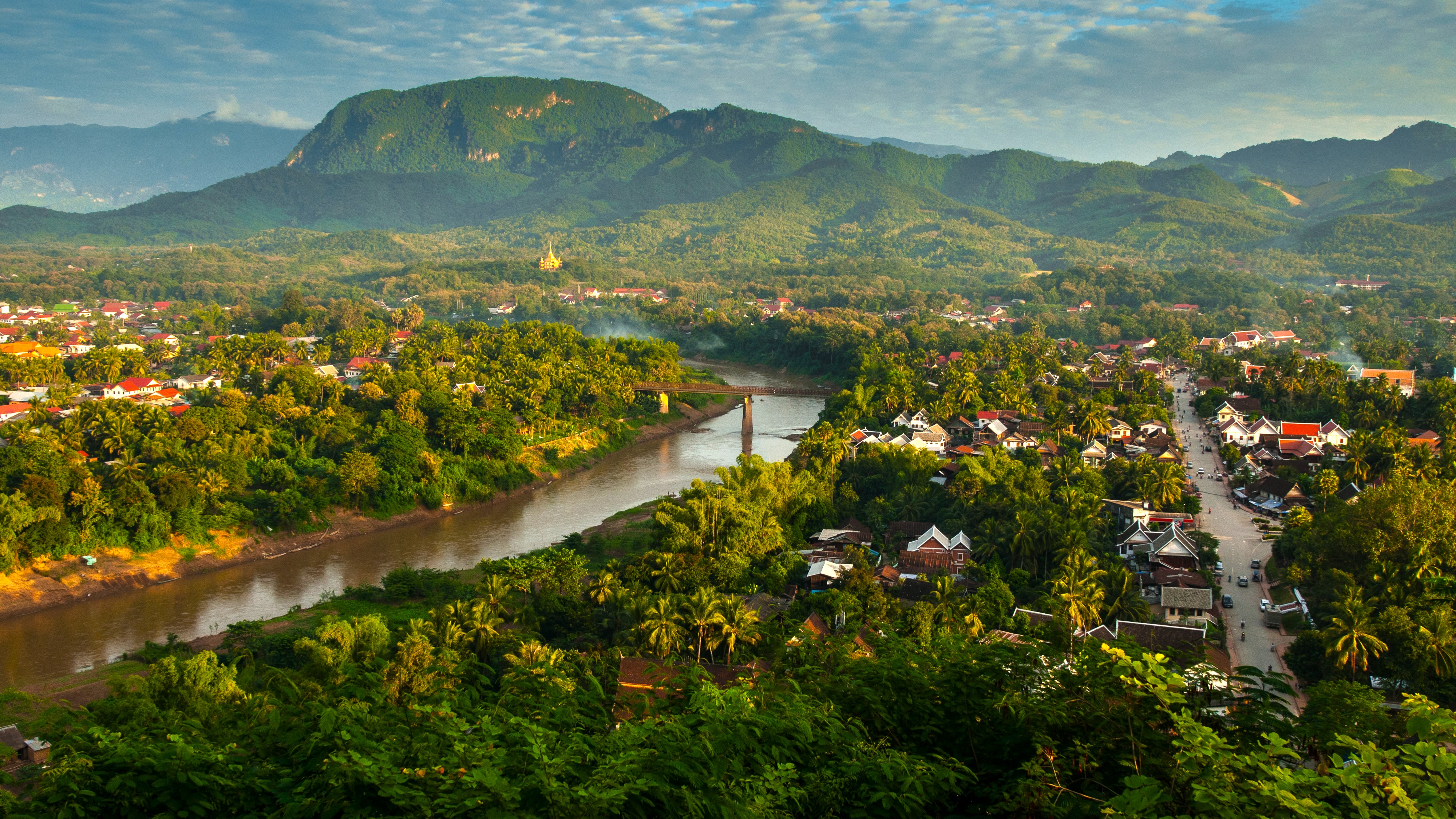
Bordered by the Nam Ou River and surrounded by dramatic karst mountains, Nong Khiaw is the standout destination in northern Laos for trekking, viewpoints and remote villages.
Located in the Luang Prabang Province, the village of Nong Khiaw has gradually become an essential stop for an authentic trip to Laos. Why? The surrounding landscape is simply breathtaking. It unfolds as generous nature with rice paddies, rivers, verdant karst mountains, dense jungle and rocky outcrops. Moreover, its villagers lead a peaceful life close to nature and embody a distinctly Lao culture.
This rustic hamlet differs markedly from the clichéd tourism hotspots found elsewhere in the country. What it offers remains its charming, off-the-beaten-path activities and tranquil pursuits. It is the ultimate destination for those seeking hiking, cycling, climbing, trekking and road trips; but also adventure, relaxation and leisurely walks.
History
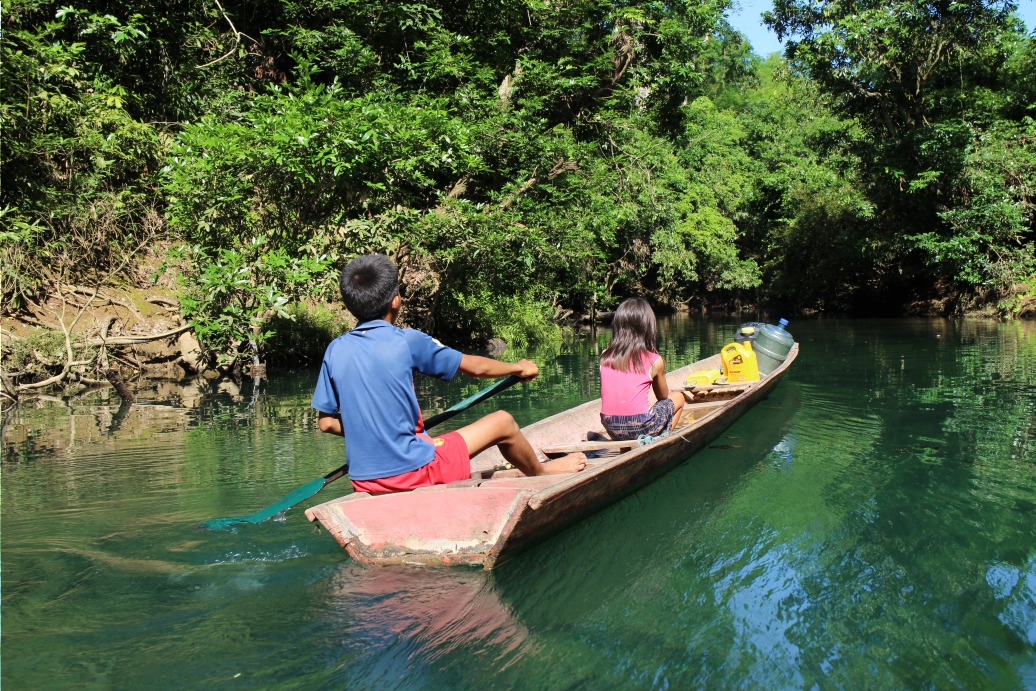
Nong Khiaw appears to be a town without history. It has changed little over centuries. Its charm lies in the daily routine: fishermen set out on the Nam Ou for the day, cattle wander the green hills, women rest on the bridge railings, and so on. Yet this tranquility masks a tragic past.
Indeed, this village endured a dark period during the Vietnam War. Between 1964 and 1973, the United States conducted a covert bombing campaign in Laos and Cambodia called "Operation Menu." These relentless attacks meant that this locality absorbed the vast majority of the 2 million tons of explosives dropped by Americans over the country's northern provinces.
Had it not been discovered that nearly a third of these bombs failed to detonate during the bombardment, no one would have known that this place had suffered under the grip of foreign powers. Certainly, it now offers countless activities to enjoy, yet the inherent fear of potential explosions impacts the daily lives of locals and tourist visits. Consequently, certain precautions have been put in place: prohibition against leaving marked trails, lighting fires, and disturbing the earth. However, the village has largely moved past these old stories and now focuses on economic growth.
Nong Khiaw has devoted itself to developing its tourism potential, driven by the recent growth of Luang Prabang. And although it has gained in popularity and modernity, this small Lao town has preserved its "nature and culture" character.
Today
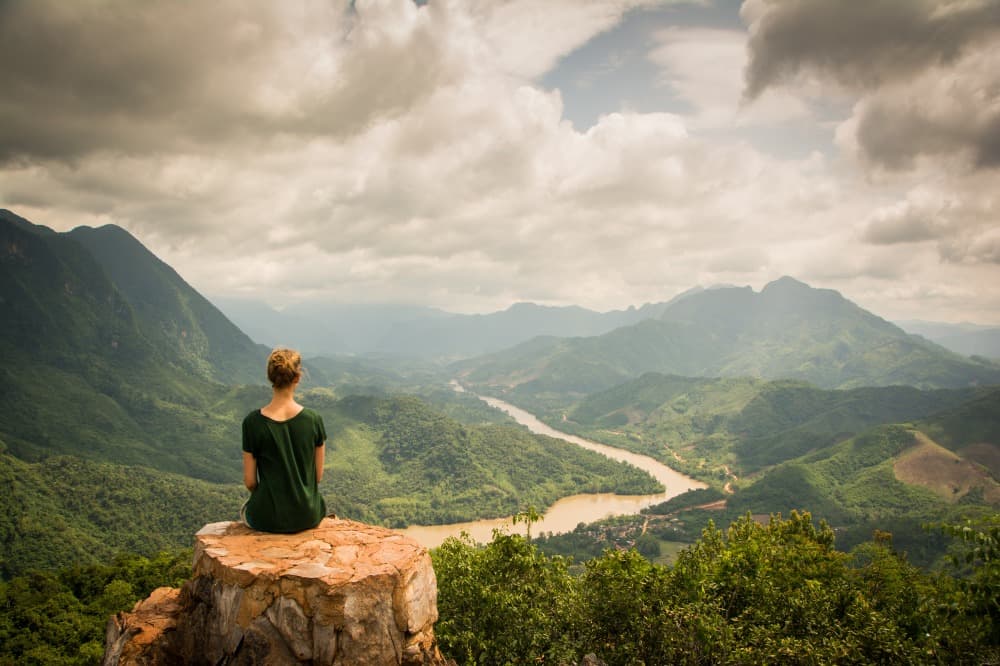
Nowadays, Nong Khiaw is described as being too quiet and somewhat bland. Yet several curiosities in its town center spark interest and wonder, including: the vertiginous bridge built by the Chinese spanning the two banks of the Nam Ou river, the towering limestone cliffs surrounding it, the sunset view from the aqueduct, the Phadeng viewpoint for appreciating the stunning panorama of the region below, its few Buddhist temples.
Its tourist center is also one of the highlights of its urban landscape. Numerous modern lodgings and guesthouses are established there. Certainly, these buildings have somewhat altered the simple and impassive way of life of locals. However, they have opened new prospects and professional opportunities for them.
Among the main attractions of this part of Laos are:
· its two caves (to be explored in the dry season):
Tham Pha Tok (entrance fee to negotiate: 10,000 kips): located 2.3 km south of the main road, this complex of three caverns sits on an imposing limestone cliff. It once served as shelter for local residents during the Second Indochina War. To reach it, simply climb a concrete staircase.
Tham Pha Kuang (fixed entrance fee: 10,000 kips): perched 300 meters above ground, this cave is only accessible by climbing. It stands out for its interior adorned with several Buddha statues. Venturing deeper, the cavern gradually narrows into a funnel, and at one point includes long passages barely half a meter high.
- River journeys on Nam Ou and jungle trekking, waterfall (Tad Mork), river, karst and villages (Ban Sopjam and its weavers; Muang Ngoi, etc.)
- kayaking/rafting downstream on Nam Ou from Muang Khua to Luang Prabang
- the "100 Waterfalls" hike: a series of dozens of waterfalls and swimming spots. The site is situated on private land. This excursion includes visits to rural villages and lush forests, plus a delicious traditional lunch.
- a tour of the picturesque Muang Ngoi: a two-hour boat excursion leads to this remarkable village. You can observe bomb casings hidden here and there in the gardens. Its other attractions lie in the authenticity of the small isolated villages nearby: Ban Na with its woven bamboo houses, Huay Sen, Huay Bo, etc.
Climate and Geography
Nong Khiaw, Nong Khiaow or Nong Khiau is a village in Luang Prabang Province, Laos. It is part of the Ngoi District and lies four hours by bus or three hours by VIP car from Luang Prabang, the former royal city. It is bordered by the Nam Ou River and encircled by stunning karst mountains.
Regarding climate, this village is characterized by extremely high temperatures from April to June. Days are very sunny and very hot. The weather only cools at night, and the vast majority of guesthouses lack air conditioning. During the rainy season (July to September), nature flourishes in its magnificent green cloak. However, access to various sites becomes more difficult, even impossible: muddy and slippery trails, leeches present, roads cut off.
The best time to explore Nong Khiaw is between November and February. As it is the dry season, days and nights are pleasantly cool, and all roads are passable.
By Bus
Nong Khiaw is located approximately 140 km north of Luang Prabang on Route 13.
From Luang Prabang
Three buses connect with the village. There is a tourist bus departing from the South Bus Station at 9 a.m. The ticket costs 50,000 kips. During the day, two local buses are available: one at 11 a.m. from the South Station and another at 2 p.m. from the North Station. Ticket price is 40,000 kips. The average journey takes 4 hours, and buses only depart once full.
Across from the South Bus Station is a minibus terminal serving the same route once or twice daily. Tickets (55,000 kips on-site or 65,000 kips reserved through an agency) are typically purchased 1 hour before the scheduled 9:30 a.m. departure.
From Oudomxay
Buses departing this town also run back and forth to this charming village: once daily and only if the vehicle is sufficiently full. This more complicated option offers no fixed departure times. Alternatively, you can negotiate a bus fare to Vang Vieng or Luang Prabang and get off at Pak Mong. From there, simply take a tuk-tuk to Nong Khiaw for approximately 30,000 kips per person.
Note: Nong Khiaw's bus station is located 1 km from the tourist center, near the Chinese bridge.
By Boat
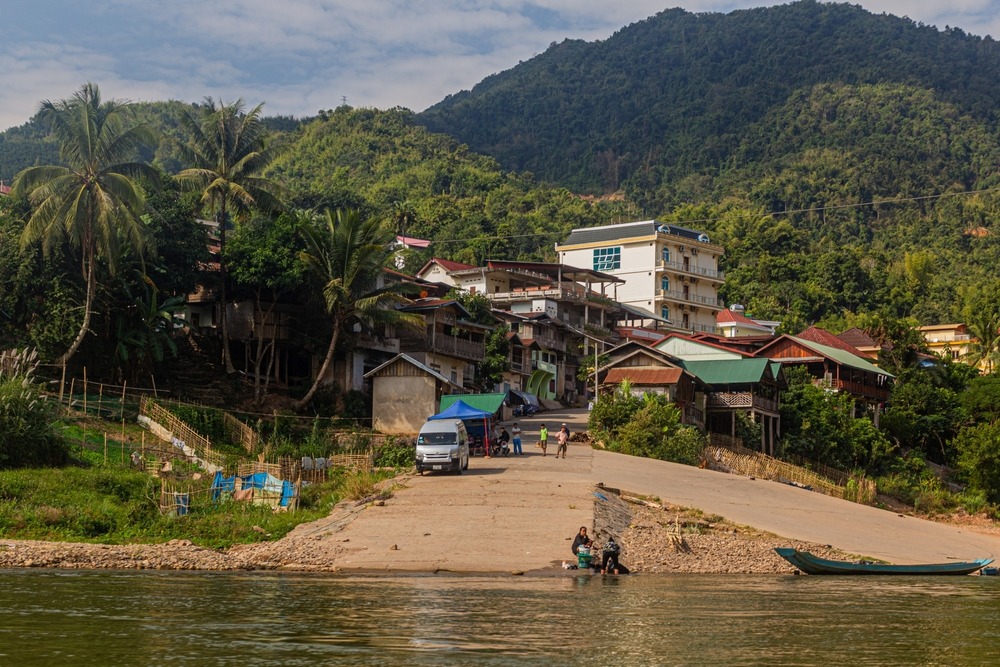
The village's landing is situated near its imposing bridge. Crossings departing from Luang Prabang were suspended due to dam construction work.
However, there are still river connections from Muang Khua. Here, boatmen request a minimum of 120,000 kips per passenger. This fare fluctuates depending on the number of travelers. Departure is at 9:30 a.m. and the crossing takes less than 4 hours. From Muang Ngoi Neua, boats leave the dock at 9:30 a.m. and navigate for at most 1 hour. The journey costs 25,000 kips.
Like most Lao towns, Nong Khiaw is small in size. It is therefore easy to explore its corners by walking.
Otherwise, there is the alternative of cycling. Tourists can rent a bicycle:
- at Riverside Bungalow hotel: 50,000 kips for a mountain bike and 10,000 kips for a city model
- across from Delilah Café: 30,000 kips for a mountain bike
Practical Information
Proper vacation planning requires good information about the destination. In this regard, traveling to Nong Khiaw necessitates taking certain factors into account, such as:
· ATMs: several ATMs are scattered throughout the village. An ATM of the BCEL bank near the bridge allows withdrawals capped at 1,500,000 kips.
· Currency exchange: BCEL provides exchange services and traveler's check cashing. This can also be done through the Youth Travel Agency. Riverside Guesthouse offers currency exchange and cash advances on credit cards.
· Internet: on one hand, good 4G connectivity is available with Lao Telecom. On the other hand, Wi-Fi services (unstable and limited) are offered at guesthouses and restaurants.
- Specific trekking equipment: hat, sunscreen, insect repellent, waterproof shoes, hiking boots, sarong (for women) for swimming, flashlight for descending from Phadeng Peak viewpoint.
What to Do?
- trek west of the limestone mountains and savor the view once at the summit
- attempt the "100 Waterfalls" hike
- stroll through the village while soaking in its relaxing atmosphere and enjoying its remarkable views of the Nam Ou
· wander the streets of Nong Khiaw and take a look at its small Buddhist temple complex
· enjoy cycling and admire the beauty of the landscape along the way: rice paddies stretching to the horizon, karsts, jungles, forests, etc.
· head east and visit the remote villages of the Khmu and Hmong peoples
· for 25,000 kips, try a herbal steam bath (25,000 kips per person for 1 hour) or a zen massage session at "Sabai Sabai" or "Herbal Sauna"
- climb the steep trail to Phadeng Peak viewpoint to savor the incomparable panorama of the surrounding valleys (entrance: 20,000 kips with or without a walking stick)
· enjoy the pleasures of an early morning outing and the sublime view of the sun emerging from the endless clouds blanketing the Nam Ou River
· relax on the river beaches near the bridge
- pass by Muang Ngoi (slow boat round-trip departure: 9 a.m. and 2 p.m.; private boat rate: 100,000 kips for 4 people)
- participate in bamboo raft-building workshops with locals
Want to discover this destination?
Our local advisors design your tailor-made trip.