Tham Chang Cave
Tham Chang Cave
An iconic speleological site in Vang Vieng, Tham Chang cave combines the history of a cave village, karst landscapes and swimming at the foot of the Nam Song river.
The cave Tham Chang (also spelled Tham Jang or Tham Jung) ranks among the most accessible speleological sites in Vang Vieng. Located approximately 1 km from town center, at the foot of a limestone cliff overlooking the Nam Song river, it combines historical interest, geological formations and sweeping views over the valley and rice paddies.
Why visit Tham Chang cave
Tham Chang stands out from most other cavities in the region through its immediate proximity to the town and its historical significance. The site was a genuine cave village, a refuge for the inhabitants of Meuang Xong against Yunnan bandits in the early 19th century. The cave still bears traces of this occupation, alongside obvious geological interest: stalactites, limestone formations and natural openings in the rock overlooking the plain.
The relatively short access from town center, the clear water basin at the entrance and the natural coolness of the cavity make for a brief visit (1 to 2 hours) that fits easily into a day in Vang Vieng.
History: from cave village to tourist site
The site's history is closely tied to the conflicts that shaped the region. Inhabitants of the village of Meuang Xong, in the southern part of town, originally occupied the surrounding lands for market gardening. In the early 19th century, incursions by Yunnan bandits from China forced them to take refuge in the cave.
They organized a genuine cave village there, with living spaces, water areas and storage zones. The cavity was again used during the Laotian civil war as an observation point over the region, its elevated position allowing surveillance of the valley and access routes.
The name would evolve into Tham Chang, where "chang" means "steadfast" or "loyal" — a reference to the resistance of the inhabitants who sheltered there. As conflicts subsided, villagers resumed farming the surrounding lands, and the cave gradually became a visitable site.
What to see in the cave
The ascent and entrance
The visit begins with climbing 147 stone steps carved into the cliff face. The effort is short but sustained, and a first platform offers from the entrance an unobstructed panorama over the Nam Song valley and the rice paddies below.
Inside the cavity
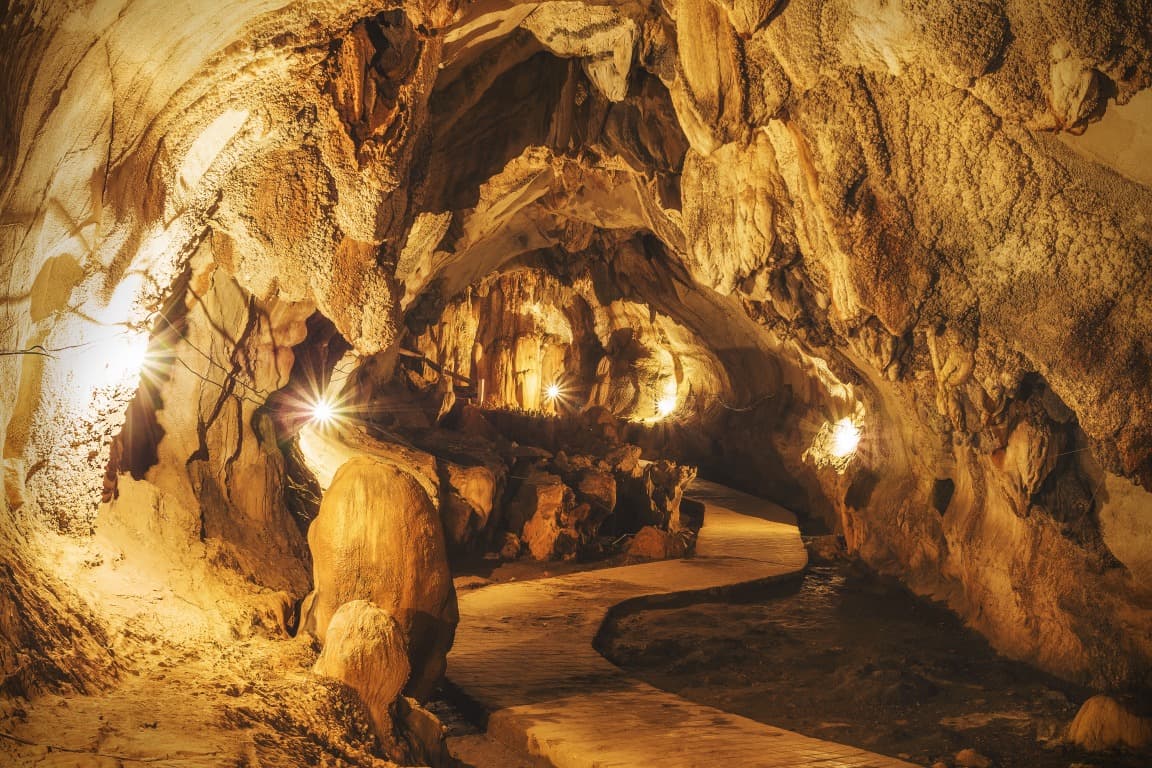
The first several hundred meters of the route, roughly 800 m, are equipped with marked walkways and electric lighting. To venture further into the galleries, a headlamp is necessary; the cave extends into several narrower galleries, to be explored with caution.
Inside, attention focuses on:
- the stalactites and limestone formations sculpted by water;
- the natural openings in the walls, which open onto the mountain, forest and rice paddies;
- remnants and installations recalling human occupation during the conflicts.
The basin and Nam Song river
Below the entrance is a small basin of clear water, with a marked turquoise hue, where it is possible to swim before or after the visit. At the foot of the site, the Nam Song river offers a shaded rest spot, ideal for a picnic or moment of respite.
Practical information
- Duration of visit: allow 1 to 2 hours to combine the cave, the platform and the basin.
- Fee: a modest entrance fee is requested on-site, to which may be added a passage fee for the access bridge and possible parking for bicycle or motorbike. Amounts vary; bring cash in kips.
- Hours: the site is generally open during the day, from morning until mid-afternoon. Check locally on the day itself.
- Equipment: closed-toe shoes (steps can be slippery), flashlight or headlamp for venturing beyond the lit zone, swimwear for the basin.
When to visit
The most pleasant time slot is early morning, before group arrivals around mid-morning. Visitor numbers increase noticeably from midday onwards, making the narrow gallery passage less smooth.
Season-wise, the dry period (roughly November to March) remains the most comfortable for combining a cave visit with outdoor activities around Vang Vieng. During the rainy season, access remains possible but steps and paths can be slippery.
How to get there
Tham Chang is the speleological site closest to Vang Vieng town center, at approximately 1 km. Several options are available:
- On foot: follow the path alongside the Nam Song heading south toward the village of Meuang Xong. At the intersection marked by the Jamee guesthouse sign, turn right onto the dirt track until you reach the entrance of the Vang Vieng Resort. After paying a passage fee, you reach the orange bridge spanning the river, then the staircase leading to the cave entrance.
- By bicycle: a practical and economical option, rentals readily available in town.
- By motorbike or car: useful if combining the visit with other sites in the region; rentals common in Vang Vieng.
Nearby attractions
The Vang Vieng region has many other caves, blue lagoons and viewpoints over karst landscapes. To extend your discovery throughout Laos, several sites complement a broader itinerary well:
- The Nam Ou river, for riverine landscapes in the north;
- Phou Khao Khouay National Park, for nature and hiking;
- Luang Prabang night market, a classic cultural stop in the country's north.
Frequently asked questions
Frequently asked questions
Allow 1 to 2 hours to tour the lit zone, enjoy the views from the wall openings and swim in the entrance basin.
Access requires climbing 147 stone steps that are relatively steep. The ascent is short but demands effort. Once inside, the main route is marked and secured by railings.
No, the cave's tourist zone is marked and lit. A guide is useful only for exploring the deeper galleries beyond the first 800 meters.
Yes, a small basin of clear water near the entrance allows swimming. Remember to bring a swimsuit and towel.
Early morning is generally the quietest time slot. Visitor numbers increase noticeably from mid-morning onwards.
Integrating Tham Chang into a Laos trip
The cave fits naturally into a few-day stay in Vang Vieng, between Vientiane and Luang Prabang. To build a tailored itinerary including this site and the surrounding karst landscapes, consult our Laos travel suggestions.
Interested in this visit?
We can include it in your personalised itinerary.