Li Phi Cascades
Li Phi Cascades
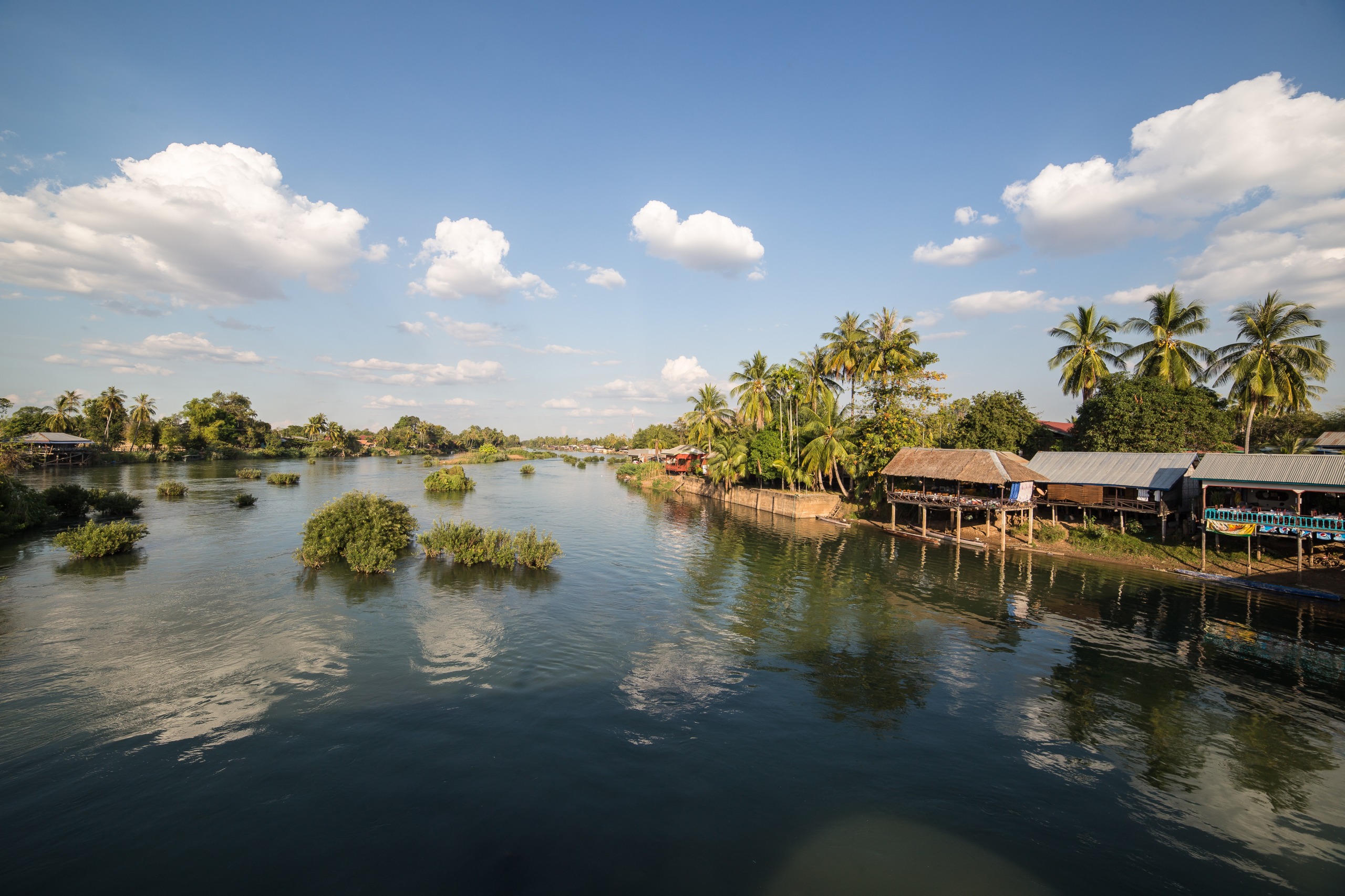
On the island of Don Khone, in the heart of the 4,000 islands, the Li Phi Cascades (Tad Somphamit) branch the Mekong into powerful falls steeped in Lao legend.
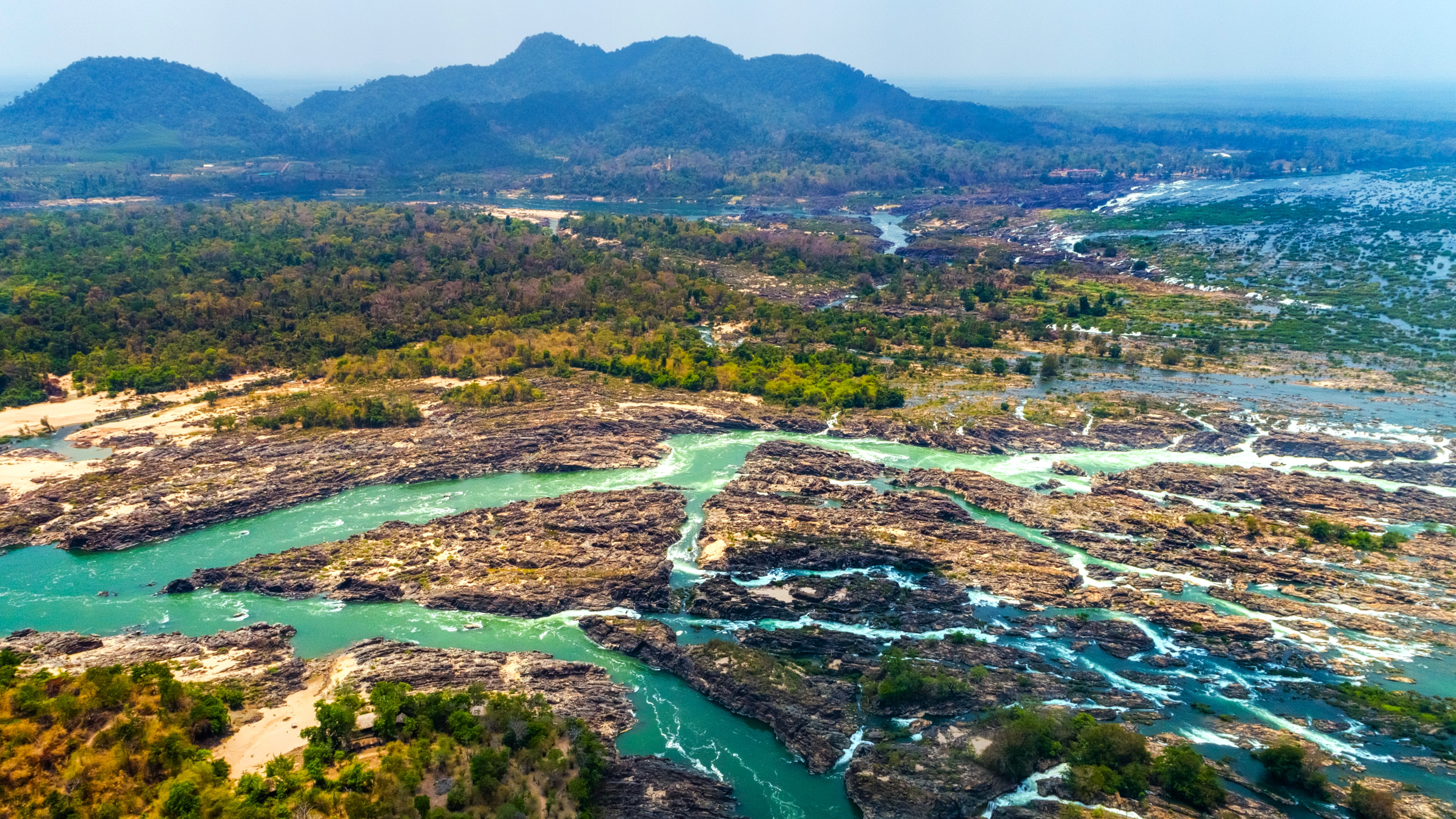
At the southern reaches of Laos, on the island of Don Khone, the Li Phi Cascades — also called Tad Somphamit — capture one of the most powerful manifestations of the Mekong. At the heart of the 4,000 islands archipelago (Si Phan Don), these shallow but high-volume rapids branch into dozens of falls that strike rocky ledges. A singular geographical site, coupled with a rich body of local legends.
Why visit Li Phi Cascades
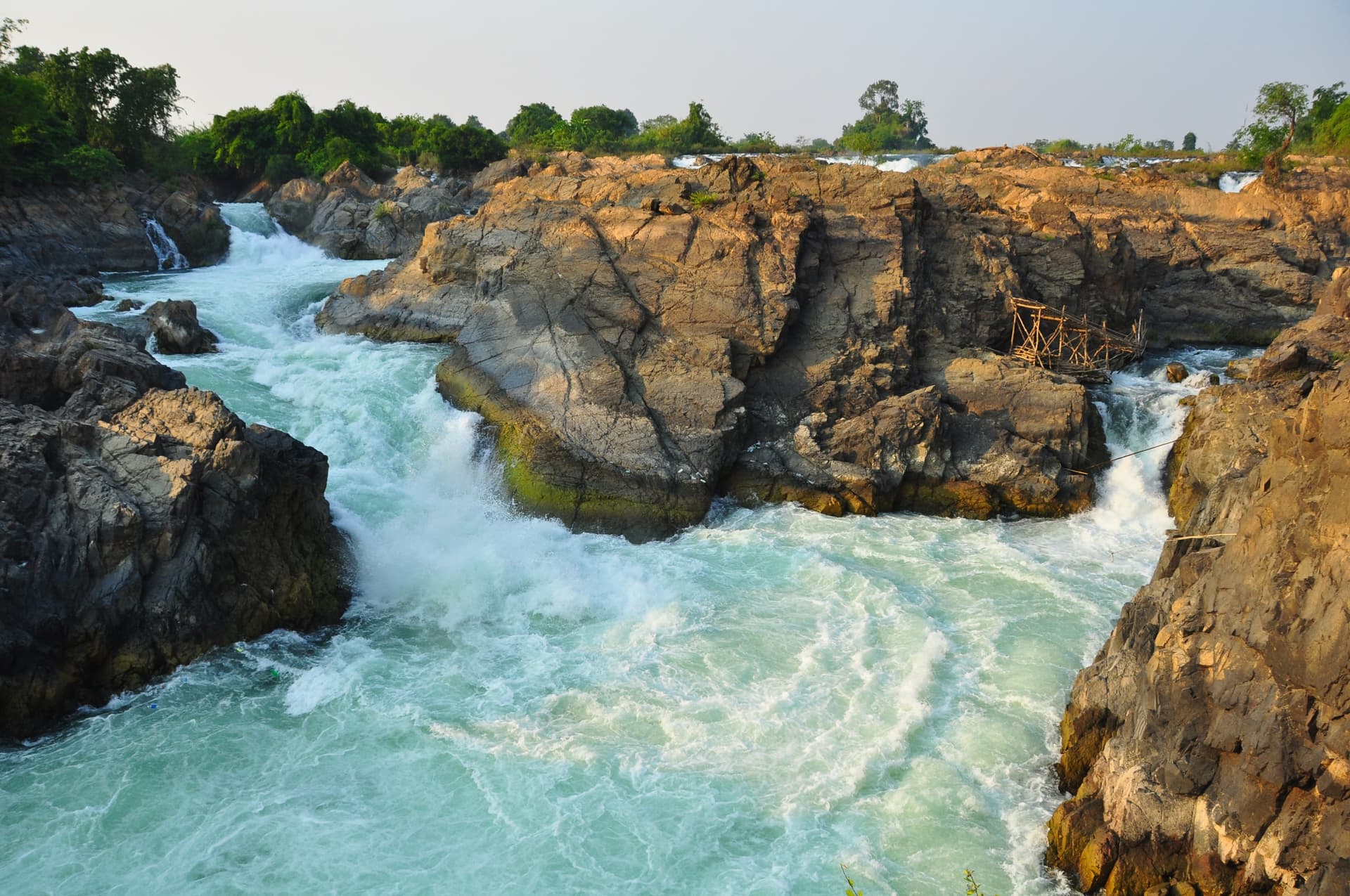
The Li Phi Cascades are not visited for their height — which is modest — but for their power. The Mekong, constricted in a rocky gorge, fragments here into branching falls whose roar carries far. The site combines several attractions:
- an impressive hydrological phenomenon, especially in the rainy season;
- dense intangible heritage, with Buddhist and popular legends attached to the place;
- emblematic wildlife nearby, including the rare Irrawaddy freshwater dolphins;
- a setting suited to slow exploration, on foot, by bicycle or boat, in keeping with the contemplative atmosphere of the 4,000 islands.
History and legends of the site
The name of the falls itself tells two superimposed stories, one etymological, the other mythical.
The etymology: a trap for fish and spirits
In Lao, Lii refers to a traditional fish trap and Phii refers to spirits, ghosts and the dead. The name "Li Phi" thus sums up the dual reputation of the place: a fishing zone feared for its whirlpools, and a passage charged with spiritual presence in local imagination.
The Buddha statue swept away by the whirlpool
A legend recounts that monks sent by the King of Cambodia were tasked with spreading Buddhism in the region and building a pagoda on Don Khone. A great Buddha statue, transported by three boats from the mainland, was caught in the whirlpool of the falls and lost in the waters, halting the construction of the sanctuary.
The mermaids and the "abyss of the dead"
Another oral tradition speaks of mermaids attracting inhabitants with their song into the rapids, where they drowned. This tale is associated with the second name of the falls, Tad Somphamit, which translates as "abyss of the dead."
What to see on site
The site is explored via a network of trails and wooden walkways offering several viewpoints over the rapids.
The rapids and wooden bridge
The falls spread over a considerable width, with water channels interlacing between the rocks. A small wooden bridge crosses a portion of the site; on days of heavy rain, it is submerged by the waters, a sign that the flow has reached its maximum. The force of the current makes bathing outside authorized zones dangerous.
Traditional fishermen
Below Tad Somphamit, in the pools formed at the base of the falls, local fishermen set traps and nets using ancient techniques adapted to the turbulence of the Mekong. This is one of the most striking observation points for understanding the bond between the river and the inhabitants of the 4,000 islands.
Irrawaddy dolphins
At the southern extremity of the islands, the waters harbor Irrawaddy freshwater dolphins, called Pla kha in Lao. A fragile and discreet population, they are approached from Ban Khone by boarding a local motorized canoe, generally in late afternoon when the animals surface.
When to visit
Seasonality strongly conditions the experience:
- Rainy season (June-October) and end of monsoon: maximum flow, most spectacular falls, but slippery trails and some passages submerged.
- Cool dry season (November-February): reduced flow, rocky structure more visible, more comfortable walking conditions; ideal period to combine the visit with a dolphin outing.
- Hot dry season (March-May): lowest water levels, marked heat; the spectacle loses its power.
Late afternoon offers the best light on the river.
How to get there
From Paksé
The classic route is to reach Paksé, the capital of southern Laos, then take a minivan or minibus to the Ban Nakasang landing. From there, a ferry crosses the Mekong to Don Khone island. After disembarking, signs and local directions lead to the site entrance.
From Don Det
If you are staying on Don Det, the most direct route is to rent a bicycle or motorcycle and use the old French railway bridge that connects Don Det to Don Khone. Then allow a few minutes to Ban Khone, followed by approximately one kilometer to the cascades.
Practical information
- Location: western tip of Don Khone island, approximately 15 km south of Muang Khong and 1 km from Ban Khone village.
- Access: paid entry, moderate rate in kips, ticket valid for the day, purchased at the entrance booth or upon arrival on Don Khone.
- Hours: daytime opening, from morning to late afternoon (variations possible depending on season).
- Duration of visit: allow 1.5 to 3 hours for the site itself, longer when combining swimming or waterside breaks.
- Safety: slippery trails delimited by wooden barriers, signage to be observed; stay in marked areas.
- What to bring: closed non-slip shoes, water, sun protection, swimwear for authorized swimming areas.
Nearby attractions
The cascades are part of a larger ensemble worth exploring over two to three days:
- Don Det, immediate neighbor, famous for its laid-back atmosphere and riverside guesthouses, accessible via the French bridge;
- the Khone Phapheng Falls, more voluminous, located on the eastern arm of the Mekong;
- boat outings to the Irrawaddy dolphins, from Ban Khone;
- remains of the old French colonial railway that crossed Don Det and Don Khone, with surviving bridges and locomotives.
To further explore Laos by river to the north, the Nam Ou River offers another face of Lao river travel. On the nature side, the Phou Khao Khouay National Park complements a route between cascades and forests well. Further north still, the Luang Prabang night market and the Ock Pop Tok boutique allow you to experience Lao textile crafts.
Frequently asked questions
Frequently asked questions
"Li Phi" comes from the Lao Lii (fish trap) and Phii (spirits, ghosts), referring to the whirlpools and the spiritual charge of the place. "Tad Somphamit" translates as "abyss of the dead," a name tied to the legend of mermaids luring inhabitants into the rapids.
Swimming is possible only in marked zones of the site. The rapids themselves are dangerous due to the force of the current and submerged rocks; it is essential to respect the barriers and signage.
Flow is maximum during the rainy season and just after the monsoon, between June and October, or even November. The cool dry season (November to February) remains very pleasant for combining a visit with other activities on the 4,000 islands.
From Ban Khone village, motorized canoes depart toward the southern tip of the islands, where dolphins surface. The outing typically lasts one to two hours and is organized locally.
The site is well-marked and can be explored independently without difficulty. A local guide, however, provides useful insights into the legends, traditional fishing, and wildlife of the 4,000 islands.
Include Li Phi Cascades in your journey
The Li Phi Cascades lend themselves to a multi-day stay in the 4,000 islands archipelago, as a complement to southern Laos (Bolovens Plateau, Champassak, Vat Phou). To build a custom itinerary including Don Khone, Don Det and neighboring sites, consult our travels in Laos.
Interested in this visit?
We can include it in your personalised itinerary.