Visiting Elephants: Yes, But With Caution
Getting close to Asian elephants, feeding them, bathing them—in short, interacting with them—is a popular tourist activity for travelers visiting Laos.
Getting close to Asian elephants, feeding them, bathing them, in short interacting with them is a popular tourist activity for travelers visiting Laos. However, it is important to keep in mind that certain practices cause suffering to this species, once manipulated excessively by wealthy classes and still highly sought after by poachers. It is now classified as "Endangered" by the International Union for the Conservation of Nature (IUCN).
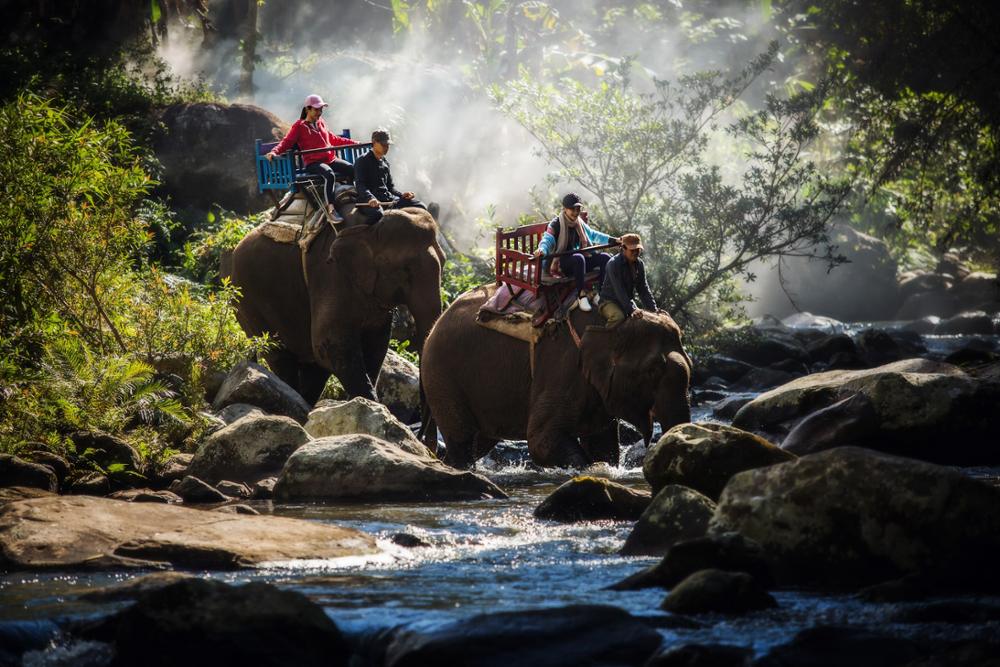
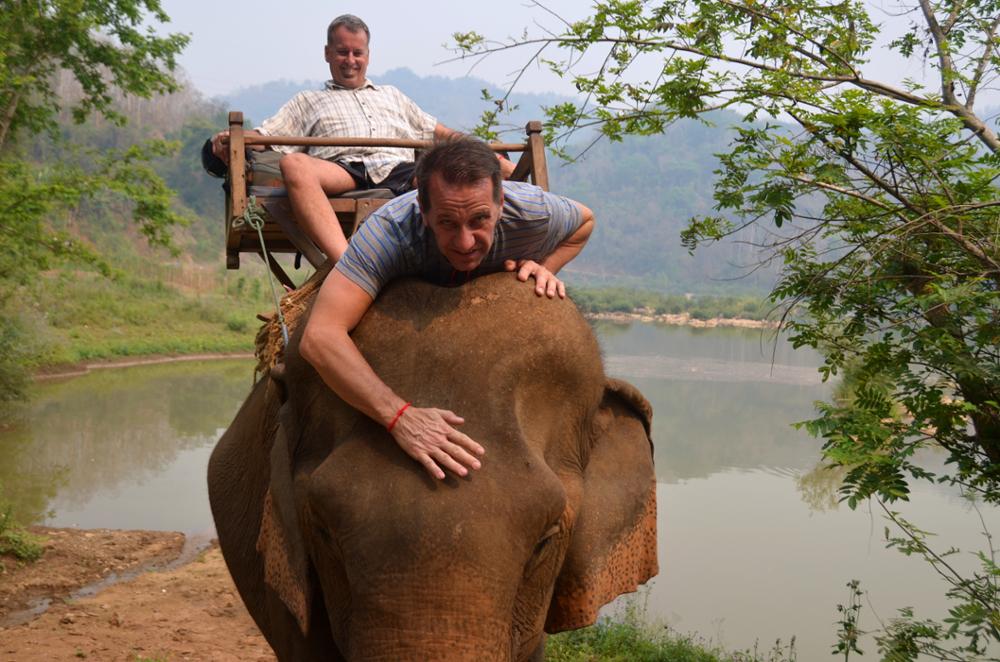
Many testimonies attest that tourist behavior toward Asian elephants must change radically. Taking responsibility. Raising awareness. An open secret: rides on their backs should be avoided. Strictly. The pachyderms may not appear mistreated outwardly, but the training they undergo to accept a human presence on their spine can amount to torture. The word is strong, but devastatingly accurate. All these forms of training serve a single objective: making money. Under the guise of labor, begging, or obviously tourism. Let's take an example of these practices—non-exhaustive but widespread across Southeast Asia—that supports this truth. "Phajaan." The goal is to subdue the elephant to the utmost degree. Bring it under control, strip it of its reflexes and instinct so it becomes completely docile in the face of Man.
Torture in its rawest form
The serious scientific investigation site Maxisciences, combined with testimonies from influencers Seth and Lise, attests to this reality: "From a practical standpoint, trainers only succeed by using violence. Phajaan lasts between 4 and 6 days and is performed on young elephants. The animals are separated from their mothers and confined in narrow cages where they are chained. They are then beaten repeatedly in strategic locations, the most sensitive ones. In addition to being beaten, elephants are kept awake, deprived of food and water under the eyes of trainers ("mahout") who recite prayers that can be translated as 'elephant, if you stop struggling, we will not hurt you anymore'." From that point on, the animal is no longer in control. It obeys and follows the orders of its despot, Man.
It should be noted that not all survive these tortures. Maxisciences scientists estimate that half of young pachyderms die during them and that some become aggressive, unusable for mahouts. Not profitable. Most would therefore be eliminated. Sometimes taking their torturer to the grave with them. More than 100 Southeast Asian elephant trainers are killed by their victim each year.
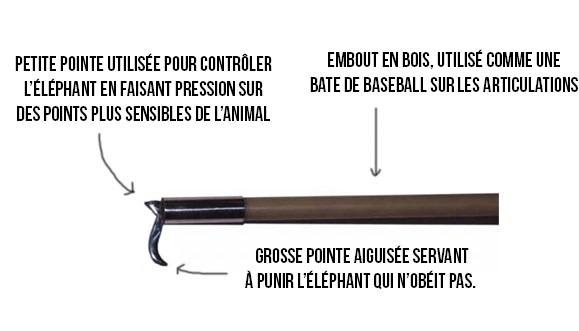
Once the elephant's depth of spirit is reduced to nothing, the mahout teaches it techniques and gestures that will serve to entertain the audience during these pernicious rides, deemed most charming by tourists, within the Southeast Asian ecosystem. So it stays in line for the rest of its life, "they are given occasional reminders by being beaten or having pressure applied again to sensitive points," they continue. The animal is now ready to welcome tourists and receive their tender caresses, immortalized in Instagram photos testifying to their benevolence.
Alternatives for travelers
But what if you want to get close to elephants in a more natural way than at a zoo? In Laos, organizations promise fabulous moments with pachyderms. Beside them, not on top of them. In Luang Prabang, for example, a very touristy city in the kingdom's north, the MandaLao association promotes its "Non-riding elephant tour experience." The goal is not to impose on the animal interactions that are not natural, such as playing football, painting with the trunk, pulling tree trunks, or serving as a carriage. Seth and Lise believe that "it is largely because of tourists that this business works, so it falls to tourists to make the right decisions. The future, the well-being, and above all the survival of thousands of elephants are at stake." This is basic economics. If demand drops sharply, supply will be reduced. The key is to inform people about these practices so there is collective awareness.
Frequently asked questions
No, elephant riding is not considered ethical, even if the animal does not appear mistreated on the surface. The training necessary for an elephant to accept a human on its back often involves violent methods like phajaan. It is strongly recommended to opt for 'non-riding experiences' offered by associations like MandaLao in Luang Prabang.
Phajaan is a traditional training practice used in Southeast Asia to subdue young elephants to human authority. This process lasts between 4 and 6 days and involves isolation, deprivation of food and water, and repeated blows to the animal's sensitive areas. It is widely condemned by animal welfare advocates because it causes lasting physical and psychological trauma.
An ethical sanctuary does not offer elephant rides or performances (painting, football). The elephants evolve in a natural space, without permanent chains, with regular veterinary care. The interactions offered are natural: observing elephants bathing, feeding them at a reasonable distance. MandaLao in Luang Prabang is a recognized example of this type of experience in Laos.
The Asian elephant is classified as 'Endangered' on the International Union for the Conservation of Nature (IUCN) Red List. Its population continues to decline due to habitat loss, poaching for ivory, and capture for tourism. Responsible tourism is one of the levers for reducing pressure on this species.
In Luang Prabang, the MandaLao association offers 'Non-riding elephant tour experience' allowing you to observe and interact with elephants without forcing them into unnatural activities. These ethical tours allow you to get close to pachyderms in their environment, accompany them during their bath, and better understand their natural behavior.