Kataw, the National Sport!
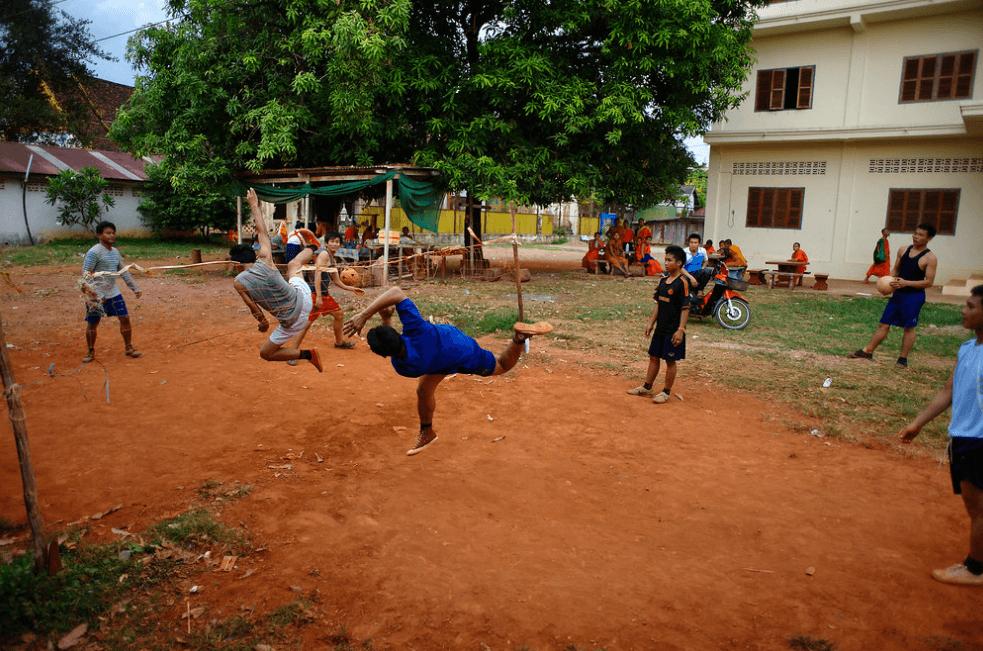
Somewhere between badminton and volleyball, kataw is one of the most popular sports in Laos. It is played on a small dirt field, in the street, or, more rarely, in a gymnasium.
Somewhere between badminton and volleyball, kataw is one of the most popular sports in Laos. It is played on a small dirt field, in the street, or, more rarely, within a gymnasium. Two teams of three players face off on a surface divided in half by a badminton net, positioned at height. Using the feet, knees, shoulders, chest or head, the goal is, after a maximum of three touches of the ball, to send it back into the opposing team's zone much like volleyball. A sport you will most certainly encounter while strolling through the streets of Vientiane or Luang Prabang before dusk falls.
Commonly called sepak takraw, from Malay "to kick" and Thai "ball", this sport enjoys extraordinary popularity throughout Southeast Asia. Kataw in Laos, sepak takraw in Malaysia, Indonesia, and Thailand, chinlon in Myanmar, si in Cambodia, even kick-volley in Europe, call it what you will—all these variations are the same sport. This discipline demands exceptional physical exertion to pull off acrobatic feats on the court. Players must sometimes thrust their feet above the net to smash the ball into the opposing team's zone. If it lands on the ground inside the opposing court, the point is won; if it goes beyond the marked boundaries, it goes to the opponent, much like in volleyball once again.
A Formidable Technique
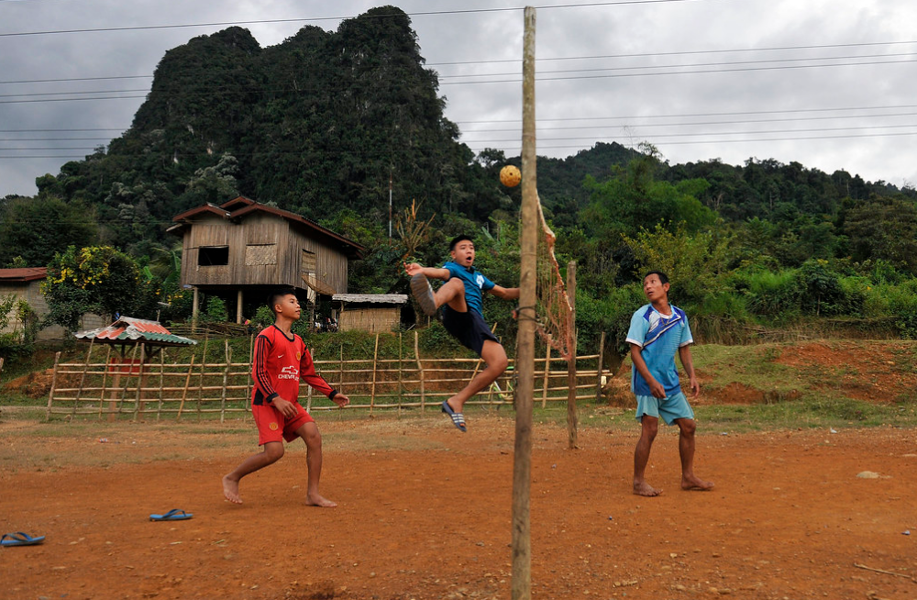
This small ball measures around six inches in diameter on average and is traditionally made of a woven structure of rattan. Today, plastic balls are increasingly common, which does not drastically change the playing experience.
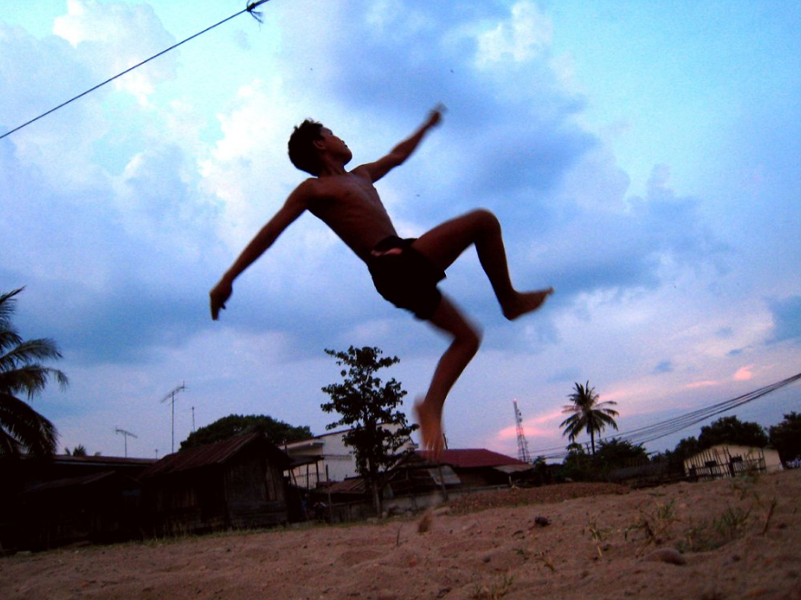
Intensive training is required to refine one's movements in this sport. Precision is paramount, but flexibility and physical strength—both muscular and joint-based—are equally essential. Players sometimes contort themselves in mid-air to strike this small ball favorably. Acrobatic returns, whimsical juggling tricks, and all manner of leaps are legion in kataw. Training for ball reception is also highly recommended, as players often need to catch themselves before falling to the ground. In any case, these aerial displays and acrobatics make this sport a joy to watch. This certainly works in its favor in terms of popularity in Laos.
High-Intensity Action
Matches typically last around thirty minutes. The duration is less important than the number of points scored. Kataw is played in a best-of-three format, with the first two sets ending when a team reaches 21 points. If each team wins one set, a decisive third set to 15 points is played. This sport is governed by the International Sepak Takraw Federation, and numerous rules must be respected. For example, only one player substitution is permitted per match, which requires players to have considerable endurance. Maintaining the pace is not always easy, especially when constantly pushing one's flexibility to the limit. A match is extremely exhausting, which is also part of its appeal. When you step onto the court, you're playing for something real.
Frequently asked questions
Kataw is the national sport of Laos. Similar to sepak takraw played in other Southeast Asian countries, it is played with a small rattan ball on a court divided by a net. Two teams of 3 players face off using only their feet, knees, shoulders, chest and head to return the ball into the opposing team's zone.
There is no fundamental difference: it is the same sport. 'Kataw' is the name used in Laos, while 'sepak takraw' is the official international designation and common name in Malaysia, Indonesia and Thailand. In Myanmar, it is called 'chinlon', and 'si' in Cambodia.
Kataw is played outdoors, often on small dirt courts in streets or parks. In Vientiane and Luang Prabang, it is common to spot games in the late afternoon, before dusk. Walking through residential neighborhoods at the end of the day is the best way to catch informal matches.
A kataw match is played in a best-of-three format. The first two sets are won by reaching 21 points. If each team wins one set, a decisive third set to 15 points is played. A point is scored when the ball lands on the ground in the opposing team's zone. Each team has a maximum of 3 touches to return the ball.
Yes, Laotian people are generally welcoming and may invite curious visitors to join an informal game. However, be aware that the sport requires great flexibility and serious training for the acrobatic elements. Watching a match is already an enriching cultural experience in itself, especially on the streets of Vientiane or Luang Prabang.