Savannakhet
Savannakhet
A discreet jewel of southern Laos, Savannakhet blends French colonial architecture, centuries-old Buddhist temples, and ecotourism within the protected areas of Dong Phu Vieng.
Savannakhet, or Savan, remains a Laos city gently shaped by the steady flow of the Mekong River. Peaceful as it may be, this locale harbors countless activities to explore both in its center and surroundings. Sometimes you'll find yourself drawn to the old colonial buildings lining its main streets; other times you'll prefer excursions and trekking deep within its protected zones.
History
According to historical research, Savannakhet is believed to have welcomed its first inhabitants around the 17th century. Some forty families from the village of Phonsim are said to have immigrated there, though certainty on these details remains elusive.
What is documented, however, is that in 1893 French Indochina conducted a border conflict along the Mekong's edges. This struggle allowed France to extend its territory over the river's eastern banks and establish the city of Savannakhet in 1894. Quickly, this locality became a major economic hub for the country. Initially, the French used the Mekong as a freight transport route. Subsequently, this European metropolis implemented a network of river and land transshipment centers, telecommunications hubs, and a railway system.
This tangible growth sparked new settlements in the region. Chinese and Vietnamese populations arrived to settle there in the 1920s and 1930s.
Today, its urban landscape is adorned with diverse historical and economic remnants including: the second Lao-Thai Friendship Bridge (built in 2007 and connecting this southern Laos region to the Thai city of Mukdahan); its colonial buildings; and the road linking it to Quang Tri in Vietnam.
Today
Certainly, frenzied entertainment isn't tailored to this city. Nevertheless, its tranquil atmosphere and warm-hearted population make it a place of undeniable charm. Among the must-see sites are:
Its Colonial Buildings
These houses with French colonial architecture often leave travelers in awe. Villas, private residences, and administrative buildings dot the landscape here and there. Dating from the 1920s, most of these structures have been abandoned, though others have undergone some restoration work. Their beauty can only be admired from the outside, as all remain private properties off-limits to visitors.
Its Buddhist Temples
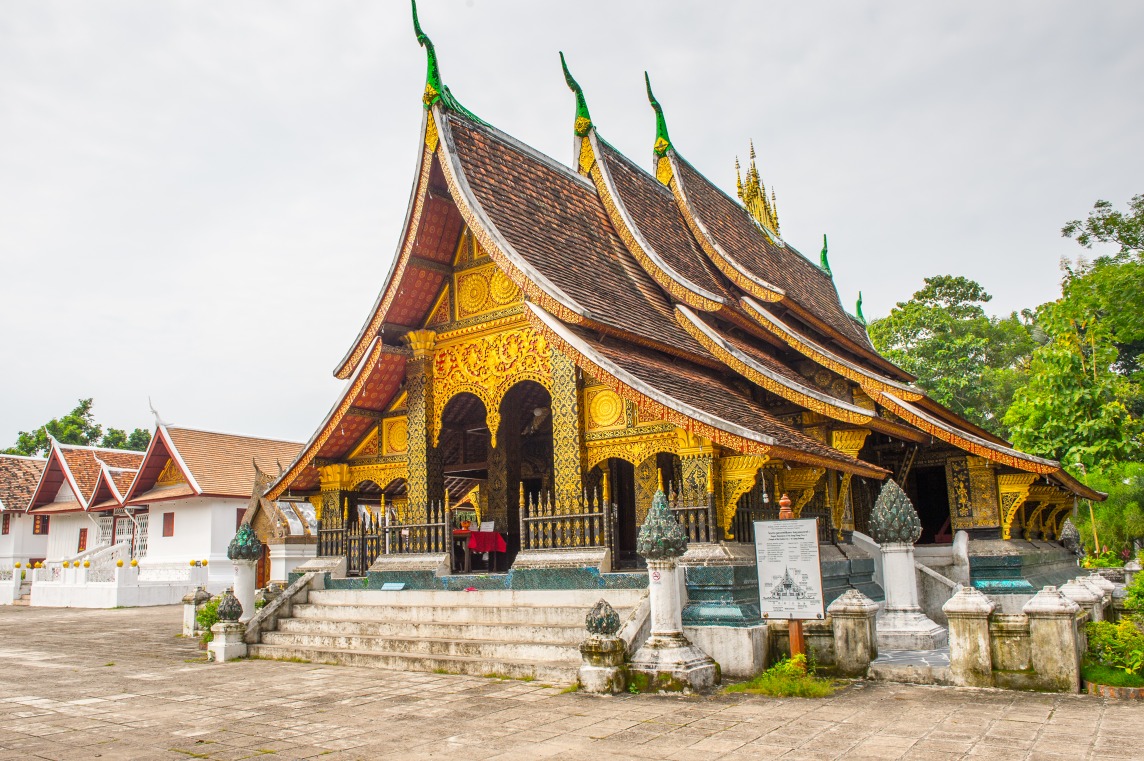
Savannakhet is home to numerous striking and impressive Buddhist pagodas. For instance, the ancient monastery Wat Xayaphoum, constructed in 1542 and standing opposite the Mekong, illuminates the city with its traditional architecture. It serves as both a place of worship and an academy for young monks. It is also a venue for celebrating Lao New Year and the Boun Suang Huea boat racing festival. Within its walls lies the renowned Ho Tay library, housing ancient manuscripts over 200 years old, crafted on palm leaves.
Its temples extend well beyond this Wat. Among its other standout pagodas are: Wat Rattanalangsi with its monks' school and an impressive 15-meter reclining Buddha; and Wat Ing Hang with its rows of statues and famous relic (Buddha's vertebrae).
Other Religious Buildings
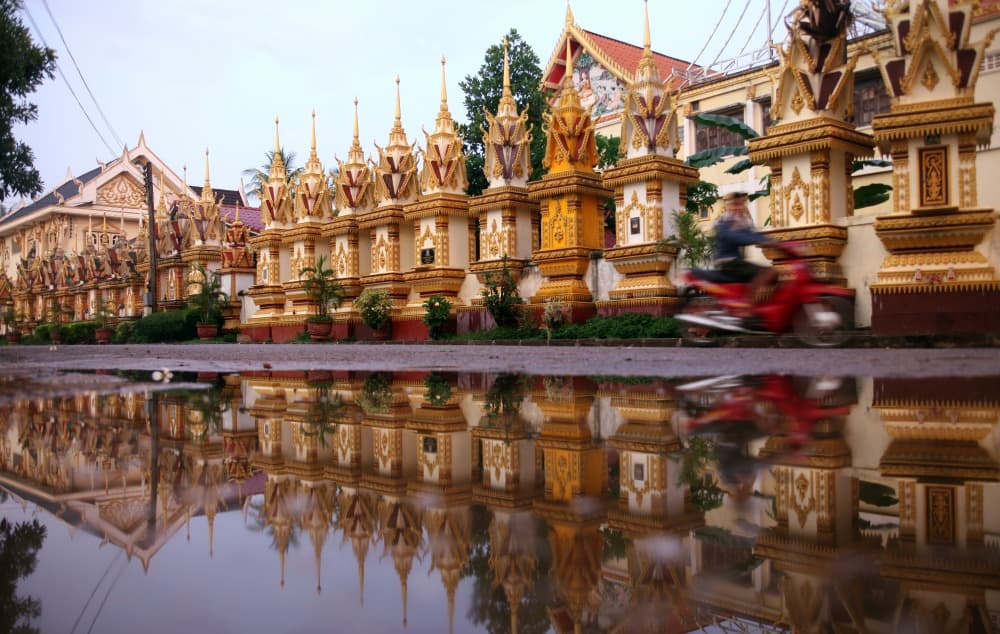
Beyond its Buddhist monasteries, Savannakhet possesses other religious structures including a recent Chinese temple, a mosque, and a Catholic church for the Vietnamese community in the region (Sainte Thérèse Church).
Its Museums
For those particularly interested in the Vietnam War, the provincial museum is worth a visit. Historical photographs and various archaeological artifacts are on display.
Among other prominent exhibition sites stands the famous dinosaur museum. The fascination with these "giant reptiles" in Savannakhet stems from the discovery of several fossils in the area. A French explorer uncovered a Tyrannosaurus tooth here in the 1930s. Within this curious gallery are housed the skeletons of these prehistoric animals recovered from the extraction site near the village of Ban Tang Vay.
The Ruins of HeuanHin
Heuan Hin, or the "stone house," remains a sacred place of worship for locals and hosts the Boun Heuan Hin festival. Its architecture reflects Khmer heritage and bears some resemblance to Wat Phu in Champassak.
Beyond these emblematic sites, the city offers various activities to enhance your Savannakhet stay, including:
Ecological Hikes
These forest walks take place outside the city center. Ranging from day trips to multi-day expeditions, these are guided visits within the region's NPA zones (National Protected Areas) such as: Dong Natad, Dong Phu Vieng, and Phu Xang Hae.
Treks
For the more intrepid and adventurous, trekking in Savannakhet promises to be utterly thrilling. Within the Dong Phu Vieng NPA, you'll encounter the Katang people (an ethnic group devoted to forest spirits). At Dong Natad, you'll visit salt mines, its sacred lake, 400-year-old villages, and the Wat Ing Hang stupa. Along the way, you'll delight in the rich flora and especially the fauna: birds, giant spiders, red ants, and more. At Dong Phu Vieng, you'll find its surprising "oil tree" and "Pepsi tree." You'll admire the beauty of wild hornbills and other rare animals. Those opting for this journey will enjoy learning about the virtues of local leaves, herbs, and fruits; and the Bai Sii ritual of surrounding villages.
Outside the NPAs, it's also possible to trek along the Ho Chi Minh trail under the guidance of a guide or through the mountainous region of Phu Xang Hae near the Phu Tai village.
Climate and Geography
Savannakhet, Savan, or Kaysone Phomvihane remains the second-most populated city after Vientiane: approximately 124,000 inhabitants. Given its history and economic significance, it boasts a diverse population of Lao, Thai, Vietnamese, and Chinese residents. Located in the country's south, it is the capital of the province of the same name and is part of the Kaysone Phomvihane district.
Also note that the region is most beautiful between October and April. From February to June, temperatures are elevated, particularly in April reaching 37°C. December is dry but somewhat cool. The months to avoid run from May to August.
By Air
The national Lao Airlines remains the sole carrier serving Savannakhet Airport (ZVK). It provides direct flights to and from Vientiane. You can also arrive in Savan via the direct national flight from Paksé. This route runs three times weekly: on Sunday, Friday, and Wednesday. Alternatively, a connection to Bangkok operates on the same days.
By Bus
This Lao city sits at the intersection of the north-south Route 13 and east-west Route 12, making numerous bus connections available.
From Vientiane (approximately 9 hours of travel): by local bus, the journey costs 75,000 kips per person and 25,000 kips per bicycle, with multiple stops en route (for passengers and cargo). By VIP bus, there are fewer stops and greater comfort (air-conditioning, restrooms, reserved seats, bunk beds for overnight trips). A seat costs 120,000 kips for a bus with beds and 110,000 kips for one with regular seats.
Local bus journeys are numerous. Multiple cities and towns offer service from Thakhek, Paksé, the 4000 Islands, Sekong, Salavan, Attapeu, and Sepon.
Savannakhet's bus terminals also accommodate buses from Laos's neighboring countries:
- from Vietnam: this journey takes about 5 hours and costs 35,000 kips per seat. Buses depart from Dansavan three times daily and pass through Sepon.
- from Thailand: from Mukdahan, the trip costs 14,000 kips and crosses the second Lao-Thai Friendship Bridge. It's important to regularize your visa at the country's immigration service.
Undoubtedly, walking and cycling prove to be excellent ways to navigate the city and explore its hidden corners.
To cover longer distances and minimize energy expenditure, tuk-tuks circulate at every street corner. They're perfect for getting quickly to a specific location, but be sure to negotiate the fare before boarding.
Useful Information
Certain precautions should be taken before visiting Savannakhet:
- be cautious of stray dogs: they're among the most aggressive in Laos. In some neighborhoods, they chase cyclists and pedestrians, especially in intense heat, day and night alike.
· exercise caution on the roads: many young locals on motorcycles weave through streets without protective gear, recklessly, and without speed limits.
· know current rates: entry to the provincial museum is free (open Monday to Friday, 8am to 12pm and 1:30pm to 4pm). As for the dinosaur gallery, admission is paid: 10,000 kips for foreigners (hours: 9am to 11:30am and 1:30pm to 4pm/photography prohibited). Entry to the Wat Ing Hang stupa costs 5,000 kips.
· ATMs: numerous BCEL automated teller machines accept VISA and Mastercard credit cards for withdrawals up to 500,000 kips with a 20,000 kips fee. Near the old market on Latsavongseuk Road, Phongsavanh Bank caps withdrawals at 1,000,000 kips and accepts Maestro, Mastercard, and Cirrus cards.
· photography of the military base at Seno is prohibited
· remember to protect electronic devices with waterproof containers during the Lao New Year celebration (Pee Mai Lao)
What to Do?
· find excellent activity recommendations at the tourist information office or Lin's Café and pick up a city map
· attend the lively Pee Mai Lao celebration (Lao New Year) between April 14-16
· create memorable souvenirs by visiting each temple
· see the dinosaur bones at the city museum
· stroll about and admire the beauty of French colonial architecture buildings
· visit the UXO SVK office (Unexploded Ordnance Savannakhet)
· cool off at Tha le Savan public pool when temperatures soar
· engage in ecotourism hikes and the joy of trekking
· relax with a Lao massage or oil massage at Dok Champa Kha or the Massage Association of the Blind
· participate in and/or attend various local festivals: the Boun Pha Tha Phonh (3-day celebration in February), Boun Heuan Hin (mid-March), Boun Phavet (elephant parade), and Boun Bang Fai (rocket festival) in Champhone (late April and early May), the Boun Suang Huea or boat racing (mid-October), and Boun Pha That Ing Hang
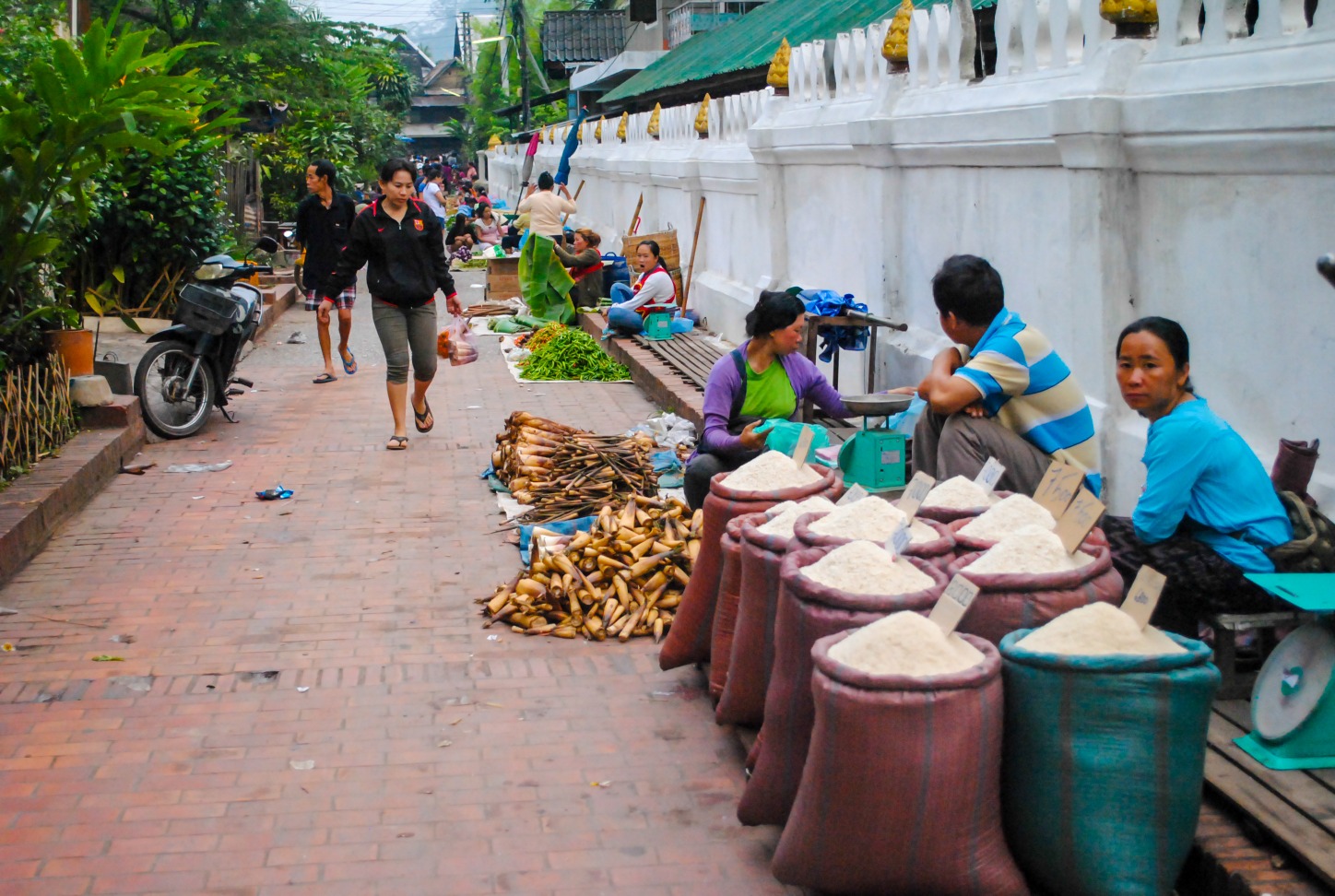
· discover local handicrafts and products at ODOP (One District One Product) and Savanxay Market
· enjoy a lovely stroll along the Mekong
Want to discover this destination?
Our local advisors design your tailor-made trip.