Paksane
Paksane
Capital of Borikhamxay province, Paksane serves as a gateway to Nam Kading and Phou Khao Khouay. Waterfalls, ethnic villages and authentic markets.
Traveling through Laos often reveals that certain cities and towns leave backpackers indifferent. Such is the case with Paksane: a typical stopover town with its main street lined with restaurants and a handful of shops. Many passing tourists find greater appeal in its surrounding sites than in its downtown area. Located on National Route 13 between Vientiane and Vietnam, it does offer a few urban attractions worth noting, particularly around its market. However, its surroundings hold significantly greater ecotourism value.
History
This town has a long and turbulent past. Its origins trace back to the late 19th century. The region in which it was situated subsequently suffered successive population losses. Multiple invasions from neighboring countries gradually deprived Laos of its inhabitants.
In 1834, the Annamites arrived and plunged the region into great insecurity. In 1836, it was the turn of Siamese troops to impose their domination. Around 1865, the Chinese "Ho" or "Red Pavillions" became one of the major causes of population displacement.
In 1876, Siamese King Rama V instituted the establishment of "Muong Borikhane" with survivors of the Ho invasion of 1874. In 1885, the French arrived in Vietnam. From that point on, they contested Siamese suzerainty over Laos. These former Thai invaders were forced to leave the left bank of the Mekong and abandon their stronghold at the mouth of the Nam Sane river.
Paris missionaries, arriving in 1890, revitalized Paksane and built a church there. By 1937, the town had around a thousand residents. That same year, Vientiane province was divided in two. One of these provinces was named "Koueng Borikhane" with Paksane as its capital. In 1980, this canton was renamed "Borikhamxay".
Today
This provincial town currently has 30,000 inhabitants spread across 35 tribes representing three ethnic groups of Laos. Lao Tai, Khmu, Hmong and others; each has its own rhythm of life, customs and crafts. There is nothing quite like visiting their villages and meeting their children and all their inhabitants.
The region in which this city is located is home to one of the country's most important biodiversity parks and one of its major tobacco, orange and sugarcane production zones. It is also an area where timber trading and gold extraction are common practice.
A calm and restful place, its urban landscape is graced with charming villas, a handful of guesthouses, restaurants and a street with a few new pick-ups and 4x4s, as well as a bus station. Taking time to explore it, one cannot help but be delighted by the differences between Laotian cities.
Among the few activities to enjoy in the downtown area, strolling around the market by day and by night (open from 5 PM) is a must. Squirrels, porcupines and bats are sold here.
Beyond that, there is little to see. It is better to venture out to discover its surroundings. Those with time will visit the few cultural and historical remains around the town (Tha Bak village with its unusual boat-bombs; the hamlet of Ban Na with its wild elephants and remarkable crafts; the temples of Wat Prabath, Wat Dan Soung and Phonsane; the caves of PhaMuang, Ban Poung and Ban Thabok, etc.).
Nature lovers can delight in the sublime natural landscapes of the surrounding waterfalls (Tat Wang Fong, Tad Xang, Tad Nam Pa and Tat Namsanam) and those of the Phou Khao Khouay protected zone (Tad Leuk and Tad Xay).
Nam Kading NBCA
The Nam Kading NBCA protected zone (national biodiversity conservation area) is a must-see for a visit to Paksane. It is located 40 km southeast of the city. Of rare beauty, it is one of the largest nature reserves in Borikhamxay province. It covers 1,740 km² and runs parallel to the Mekong. Spared from modern civilization, there are neither roads nor hiking trails within its boundaries. A mountain range crowns it along its entire length, with the Pha Pet mountain at 1,588 meters as its highest point.
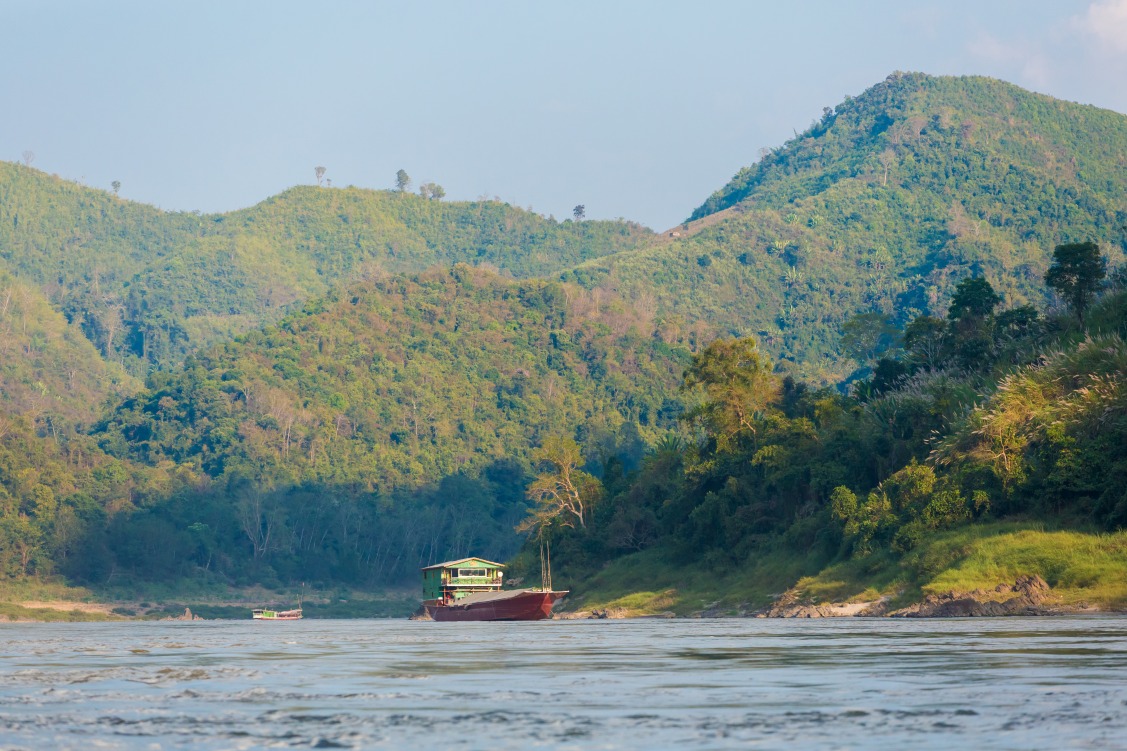
Beyond the mountain at the edge of the zone flows the tranquil delta of the Nam Kading river: the meeting point of the Nam Theun and Nam Mouan rivers. It winds through the surrounding mountains before flowing into the Mekong at Pakkading village.
Toward Pakkading and Its Fishing Villages
Heading toward this small Laotian town holds some surprises for travelers. Along the way stand some local curiosities including the friendly fresh and dried fish market where typical Laotian dishes are sold, a few good fish restaurants, and the Russian bridge with its mythical water serpent below. Passing the Thabok river and Pakkading, several fishing villages gradually appear along the road. Each house in each hamlet has a stall set up in front where various fish-based foods are sold.
Climate and Geography
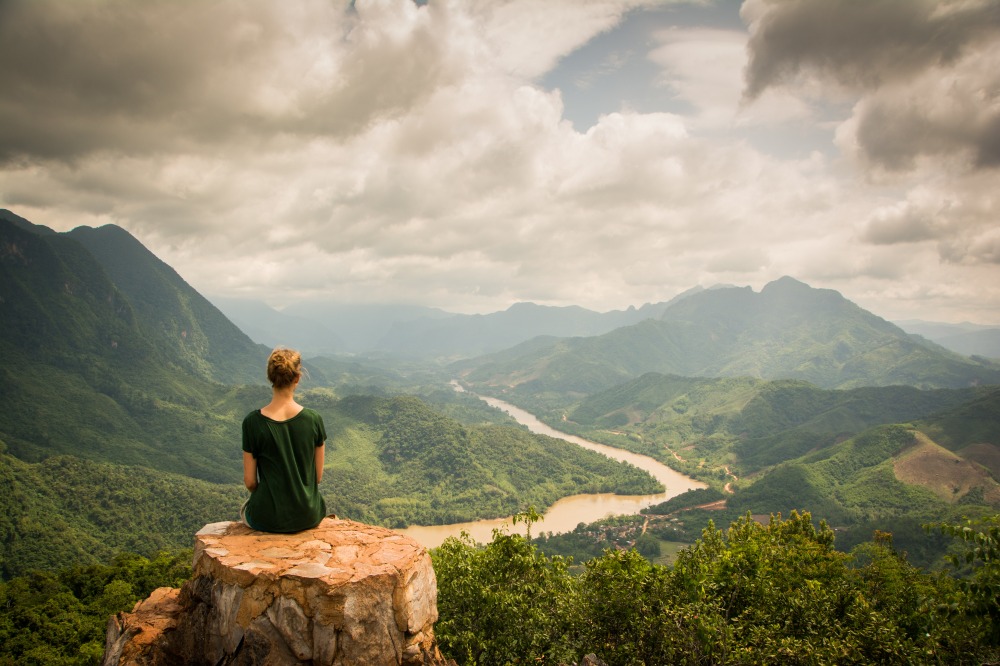
Paksane, also known as Paksan, Pakxan and Pakxanh, is the capital of Borikhamxay province. It sits at the confluence of the Nam Sane river and the Mekong river. Neighboring the Thai city of Bueng Kan, it has a small airport and is traversed by National Route 13 and Route 4B. Nestled in central Laos, it is blessed with high karst mountains with steep walls and several valleys. It is also bordered to the southeast by a mountain range, separating it from Vietnam. To the west, the Mekong serves as its border with Thailand.
The best period to explore the region is the dry season: October to March. Rainfall is less abundant than in winter. During the rainy season, many of the attractive sites become difficult or impossible to access. The average temperature throughout the year is 27.9°C.
Since Paksane is located on Highway 13, it is possible to reach it by taking a bus from Vientiane or Paksé. You can also opt for buses passing through the Cau Treo border heading to Vietnam. These buses make a stop here. Otherwise, travelers can come and go to Thailand from this sleepy town. However, this option is not popular with visitors.
The bus arrival point is located in front of the market. For smaller destinations, a terminal is available near the market.
Other than walking, only tuk-tuks allow you to get around town. That said, this means of transportation is quite rare. They are parked only at the bus station, the market and the border service.
What to Do?
· Stretch your legs with a hike in Phou Khao Kuai National Park and Nam Kading NBCA
- Learn about the crafts and traditions of minority villages in the surrounding area
· Spend time at the market to taste local cuisine and discover the handicrafts of the surrounding tribes
- Take a boat ride on the Nam Sane river and the Nam Kading river
Want to discover this destination?
Our local advisors design your tailor-made trip.