Ban Khone
Ban Khone
On the southern tip of Don Khone, Ban Khone brings together Mekong waterfalls, Irrawaddy dolphins and colonial remnants. Complete guide to the 4000 Islands.
For those seeking to experience the adventure of Laos's 4000 Islands, the charming village of Ban Khone is an essential stop. This peaceful peninsula lies to the south of the modest Don Khone island. Don Khone is part of the three major islands of Si Phan Don or the "four thousand islands": alongside Don Det and Khong island (Don Khong).
A place of character and tranquility, Ban Khone is a fishing village renowned for its coconuts, kapok or cotton, and bamboo. For those seeking genuine escape, it's the quintessential destination. Lao culture is predominant here and deeply palpable.
Today
This locality is marked by an unhurried, joyful countryside atmosphere. A gentle pace of life and call to escape are very much present. Everything unfolds with simplicity. The islanders craft their own fragrant wood incense for Buddhist worship, and the village has preserved both its traditional houses and buildings over 100 years old dating from French colonial times.
It features an earthen path running along the banks of the Mekong River. Along this route sit a few rustic dwellings, guesthouses here and there, and lush vegetation. But beyond this rural setting, this hamlet from another era holds intriguing remnants.
- Wat Khon Tai
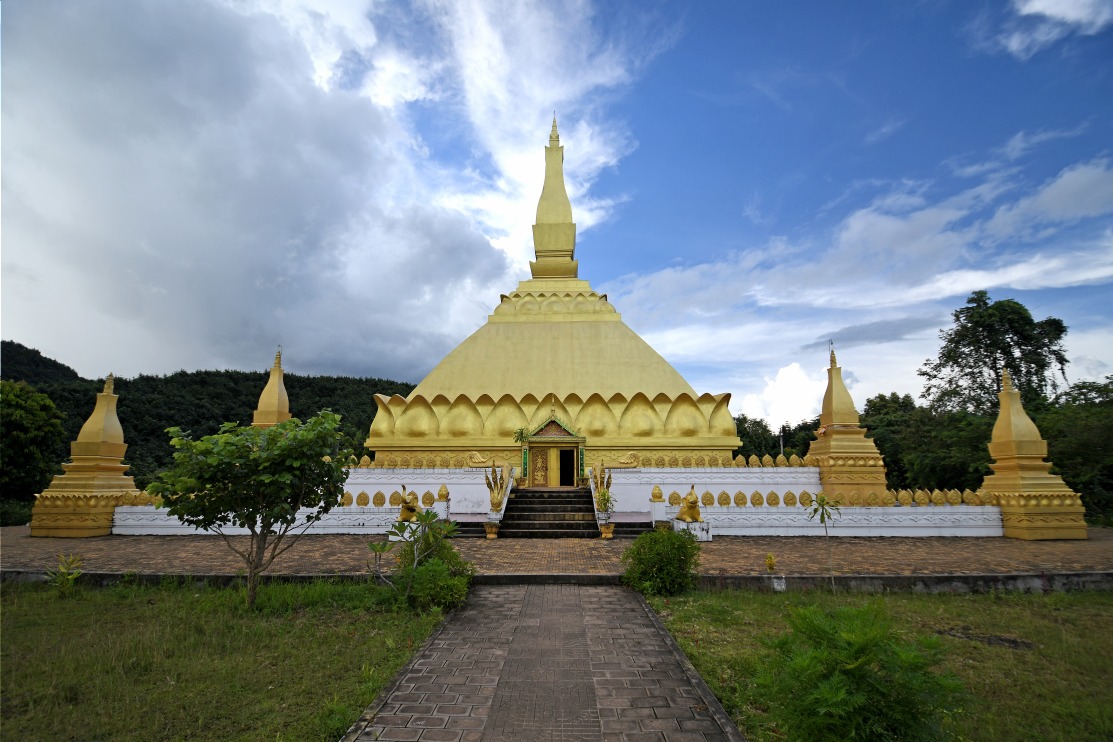
This temple is one of the symbols of the Ban Khone village. It is located in Ban Khon Tai, at the extreme southwest of the town. Built on an ancient Khmer site, it houses an old crumbling stupa and a shiva linga dating from the Khmer Empire. The laterite of its buildings is scattered throughout the grounds.
- Eloïse and the Old Railway
A bit of history to begin with. Don Khone island received its first railway in 1893: the era when Laos became part of French Indochina. This newly established line ran across the peninsula for four kilometres: near Ban Hang Khon to the vicinity of Ban Khone. During the 1910s, it was extended three kilometres to Don Det and ended with a dock within Ban Khone village. However, this railway was definitively closed at the dawn of World War II. The last train to run on Don Khone dates back to the 1940s, following the Japanese invasion.
Today, in this small fishing village you can see the remains of one of two old wood-fired steam locomotives, fitted with a rusted engine and placed on a stretch of railway track. It is displayed in an old maintenance depot. Named "Eloïse", it apparently came into being in 1911 in the Orenstein & Koppel workshops. A sight worth seeing, especially if you extend your visit to include its old dock and railway bridge.
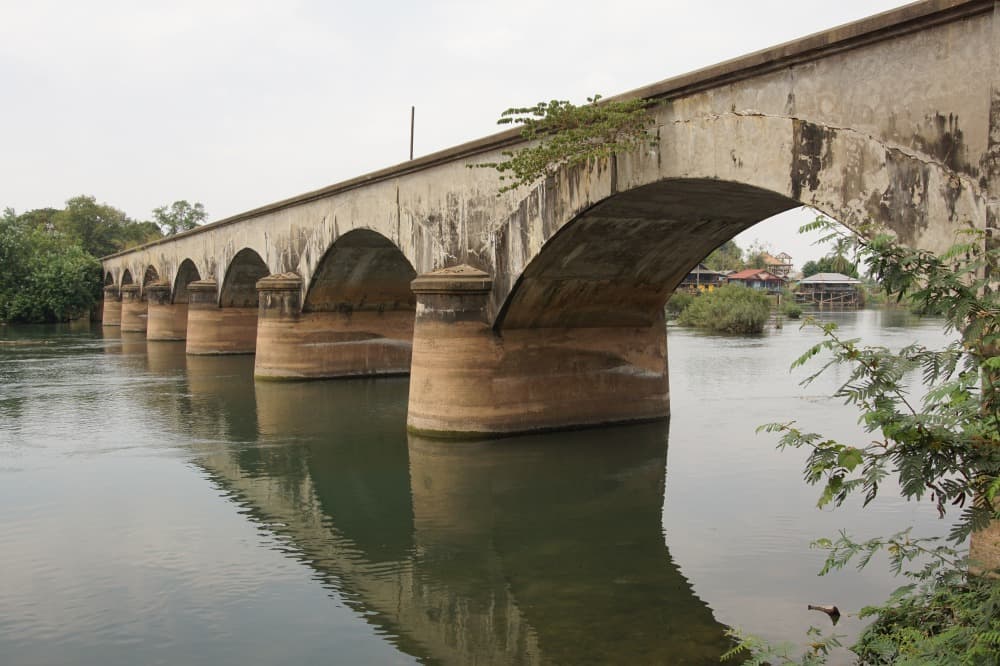
Currently, this former railway serves the inhabitants of this small town as a road connecting Don Khone island with Don Det. How? Through the old railway bridge that spans the Mekong. And as resourceful villagers, they have recycled remaining rails and sleepers to fabricate garden fences, beams, and more.
- Cascades and Falls to the South
Visiting Ban Khone village often refers to an excursion to its magnificent waterfalls, including:
Khone Falls or Khone Phapheng
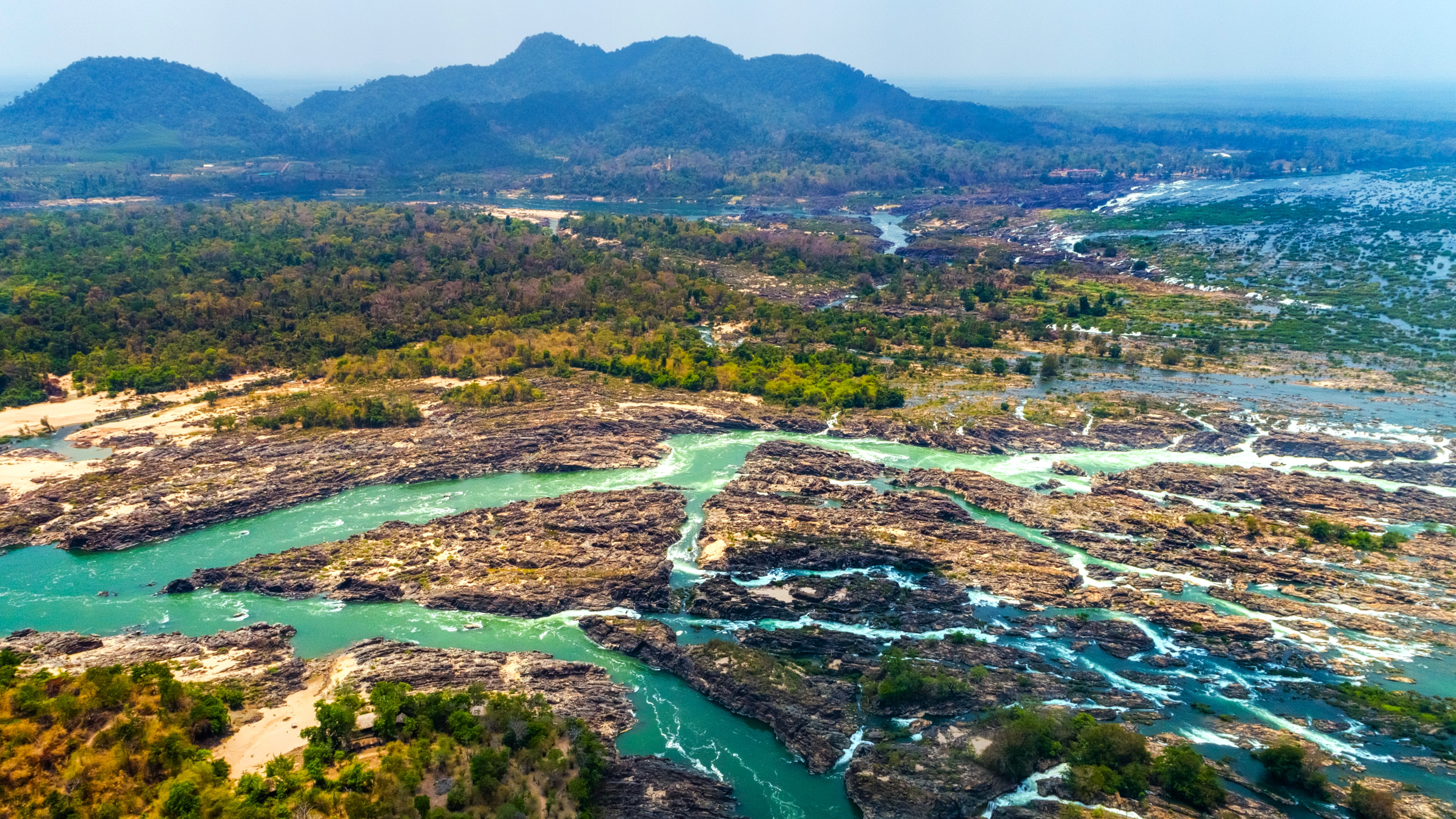
Due to their power, this is the only place where the Mekong is not navigable. Nicknamed the Niagara of Asia, these spectacular falls impress with their wild, grandiose character and thunderous roar. They span 1 kilometre wide, reach 15 metres in depth, and have a water flow of over 9 million litres per second.
Liphi Cascades or Taat Samphamit:
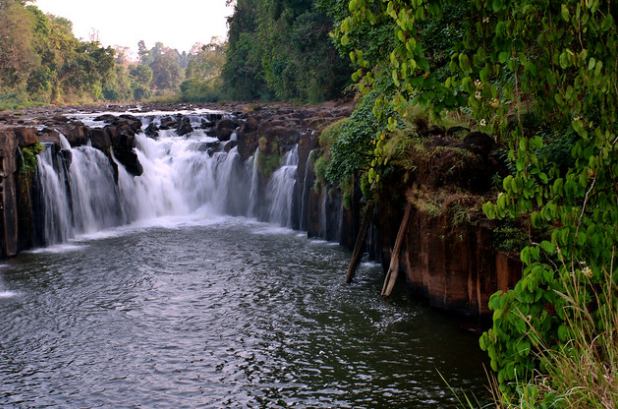
Less fierce than Khone Falls, these cascades surprise equally for their power and volume. They are located at the far west, about 1 kilometre from the town. These rapids are accessible from the village via the main path heading southwest or via a smaller shaded dirt path that crosses the Wat. Apart from its powerful torrents, you'll also find fishermen here working with their traps and fishing nets.
- Freshwater Dolphins
A rare but not impossible occurrence in Laos: encountering the freshwater dolphins known as "Pha kha". These mammals live just south of Ban Khone village in the Irrawaddy River. To hope to see them, you must rise at dawn or wait in late afternoon, between December and May. These animals, sacred to the Laotians, can only be observed from a distance by boat.
Since Don Khone island lies within the 4000 Islands area, the best way to get there is by water. It takes approximately 25 minutes by longtail boat to reach the peninsula from Ban Nakasang. And to reach Ban Khone village, simply travel on foot or by rented bicycle (10,000 kips per day).
You can also access Don Khone island from Don Det island via the old French railway bridge. However, you will need to pay an entrance fee of 35,000 kips (2016 reference) serving as entry and ticket for Liphi Falls.
What to Do?
- Explore the dirt trails of the village where restaurants, guesthouses and homes succeed one another
· Charter a boat and venture out to meet the Pha kha
· Admire up close the Mekong waterfalls and Liphi cascades
· See what the old locomotive "Eloïse" looks like and the old French bridge
- Visit Wat Khon Tai
- Try fishing with the locals
· Enjoy the relaxing landscape, as well as the unhurried and peaceful atmosphere of the region
Want to discover this destination?
Our local advisors design your tailor-made trip.