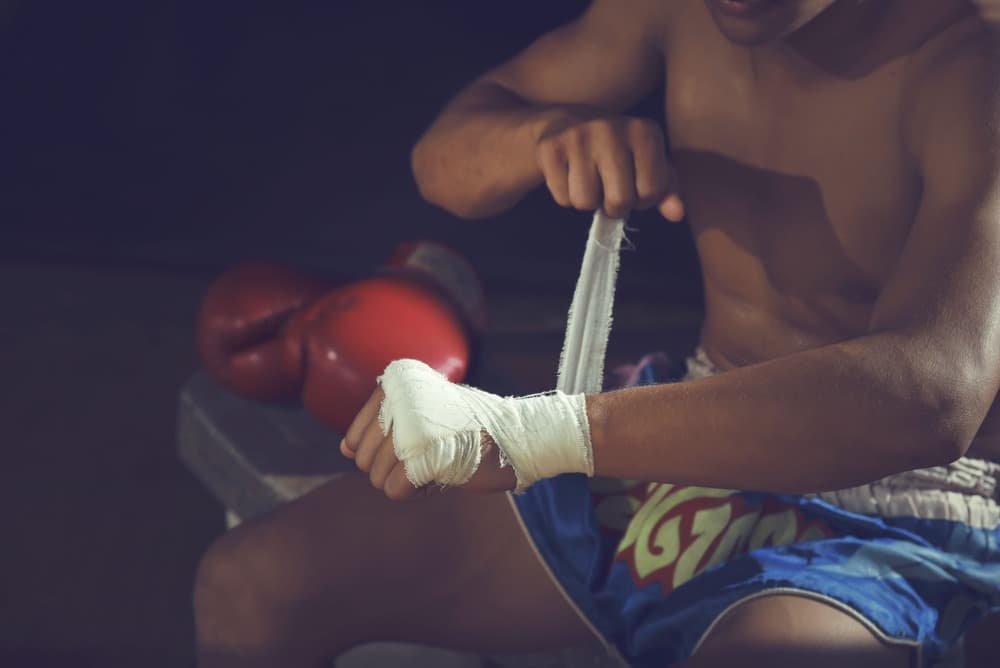
Muay Lao
Muay Lao
Calling all sports and culture enthusiasts looking to discover Laos from a different perspective!
Calling all sports and culture enthusiasts looking to discover Laos from a different perspective!
Did you know that Muay Lao transcends the boundaries of sport to become an integral element of national identity? Discover it fully during your next visit to the country.
The origins of muay lao
In the 16th century, Laotians began practicing Muay Lao, initially solely for self-defense against Burmese invasions. Later, it evolved from military training into a cornerstone of Laotian culture. Influenced by Thai Muay Thai and Cambodian Pradal Serey, it continued to evolve while preserving its distinct identity in Southeast Asia. Though its origins remain debated, some have suggested possible connections to the Khmer civilization and northern Thailand.
Muay Lao: a sport to share with family and friends
A traditional martial art characteristic of Laos, muay lao is, in essence, a form of kickboxing. The term "Muay" derives from the Sanskrit word "mavya," meaning "boxing." It is characterized by boxing techniques, kicks and grappling, along with powerful strikes and rapid-fire exchanges in the ring.
Modern yet deeply rooted in tradition, it shares similarities with other Southeast Asian disciplines such as kun khmer, muay Thai, lethwei, and tomoi. Professional fighters employ fists, knees, elbows, and feet, though elbow strikes are prohibited for amateurs and young practitioners. No additional equipment such as headgear or arm guards is required.
In Laotian culture, it goes far beyond mere sport. It symbolizes strength, heritage, and national identity. At festivals, you'll witness muay lao performances on stage.
To experience the thrill of professional bouts, head to Vientiane, where these electrifying events take place roughly twice monthly.
Muay Lao today
Passed down through generations, this Laotian fighting style is today a thriving modern sport experiencing rapid growth on the global stage. The relocation of the old Sok Sai stadium toward a larger festival, supported by partners such as Thailand's Singha Beer, has contributed significantly to this expansion.
This surge in popularity has given rise to international Muay Lao training schools and camps.
With mounting interest both within Laos and internationally, Muay Lao appears poised for a brilliant future, even sparking aspirations to see it featured in prestigious martial arts competitions.
Good reasons to practice muay lao
Go beyond learning a martial art. Adding Muay Lao to your fitness routine offers profound benefits for both body and mind. It targets specific muscle groups while strengthening overall coordination and balance. Whether you're a beginner or a seasoned gym-goer, Muay Lao is an excellent addition to your fitness program. The primary goal is to get fit, stay agile, and enjoy the process.
On the physical level, it delivers a complete workout as it engages all muscle groups, improves cardiovascular health, builds strength, and enhances flexibility.
It's the sport of choice for boosting power, endurance, and flexibility. Its varied movements—from striking to clinching—engage different muscle groups. Rhythmic training enhances endurance, beneficial both in the ring and in daily life. Dynamic movements and stretching increase flexibility and make the body more agile.
On the mental side, practice sharpens concentration, reduces stress, and builds confidence. At the same time, you'll become stronger and discover the world of martial arts.
Learn muay lao techniques
Muay Lao is built on posture and movement. Begin with a balanced, agile stance: feet firmly grounded, body slightly turned, ready to attack or defend. This posture facilitates rapid, fluid movements and allows you to advance or retreat with strategic timing.
The discipline involves various striking forms: precise punches, elbows, kicks, and knees. Defense plays a crucial role through blocks, parries, and evasion. In Muay Lao, the art lies in the seamless transition from attack to defense. This creates dynamic interplay where each strike sets up the next defensive action.
Fighters use heavy bags to build power, mitts to hone precision, and sparring for real-world scenarios. This training improves technique, builds endurance, and sharpens reflexes.
A few tips for beginners
When starting out, focus on fundamentals and take time to learn the movements properly.
Once these basics are mastered, progress toward advanced techniques at your own pace.
Becoming proficient in muay lao means prioritizing form and technique over raw power. Place greater emphasis on precision than force in your movements. Finally, keep an open mind and stay ready to learn, as muay lao demands as much mental discipline as physical skill.
Give it a go!
Our local experts arrange this activity for you.