Lak Sao
Lak Sao
Lak Sao, a small town in Khamkeut District steeped in history, opens onto the karst caves, hot springs, and ethnic villages of central Laos.
In Laos, there are dozens of transit towns and villages. Lacking major tourist attractions, these localities represent merely waypoints or jumping-off points for more thrilling adventures to most travelers. Such is the case with Lak Sao, a small town in Khamkeut District charged with history and dust. Its only real merit lies in a maze of markets and a cash machine. The true pearls of this town are found mostly at its periphery.
Limestone caves, karst mountains, hot springs, and villages remain its finest attractions. Whether you're a hardened backpacker or a leisure traveler, the road leading to this Laotian destination is marked by magnificent scenery and natural treasures. And along Route 8, follow the path the Royal Lao Army took to repel—in vain—the communist North Vietnamese forces.
A Past Marked by War
Laotians will always remember the Battle of Lak Sao. It took place between November 1963 and January 1964. It played a pivotal role in triggering the civil war that ravaged the country.
At that time, the Royal Lao Army (RLA) was under the command of General Phoumi Nosavan. In November 1963, this man launched a military offensive against communist North Vietnamese occupiers passing through the northern part of the country. He acted in partnership with the Neutralist Armed Forces (FAN) to block the upper Lao panhandle and thus divide these antagonistic forces.
At that time, the Americans played an advisory role on behalf of the royal Laotian regime through proxies. The U.S. Embassy, however, had not approved Phoumi's actions, but he persisted in his efforts to drive out these communist forces. This general pushed them back from Nhommarath in the north toward Lak Sao and to the Vietnamese border to the east (on the side of Napé Pass). CIA consultants had warned him about the rebels' reactions, but Phoumi chose to ignore this warning.
Progressively, the RLA and FAN alliance repelled the rebels. They first occupied Lak Sao, then gradually moved toward Napé Pass. After dispersing an initial blockade by Pathet Lao forces, the RLA fulfilled its mission until it faced heavy counteroffensives from the resistance.
During December 1963, the communists cornered two battalions of paratroopers (11th and 55th) of the royal army. Additionally, the People's Army of Vietnam (PAVN) swept aside a volunteer battalion (34th) of the RLA.
Faced with so many setbacks, the Royal Armed Forces (FAR) concluded the Battle of Lak Sao in January 1964 with a crushing defeat. Their failure resulted in the cession of the Nakay Plateau to the communists.
This battle constituted General Phoumi Nosavan's second failed assault, along with the Battle of Luang Namtha. It also proved a windfall for the Pathet Lao, as it allowed them to strip the RLA of much of its reserve force.
Today
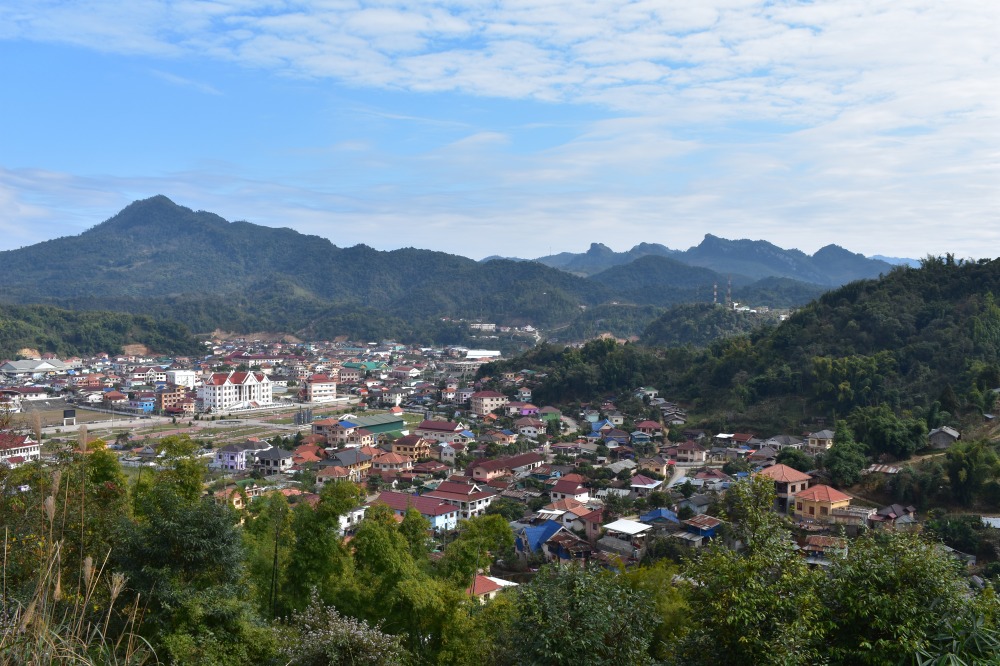
Lak Sao or Lak Xao, which means "km 20" in Lao, is located about thirty kilometers from the Vietnamese border. The town was recently established and is now depicted as a dusty, forested city crossed by two main streets. Once, locals traded in various types of wildlife now protected. Today, they live primarily from timber exploitation.
This locality is part of Bolikhamsai Province. Many travelers consider it merely a stopover on the Thakhek Loop or a departure point for excursions to the Ho Chi Minh Trail and the Nakai-Nam Theun NBCA nature reserve. Travelers come here to refuel and rest briefly before hitting the road again.
There is little to see in its center. Taking time to explore its corners means passing by its numerous well-maintained guesthouses and restaurants lining its streets. What people particularly enjoy: wandering through its maze of markets, watching convoys of trucks pierce the road to Vientiane, exchanging currency at ATMs, and observing the daily life of its residents.
It is far from offering an exceptional setting with its thick layer of dust; however, the same cannot be said for its surroundings. Lak Sao is surrounded by impressive mountains with jagged limestone cliffs. The road leading to it proves highly interesting. Indeed, traveling to this destination allows you to pass through numerous minority villages, including Hmong (Kao and Lay) and Tai Muen peoples. Seventeen kilometers northwest of town on Route 8 stand the Mong Khon limestone caves. During the independence war, resistance fighters took shelter here. It's also possible to see the former French military base not far from the Lao-Vietnamese border, at Ban Napé village. And for a relaxing break, enjoy the hot springs at Ban Pak Nam Eun near the same town. These baths make a perfect pause to shake off the fatigue of a long Laos trip or the Thakhek Loop. Occasionally, extend your journey toward Phou Phaa Phi Hong Mountain. This spot offers a striking panorama of the surrounding region and the border post mountain.
When to Visit?
The climate here is warm and temperate. In summer, it rains much more than in winter. Over the year, the average temperature is 22.8°C and precipitation is estimated at 2,208 mm.
If you plan to visit, choose a period between November and March. This is when the weather is pleasant and mild. In particular, January is the ideal month with its average temperature of 17.8°C and low rainfall (5 mm of precipitation). It's perfect for reaching remote sites, including caves and hot springs.
How to Get There?
This city sits on Route 8, connecting the Laotian capital Vientiane and Vietnamese city of Vinh. To get there, you can take a bus from the capital and get off midway. The journey costs 40,000 kips and takes 9 hours.
Useful Information
Although Lak Sao is considered merely a transit town, you can still benefit from valuable services there. Notably, there is a 24-hour ATM. Also, there is a currency exchange service at the Lao Development Bank where you can exchange Thai baht, Australian dollars, British pounds, and Vietnamese dong for kips.
Want to discover this destination?
Our local advisors design your tailor-made trip.