Wat Xieng Thong
Wat Xieng Thong
Founded in 1560 by King Setthathirath, Wat Xieng Thong is one of the oldest temples in Luang Prabang, renowned for its mosaic tree of life.
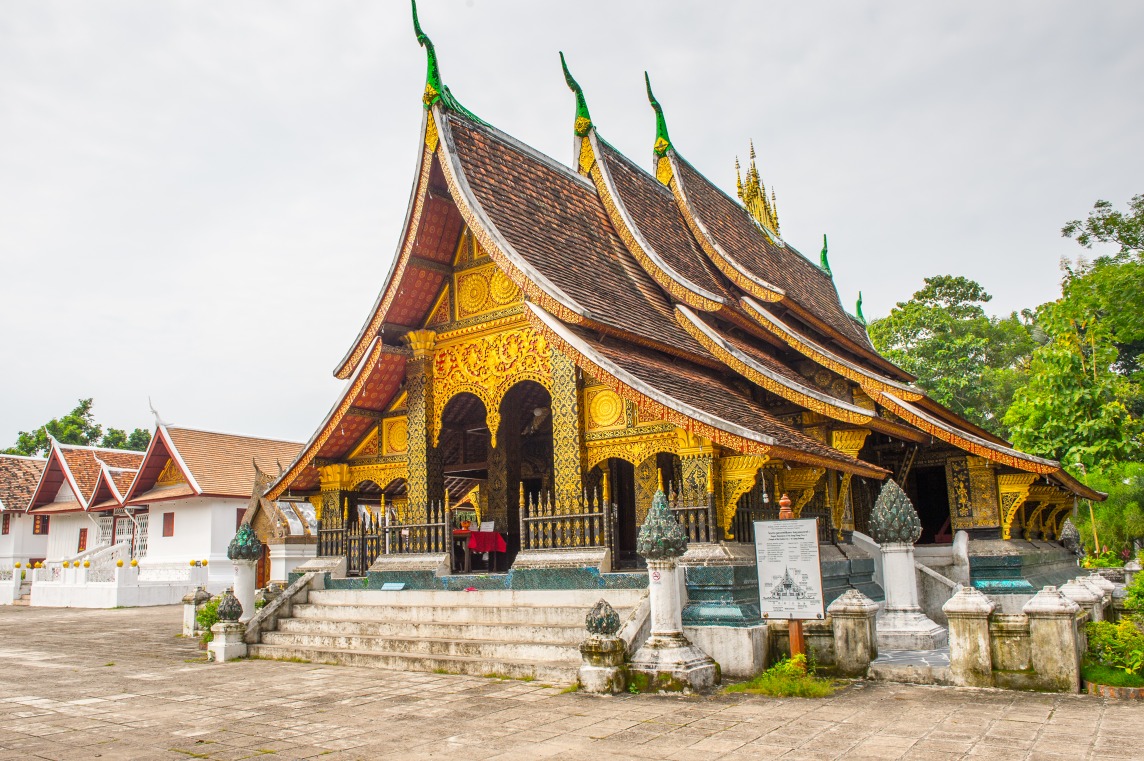
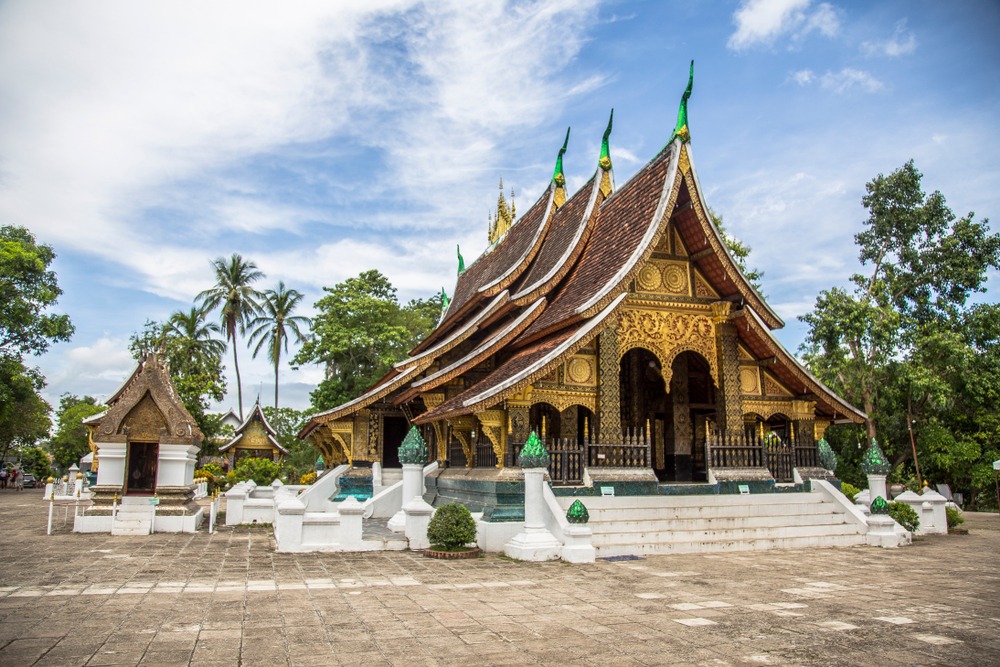
Wat Xieng Thong, whose name means "temple of gold of the city," is one of the oldest Buddhist sanctuaries in Luang Prabang. Founded in 1559–1560 under the reign of King Setthathirath, it occupies the northern tip of the peninsula, at the confluence of the Mekong and Nam Khan rivers. Its roofs cascading to the ground, its mosaic tree of life, and its royal funeral chariot make it a major landmark of Lao heritage.
Why Visit Wat Xieng Thong
Unlike many temples in the city that were rebuilt or altered in the 19th and 20th centuries, the main sim of Wat Xieng Thong escaped destruction, notably during the sacking of Luang Prabang by the Black Flags in 1887. It is one of the rare royal complexes to retain its original architecture, considered one of the pinnacles of the classical Luang Prabang style. The temple long served as a coronation site for the sovereigns of the Lan Xang kingdom, then Luang Prabang, which gives it a particular status in the religious and political history of Laos.
The site is inscribed within the UNESCO-protected perimeter since 1995, which covers the entire old town. The site remains active: monks reside there and it is possible to encounter them coming and going in the early morning.
Temple History
Founded between 1559 and 1560 by King Setthathirath shortly before the transfer of the Lan Xang capital to Vientiane, Wat Xieng Thong was placed under direct royal patronage. For more than three centuries, it hosted royal ceremonies, including coronations. In the 19th century, when the Black Flags plundered the city, the sanctuary was spared—according to local tradition, because their leader made it his headquarters.
In the 20th century, several secondary buildings were added or renovated under the impetus of the royal family. The chapel housing the funeral chariot was built in 1962 to receive the hearse of King Sisavang Vong, who died in 1959. The 1975 revolution and the abolition of the monarchy ended the temple's royal function, though it remained an active place of worship.
What to See
The Main Sim
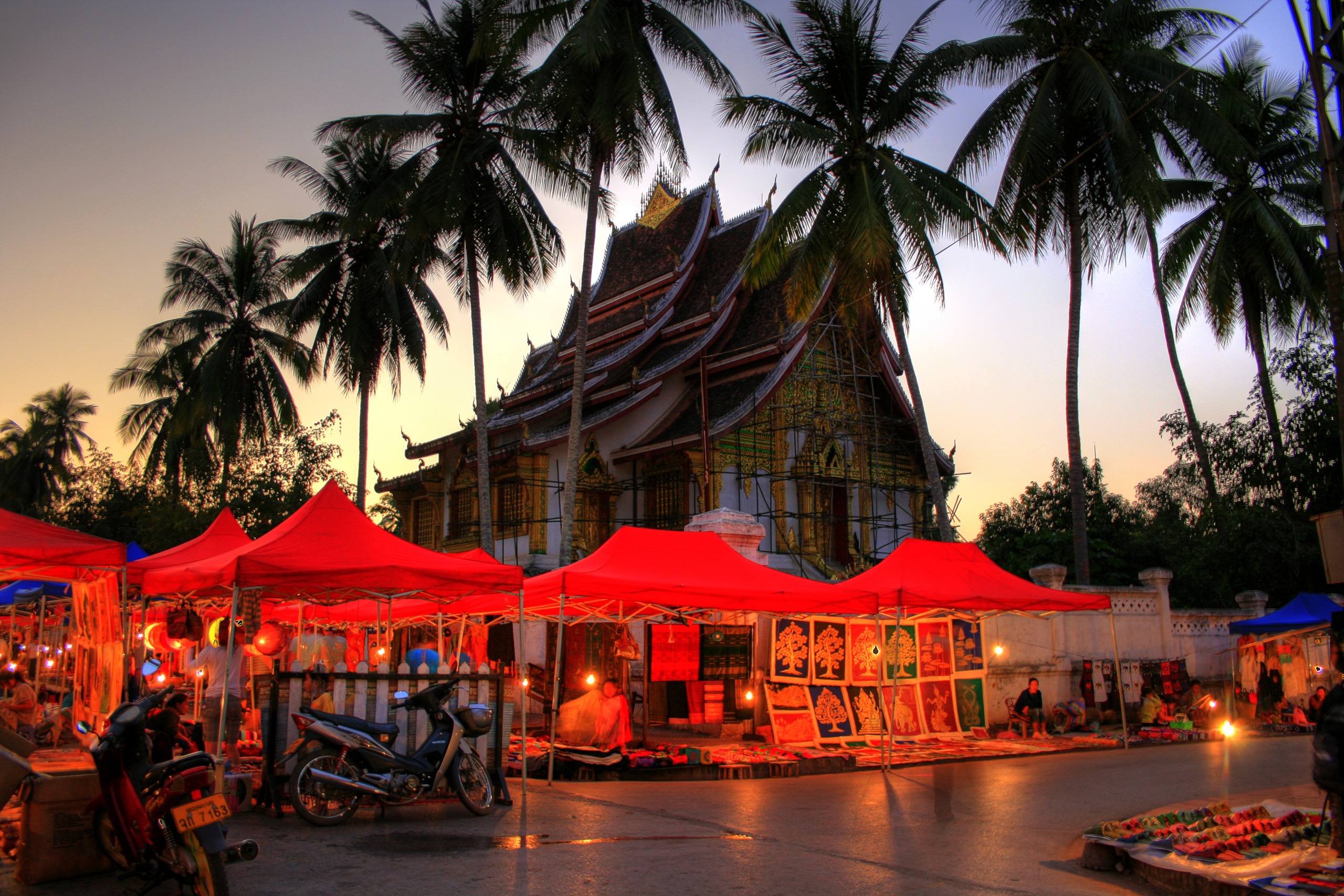
The central sanctuary is the most photographed element of the site. Its roofs descend in successive tiers down to nearly touch the ground, a signature of Luang Prabang's architectural style. Inside, black and gold lacquered pillars support a ceiling painted with dharma wheels. On the exterior rear wall, a large mosaic of colored glass represents a tree of life, created in 1960 for the 2500th anniversary of the Buddha's death. It is one of the most recognizable decorative elements of the temple.
The Funeral Chariot Chapel (Hong Kep Mien)
Located in the eastern corner of the compound, this chapel houses the royal funeral chariot, approximately 12 meters high, carved and gilded, topped with naga figures. It was used to transport the funeral urns of King Sisavang Vong. The exterior facades of the building are decorated with gilded wood bas-reliefs illustrating episodes from the Ramayana.
The Reclining Buddha Chapel
Known as the "Red Chapel" due to its red plaster, it houses a bronze reclining Buddha dating from the 16th century, presented at the Paris Exposition in 1931 and kept in Vientiane before its return to Luang Prabang in 1964. The exterior walls are decorated with glass mosaics depicting scenes of daily Lao life.
Other Buildings
- Several small stupas and secondary chapels ("hô"), including those housing standing Buddhas and a Buddha in the rain-calling position
- The monastery where monks reside
- An entrance portico adorned with háang thíen (candleholders) topped with nagas
Practical Information
Wat Xieng Thong is located at the northern tip of the historic peninsula, in the Royal Palace district, accessible via Xotikhoumman Street (Sakkaline). A modest entry fee is requested, payable in kips upon arrival—the amount contributes to the site's maintenance. Opening hours generally cover morning and afternoon, with a midday break; it is best to check on site the day before.
Plan for 45 minutes to 1.5 hours of visiting depending on your interest in iconographic details. Clothing covering shoulders and knees is required; shoes must be removed before entering the sim. Silence is expected, especially if monks are meditating or praying.
When to Visit
The dry season, from November to February, offers the most pleasant conditions: moderate temperatures and clear light that showcases the mosaics. March and April are hot, but coincide with Pi Mai (Lao new year, mid-April): the temple becomes a major site of processions and ritual ablutions, very crowded but intensely vibrant. The rainy season (June–September) remains accessible; showers are often brief at day's end.
To avoid crowds, prioritize early morning or the last hour of afternoon, when low light illuminates the mosaic tree of life.
Nearby
The temple's location at the peninsula's tip makes it a logical starting or ending point for a walk through the old town:
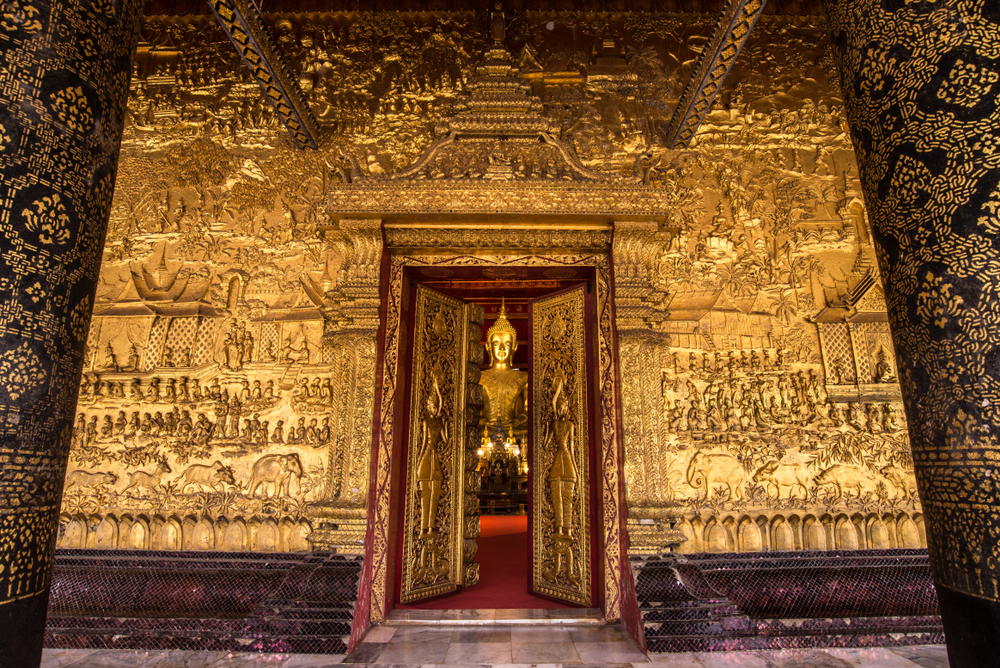
- Wat Sene, an immediate neighbor, recognizable by its red and gold facade
- The historic center of Luang Prabang and its former Royal Palace (Haw Kham), now the national museum
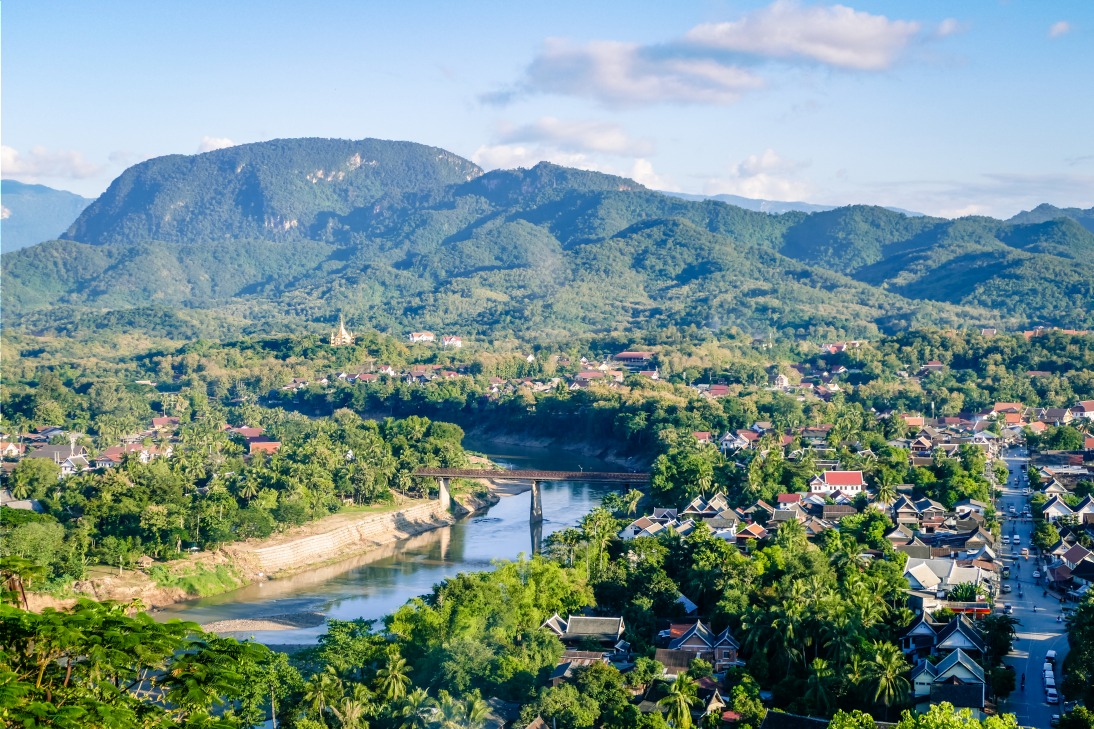
- Mount Phousi, whose summit offers a panorama of the river confluence
- The Ethnology and Traditional Arts Museum (TAEC), to understand the ethnic diversity of northern Laos
- The Pha Tad Ke Botanical Garden, accessible by boat from the nearby pier
Frequently Asked Questions
Frequently asked questions
The phrase translates to "temple of the golden city," in reference to the ancient name of Luang Prabang.
The main sim was constructed between 1559 and 1560 under the reign of King Setthathirath, making it one of the oldest temples still standing in Luang Prabang.
The large glass mosaic representing a tree of life, located on the exterior rear wall of the sim, created in 1960. The 12-meter royal funeral chariot, housed in a dedicated chapel, is the other major piece.
Yes: shoulders and knees must be covered; shoes must be removed before entering the sim. Avoid wearing hats inside and speak in a low voice.
From 45 minutes for a quick tour to 1.5 hours if you take time to examine the bas-reliefs, mosaics, and secondary chapels.
Preparing Your Visit
Wat Xieng Thong naturally fits into an itinerary covering the Luang Prabang peninsula, the Mekong surroundings, and the natural sites of the north. To build a coherent stay, consult our ideas for traveling in Laos.
Nearby
Interested in this visit?
We can include it in your personalised itinerary.