Royal Palace Museum
Royal Palace Museum
A former royal residence of Laos converted into a museum, the Haw Kham in Luang Prabang houses the throne room, royal apartments and the Phra Bang.
Royal Palace Museum of Luang Prabang
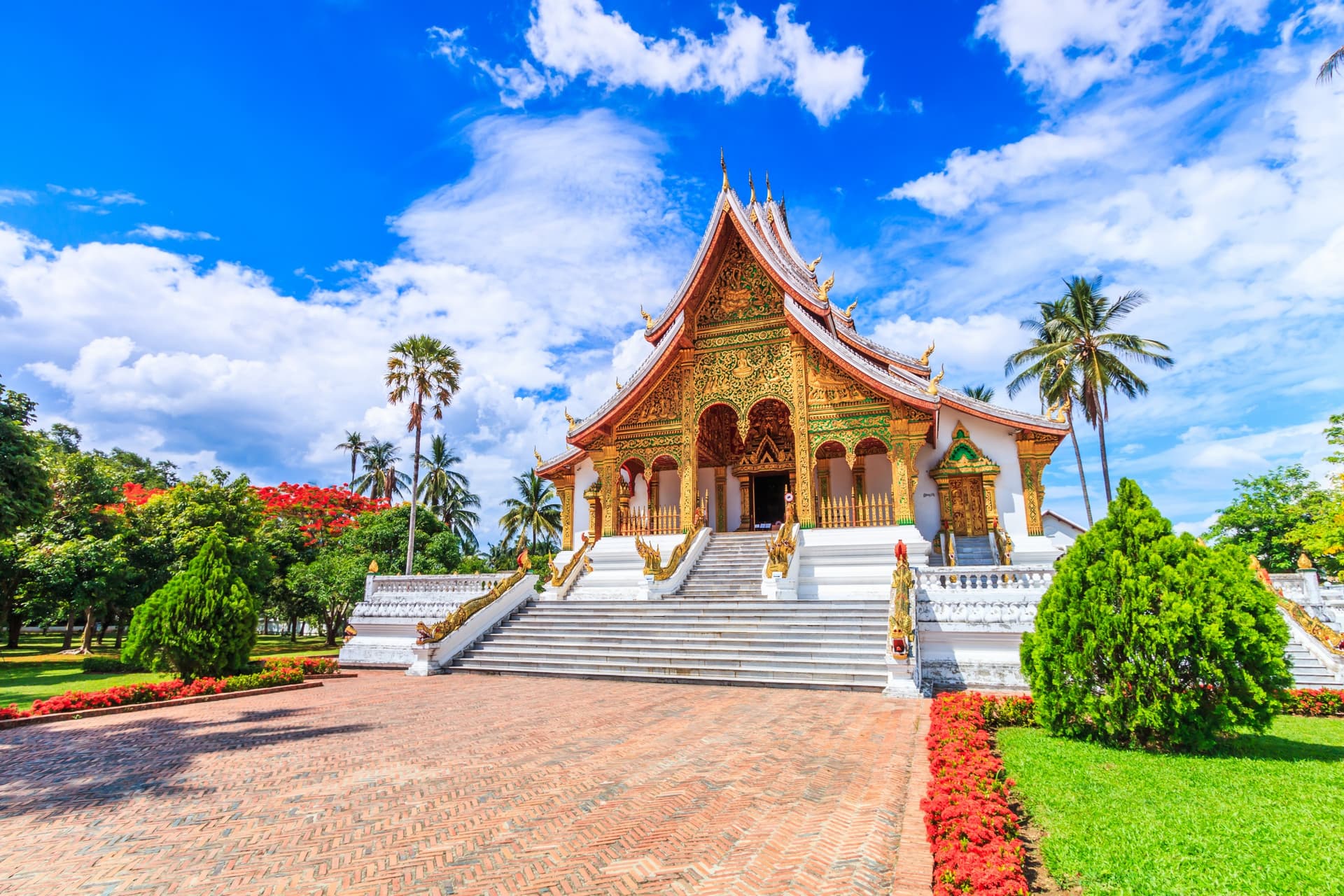
On the banks of the Mekong, facing Mount Phousi, the Haw Kham — literally "golden palace" — was Laos's royal residence until the abolition of the monarchy in 1975. Converted into a national museum in 1995, it now brings together a cluster of buildings blending French Beaux-Arts architecture with Laotian traditions: residential wings, throne room, theatre and the Haw Pha Bang temple, which houses the country's most venerated statue.
Why Visit the Royal Palace Museum
The site condenses a century of Laotian history into a single location. Here you'll find the private apartments of the last royal family preserved as they were, a richly decorated throne room, murals depicting the Ramayana and scenes of local life, as well as a collection of American automobiles that belonged to the last king. The Phra Bang, a golden statue 83 cm tall and weighing approximately 50 kg, gives its name to the city and serves as the nation's palladium.
For a first introduction to Laos, this museum provides valuable historical context before continuing your exploration of Luang Prabang and its temples.
History of the Palace
The former royal palace of Luang Prabang was ravaged in 1887 by the Black Flags (an irregular Chinese army). In 1904, under King Sisavangvong's reign and during the French protectorate, construction of a new palace began. The building, made of brick and teak wood, was completed in five years. It combines classical French design with traditional Laotian roofs, and bears the name Haw Kham, "golden palace."
King Sisavangvong lived there until his death in 1959. Its last occupants were his son Savang Vatthana and family members. In 1975, the Pathet Lao's seizure of power ended the monarchy: the royal family was expelled and the palace sealed. It remained closed to the public until 1995, when it was converted into a National Museum and opened to visitors.
As for the Phra Bang housed within the complex, tradition holds that it was cast in Sri Lanka nearly 2,000 years ago before being presented in 1359 to King Fa Ngum, founder of the Lane Xang kingdom. Siamese raids in 1779 and 1827 carried it away to Bangkok, until King Mongkut (Rama IV) returned it to Laos in 1867.
What to See On Site
The National Museum
Access is via a long avenue lined with palms passing the statue of King Sisavangvong. The interior is divided into three sections:
- The front wing: grand hall, reception room of the king and queen, former secretariat and a chamber of rare artistic objects.
- The throne room: royal thrones and display cases of Buddhist statuettes, murals depicting the Ramayana and scenes of local life.
- The rear wing: residential quarters of the royal family with bedrooms, library, dining room and music room, furnished with original pieces.
The collection also includes marble staircases, weapons, jewels, the royal crown and the last sovereign's American automobiles.
The Haw Pha Bang Temple
At the centre of the complex, this royal temple began construction in 1963 and was completed in the 2000s. It now houses the Phra Bang, a golden statue 83 cm tall weighing approximately 50 kg. The statue rests in a small chamber surrounded by elephant tusks and silk screens embroidered by the queen.
The Royal Palace Theatre
Facing the Phra Bang pavilion, the theatre is surrounded by gardens and fountains. It occasionally hosts traditional dance performances (the Laotian Ramayana). Programming varies by season.
Other Buildings
The complex also includes the royal barge garage, a conference hall, a temporary exhibitions pavilion, kitchens and staff quarters.
Practical Information
- Photography and video prohibited inside buildings.
- Bags not permitted: free lockers are available to the left of the main entrance (avoid leaving valuables in them).
- Shoes must be removed before entering; socks are permitted.
- Dress code: knees, arms and shoulders covered. Sarongs are available for rent at the cloakroom.
- The ticket office closes 30 minutes before the site closes.
- Moderate entry fee, payable in kips at the entrance (verify current rates on site).
- Allow approximately 1.5 to 2 hours to cover the entire complex.
When to Visit
Luang Prabang is comfortably visited from November to February, during the dry and cool season. March and April are hot, with an atmosphere sometimes hazy from agricultural burning. The rainy season (May to September) remains viable and offers greener light across the palace gardens. The museum is open morning and afternoon with a midday break, so visiting early morning avoids heat and crowds.
How to Get There
The palace is located on Sisavangvong Street in Luang Prabang's historic centre, immediately near Wat Mai. From most accommodations on the peninsula, walking is the simplest option: the UNESCO-listed peninsula can be crossed on foot in fifteen to twenty minutes. The tuk-tuk is an alternative for longer journeys or in intense heat; negotiate the fare before departure.
What to See Nearby
With the palace at the heart of the peninsula, several sites can be visited in the same outing:
- Wat Mai, just next door, one of the city's most ornate temples.
- Mount Phousi, across the way, for views over the Mekong at sunset.
- The night market of Luang Prabang, which sets up along Sisavangvong Street in the evening.
- The Kuang Si butterfly park and the Nahm Dong park, accessible on a day excursion.
- The Nam Ou River to extend your exploration north of the city.
Frequently Asked Questions
Frequently asked questions
Include the Royal Palace in Your Journey
The Royal Palace Museum integrates naturally into a stay in Luang Prabang, a major historical and cultural stop in northern Laos. To build a tailor-made itinerary combining royal heritage, temples, rivers and mountain landscapes, see our suggestions for travel to Laos.
Interested in this visit?
We can include it in your personalised itinerary.