Phousi Mountain
Phousi Mountain
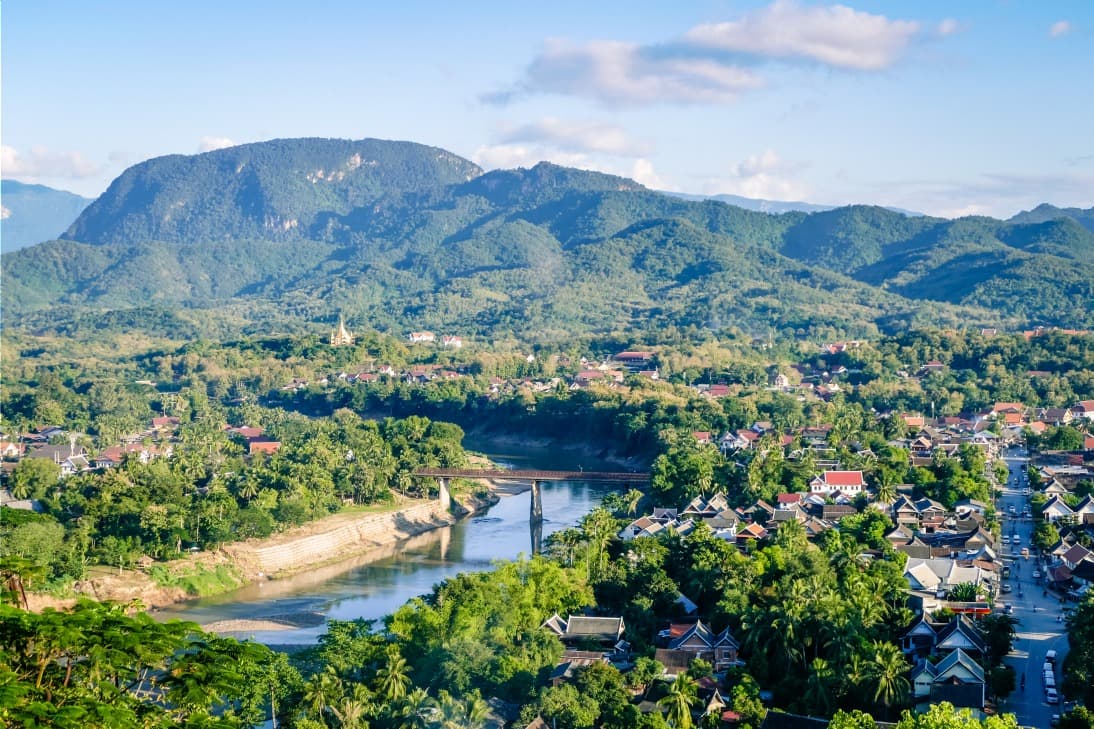
Sacred hill at the heart of Luang Prabang, Phousi Mountain climbs 320 steps and offers a 360° panorama over the city and the Mekong and Nam Khan confluence.
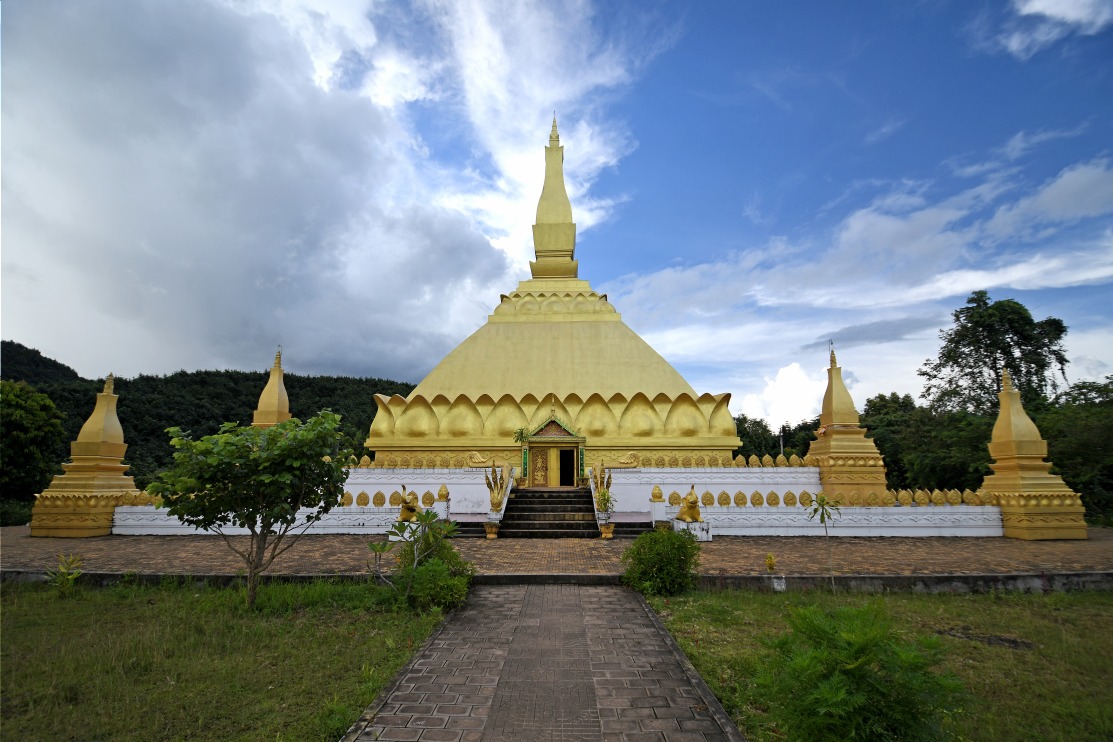
Phousi Mountain dominates the old town of Luang Prabang by about a hundred meters. This wooded hill, crowned by the golden stupa of Wat That Chomsi, serves as a visual and spiritual landmark for the former royal capital. Its ascent via 320 steps leads to a 360° panorama over the city and the confluence of the Mekong and Nam Khan rivers.
Why climb Phousi Mountain
Phousi Mountain serves three purposes: viewpoint, place of worship, and landmark within Luang Prabang's urban layout. For locals, it is a sacred hill where one comes to pray, leave offerings, or perform bird release, a gesture believed to bring happiness and good fortune. For travelers, it offers one of the region's finest panoramas: the old town on one side, the rivers on the other, mountains in the distance.
The ascent route passes through several small sanctuaries, shaded terraces, and vegetated areas. Allow approximately 30 to 45 minutes for the climb at a leisurely pace, taking time to visit the temples that dot the pathway.
History and legend
The summit of Phousi Mountain is occupied by Wat That Chomsi, a golden stupa built in 1804 by King Anourouth. The building was renovated in 1914 under the direction of Tiao Komakhoun Duang Chanh, then director of religious affairs. The stupa stands 24 meters tall, rests on a rectangular base, and features seven levels topped by a golden spire.
A local legend is attached to the hill. It tells of a deep pit on the mountain that led to the center of the earth. A monk is said to have descended with the help of villagers to retrieve a treasure. Betrayed and then buried alive, the monk allegedly used magical powers to escape the pit and defeat seven treasure guardians. Upon learning this, the king of Luang Prabang condemned the villagers to strike drums, gongs, and cymbals every three hours to prevent dragons from troubling the world. This practice is still observed near Wat Thum Thao temple.
What to see
Vat Tham Phousi
Located halfway up, this small sanctuary houses a statue of Buddha with a rounded belly lodged in a narrow cave, as well as a reclining Buddha. It is a brief but striking stop, often less crowded than the summit.
Wat Siphoutthabath
At the north foot of the hill, this temple extends across several buildings and features a large upper terrace. Views stretch over the Mekong to the north and the Nam Khan to the east and south. Monks can be seen here and visitors are free to explore.
Vat That Chomsi and summit terrace
At the summit, the golden stupa of Vat That Chomsi marks the highest point of the visit. During Pee Mai Lao, the Lao New Year, women deposit flower offerings from the first step at the foot of the hill to the foot of the temple. The terrace surrounding the stupa allows you to take in the entire city at a glance, from the Royal Palace district to the two waterways that embrace the peninsula.
That Chomsi Pagoda and bird release
Near the stupa, vendors offer flowers for offerings and caged birds. Bird release is a ritual gesture: opening the cage is believed to bring happiness and good fortune to the one who performs it.
When to climb
Phousi Mountain can be visited year-round. The time of day, however, makes a real difference in terms of crowds and light:
- Early morning: few people, soft light, comfortable temperature for the climb.
- Midday: not crowded, but the ascent can be challenging in intense heat.
- Late afternoon and sunset: spectacular views over the Mekong, but heavy crowds; arrive an hour before sunset to secure a spot on the terrace.
The dry season, from November to March, offers the clearest skies. During the monsoon (June to September), sunsets are less predictable but the landscape is greener.
Practical information
- Duration of visit: allow 1 to 2 hours round trip depending on stops at temples.
- Fee: small entrance fee paid in kips at the site's ticket office.
- Hours: open during daylight hours, typically from dawn to sunset; check on site.
- What to bring: water, hat, insect repellent, sturdy shoes for the steps. Clothing covering shoulders and knees for the temples.
- On site: drinks and snacks available near the summit.
How to get there
Phousi Mountain is located at the heart of Luang Prabang's old town, between Thanon Sisavangvong and Thanon Phousi. Two main access points lead to the summit:
- Main access: the steps located opposite the Royal Palace Museum, on Thanon Sisavangvong. This is the most frequented route.
- Secondary access: on Thanon Phousi, near Bar Hive. This route passes through Vat Tham Phousi and remains quieter.
Both paths converge at the ticket office before access to the summit. Since the old town is compact, most accommodations in the center are within walking distance of the hill's base.
Nearby
Phousi Mountain naturally fits into a broader visit to Luang Prabang and its surroundings:
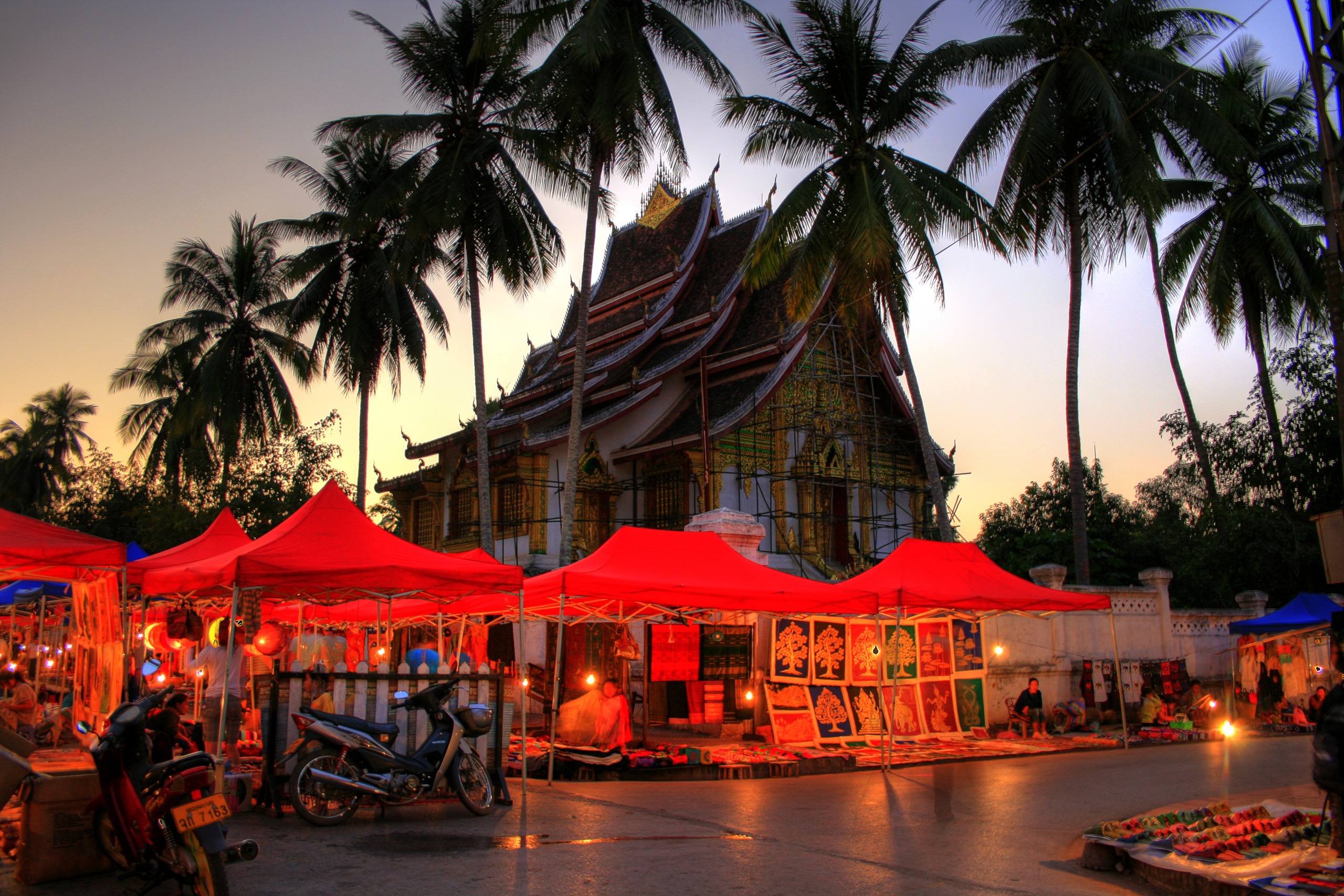
- Luang Prabang night market: just steps from the foot of the hill, to explore after sunset.
- Kuang Si Butterfly Park: to combine with the famous Kuang Si waterfalls.
- Nahm Dong Park: nature and activities near the city.
- Nam Ou River: to extend travel north into Laos.
Frequently asked questions
Frequently asked questions
The main ascent has 320 steps from the entrance opposite the Royal Palace Museum. The elevation gain is approximately 100 meters.
No, entrance is charged but the fee is small and paid in kips at the ticket office. All access routes lead to the same checkpoint.
The twilight view over the Mekong is one of the site's highlights, but crowds are very heavy. To secure a comfortable spot on the terrace, it is better to climb an hour before sunset. An early morning visit offers a more peaceful experience.
A 360° panorama over Luang Prabang's old town, the confluence of the Mekong and Nam Khan rivers, and the surrounding mountains.
The ascent remains accessible to anyone in good condition. The steps are regular but numerous. It is advisable to avoid the hottest hours and bring water.
Extend the experience
Phousi Mountain is just one landmark among the cultural and natural sites in the region. To plan a complete itinerary between temples, rivers, and mountains, explore our journeys through Laos.
Nearby
Interested in this visit?
We can include it in your personalised itinerary.