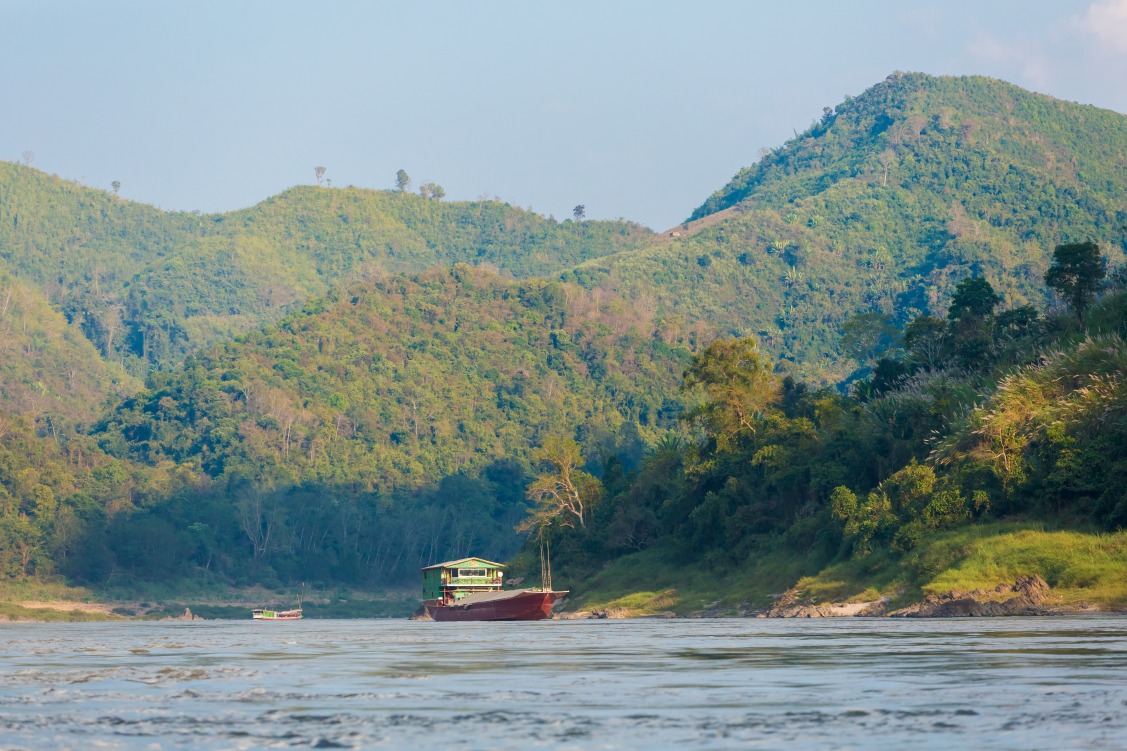
Tham None (Sleeping Buddha Cave)
Tham None, the 'Sleeping Buddha Cave', is a Buddhist sanctuary carved into the karst formations surrounding Vang Vieng. Less crowded than its neighbours, it offers an authentic natural and spiritual setting.
Tham None — literally 'sleeping cave' — sits in the hills around Vang Vieng, deep within the limestone karsts that rise above the Nam Song valley. The cave takes its name from a reclining Buddha statue enshrined within. Less visited than Tham Jang or Tham Phu Kham, it attracts travellers seeking a spiritual and natural refuge away from the main tourist trails.
What to see
The cave houses one or more reclining Buddha statues, a classic arrangement in Laotian cave sanctuaries. Limestone formations — stalactites and stalagmites — create the natural décor of the cavern. Tropical vegetation frames the entrance, typical of the karst cliffs surrounding Vang Vieng.
History and context
The caves around Vang Vieng have served as Buddhist worship sites for centuries. During the Vietnam War, several cavities in the region also provided shelter for local populations. Tham None embodies this dual heritage: a natural wonder and a villagers' sacred sanctuary.
Etiquette and visiting rules
- Appropriate dress required : shoulders and knees covered when entering the sanctuary area.
- Footwear : remove shoes before the Buddha statues.
- Respect for silence : the site remains an active religious space for villagers.
- Do not touch the statues or offerings.
Photography tips
The cave interior is dim: a torch or camera flash is necessary. Natural light at the entrance during mid-morning offers an intriguing contrast between vegetation and stone. Check on-site whether photographing the statues is permitted.
Location and access
Vang Vieng is reachable from Vientiane (approximately 4 hours by bus) or from Luang Prabang. Tham None lies within the immediate surroundings of the town, in the karst zone east or north of the Nam Song — precise location warrants confirmation with a local guide or your operator. Bicycle or tuk-tuk from Vang Vieng's centre are the typical ways to reach the region's caves.
Nearby attractions
- Tham Jang — Vang Vieng's iconic fortress-cave, easily accessible from the town centre.
- Tham Phu Kham — cave with an emerald Buddha and turquoise lagoon, among the region's most visited.
- Blue Lagoon — natural lagoon popular for swimming, often combined with Tham Phu Kham.
Frequently asked questions
The dry season (November to April) is most favourable: access trails are passable and cave humidity remains manageable. During the rainy season, some paths may become muddy or flooded.
Yes. As with any Buddhist sanctuary in Laos, shoulders and knees must be covered. Bring a lightweight sarong or wrap if you are wearing shorts.
Yes, the cave interior is dimly lit or unlit. A torch is essential to safely explore the cavern and appreciate the limestone formations.
Absolutely. Caves in the region are often visited as part of a half-day or full-day circuit by bicycle or tuk-tuk. Tham Phu Kham and its lagoon make a natural pairing.
Photography of the natural landscape is generally tolerated. For Buddhist statues, check on-site: some sanctuaries prohibit it out of religious respect.
Interested in this visit?
We can include it in your personalised itinerary.